
Europe's 2030 climate reckoning
The EU's five largest economies are diverging sharply on emissions reduction. Germany risks missing its own target by up to 100 million tons of CO₂. France isn't cutting fast enough.

Spain may actually exceed its goal.
At a Glance
Germany, the EU’s largest economy, could overshoot its CO₂ projection by up to 100 million tons, according to the country’s independent Expert Council on Climate Change.
France must cut emissions more than three times faster than its current pace to meet its 2030 target — and its transportation sector, responsible for nearly a third of national emissions, remains the main obstacle.
Spain stands out as the clear overperformer: with 75% of its electricity now coming from renewables, it is on track to achieve a 41.4% reduction in emissions by 2030, well above its own 32% target.
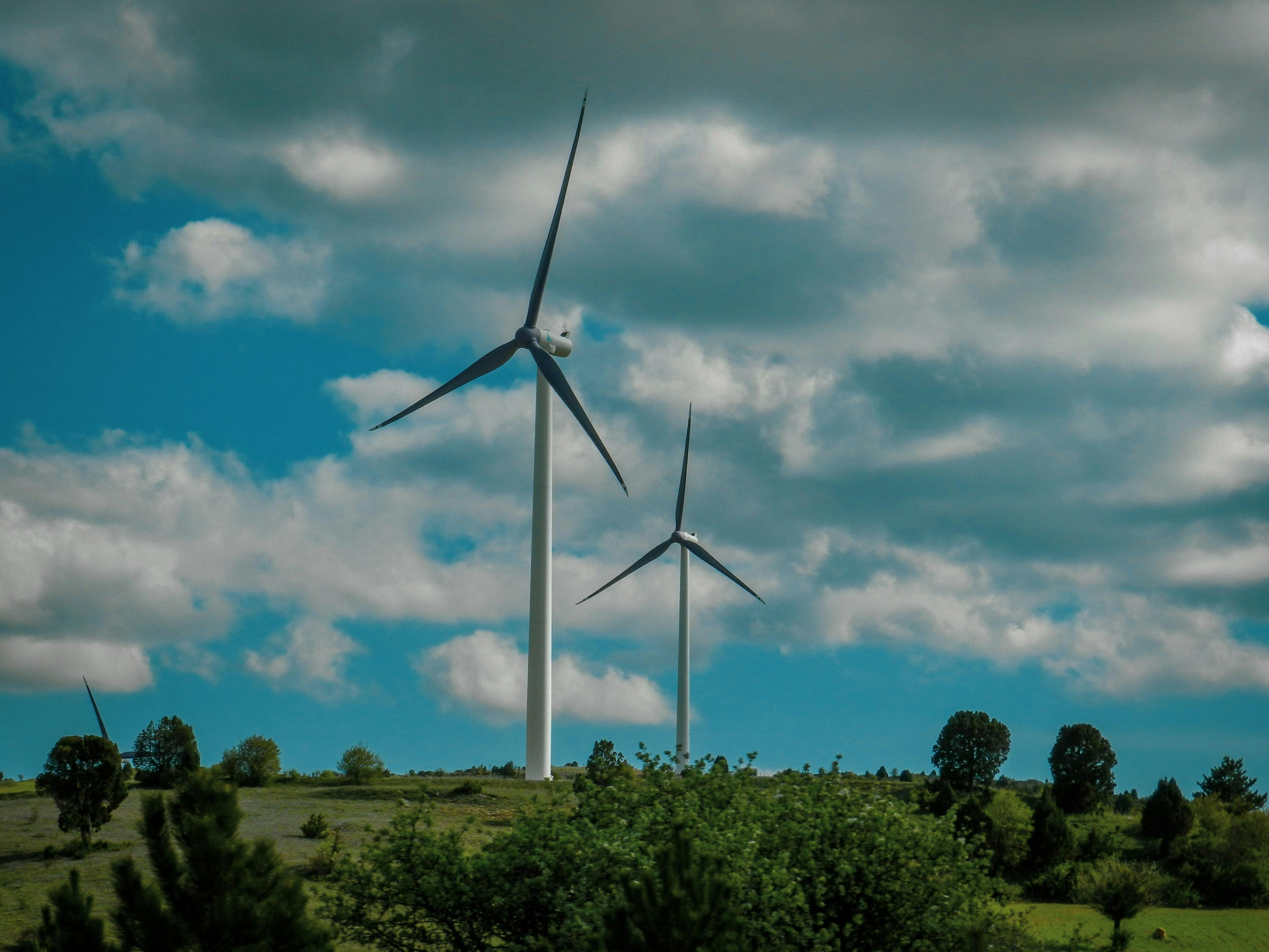
This image is used for illustrative purposes only.
The European Union has committed to cutting greenhouse gas emissions by at least 55% by 2030. Four years remain — and the national trajectories of the EU’s five largest economies have never looked so different. While one country may exceed its own target, the bloc’s largest economy risks missing its goal by more than 100 million tons of CO₂.
Germany’s unfinished transition
Germany’s federal Climate Protection Act commits the country to cutting greenhouse gas emissions by at least 65% by 2030 — the most ambitious national target among the five economies compared here. In March 2026, Chancellor Friedrich Merz presented a 67-point action plan to get the country back on track: 12 additional gigawatts of onshore wind capacity, incentives to accelerate electric vehicle adoption, and protections for forests and soils.
The measures have not persuaded Germany’s independent Expert Council on Climate Change, a government-mandated body established to assess whether the country is meeting its legal climate obligations. Its 2026 report projects that Germany could overshoot its emissions targets by up to 100 million tons of CO₂. Emissions were essentially flat in 2025: declines in industry and energy were offset by increases in buildings and transportation. More alarming, the council found that Germany’s forests — historically a carbon sink — have become a net source of emissions, a trend it expects to continue through 2045.
The government’s decision in 2026 to water down legislation that would have required households to replace fossil fuel heating systems with cleaner alternatives drew sharp criticism. The move could suggest a deliberate trade-off between the social cost of the energy transition and climate ambition — though the exact political calculus behind it remains difficult to establish.
Germany has so far reduced its emissions by 48%. To reach 65% by 2030, it would need to dramatically accelerate.
France: clean electricity, slow overall progress
France presents a favorable surface picture: it was the EU’s top clean electricity producer in 2025, with fossil fuels accounting for just 5.2% of its power mix, driven by its uniquely large nuclear fleet and a rapidly expanding solar and wind sector. Its national target under the SNBC 3, France’s third national low-carbon strategy adopted in late 2025, is a 50% cut in territorial emissions by 2030 compared to 1990 — a significant upgrade from the previous 40% target, revised upward to align with the EU’s Fit for 55 framework, but still less demanding than Germany’s.
But the trajectory is insufficient. Data from Citepa, the French government’s reference body for national emissions inventories, shows emissions fell an estimated 1.5% in 2025, following a 1.8% drop in 2024. To stay on course for 2030, France would need to cut emissions by 4.6% per year — more than three times its current rate.
Transportation — responsible for roughly a third of France’s total emissions — is the central bottleneck. In 2025, the sector’s emissions fell just 1.4%, against an annual target of 5%. The national decarbonization roadmap unveiled at the Santa Marta energy transition conference in April consolidates existing commitments: an end to coal by 2030, oil by 2045, gas for energy production by 2050, a ban on new gas boilers in buildings from 2026, and a target of two-thirds of new cars being electric by 2030. What it doesn’t resolve is the pace problem.
A deeper question lingers: France’s industrial emissions declined largely because of a slowdown in manufacturing and construction activity — not structural decarbonization. Is France’s economy genuinely decarbonizing, or simply contracting?
Italy: clinging to fossil fuels
Italy’s energy picture is contradictory. Renewables accounted for 41% of its electricity consumption in 2025, led by a surge in solar power which provided 14.5% of its electricity mix — a notable achievement for a country with a target of reducing overall greenhouse gas emissions by 43.7% under EU rules. Yet the European Environment Agency (EEA), the bloc’s independent environmental monitoring body, warns that a “significant acceleration” in renewables remains necessary to hit that target.
That gap becomes harder to close following Prime Minister Giorgia Meloni’s announcement in April 2026 that the country’s last coal plants would stay open until 2038 — 13 years later than originally planned, and eight years past the 2030 deadline. The decision drew criticism from environmental groups and the center-left opposition. Angelo Bonelli, leader of the Green party Europa Verde, accused the government of “climate negligence.”
The timing is strategically awkward: Italy made the announcement at a moment when the war against Iran was highlighting the vulnerabilities of countries still dependent on oil and gas imports — a context that makes extending fossil fuel dependency a more difficult position to defend, though the government has not publicly addressed this tension.
Italy’s National Institute for Environmental Protection and Research (ISPRA) concluded in its 2026 report that delays in the energy transition, transportation decarbonization, and production efficiency make it unlikely the country will meet its 2030 emissions target.
Spain: the EU’s climate overperformer
Spain has quietly become one of the EU’s most credible climate stories. Its electricity mix reached 75% renewables in 2025 — well above the European average of 30%. Over two decades, emissions from Spain’s power sector fell by more than two-thirds as solar and wind progressively displaced fossil fuels.
In May 2026, the government announced a €9 billion (approximately $9.9 billion at current exchange rates) energy transition plan covering home energy efficiency, community electricity sharing, and near-free public transit for low-income households. Prime Minister Pedro Sánchez explicitly tied climate ambition to social equity, warning that “climate-skeptic rhetoric” risked slowing the transition.
The European Climate Neutrality Observatory (ECNO) projects that Spain could achieve a 41.4% reduction in emissions by 2030 — significantly exceeding its own 32% national target — provided its carbon absorption and clean energy policies remain in place.
The Netherlands: green reputation, unfinished reality
The Netherlands maintains a green image that holds up only partially on closer inspection. Wind and solar provided 46% of its electricity in 2025, and the country generates more solar power per capita than any other EU member state. In early 2026, Amsterdam became the first capital city in the world to ban advertising for climate-damaging products — including fossil fuels and meat — from public spaces.
But the Netherlands remains heavily dependent on natural gas, and the country’s Planning Bureau for the Living Environment (PBL) concluded in its 2025 report that it is “extremely unlikely” the country will achieve its 55% emissions reduction target by 2030. Delays in offshore wind farm deployment, a partial construction freeze caused by the nitrogen permit crisis triggered by the 2019 Council of State ruling, and an absence of projected emissions reductions after 2030 all contribute to that assessment.
The PBL warned that the number of policy combinations capable of delivering a 55% emissions cut by 2030 — without serious economic damage or major social resistance — is shrinking rapidly.
What the divergence reveals
The comparison of these five trajectories points to something structural about the European transition: the countries moving fastest are not necessarily the wealthiest or most industrialized. Spain’s lighter industrial base gives it more room to reshape its energy mix than Germany, whose manufacturing weight and reliance on residential heating create friction that government programs have struggled to overcome.
The EU’s collective target structure creates a perverse incentive: frontrunners can theoretically offset laggards through flexibility mechanisms. Under the 2040 targets adopted by the European Council in March 2026, member states will be allowed to use “high-quality international carbon credits” for up to 5% of the EU’s 1990 net emissions toward the 2040 goal — essentially letting countries purchase emissions reductions generated abroad and count them against their own obligations. Critics argue this risks becoming a substitute for genuine domestic action.
The real cost to European taxpayers is deferred, not avoided. For German households keeping their gas boilers another decade, or French commuters stuck in a car-dependent transport system cutting emissions at a fraction of the required rate, the transition will eventually come — at higher cost, under greater political pressure.
The bottom line
Europe in 2030 will not look like the Europe of the Paris Agreement’s ambitions. What is at stake is not only a question of tons of CO₂ — it is a test of whether large industrial democracies can restructure their economies without waiting for perfect political conditions.
Spain demonstrates it is possible. Germany demonstrates how hard it is. The Netherlands demonstrates that projecting a green image is not enough.
The real question is not whether the EU will come close to its 55% target — on aggregate, it probably will. The question is whether the countries that fall short today will have built the foundations of genuine decarbonization, or simply pushed the reckoning further down the road.
Sources: Euronews · Expert Council on Climate Change (Germany) · Citepa · SNBC 3 · ISPRA · European Climate Neutrality Observatory (ECNO) · PBL Netherlands Environmental Assessment Agency · Ember · European Environment Agency