
EU visa crackdown: 11 countries push to block Russian tourists

A coalition of 11 European countries is demanding binding Schengen visa restrictions on Russian tourists. More than 477,000 tourist visas were issued to Russians in 2025 — even as the war in Ukraine rages on.
While Ukrainians die on the front lines, Russian tourists are shopping in Paris, sunbathing on Spanish beaches, and touring European capitals. Eleven countries that belong to or participate in the Schengen zone — Europe’s passport-free travel area — have decided this situation is no longer acceptable, and they’re taking their case formally to Brussels.
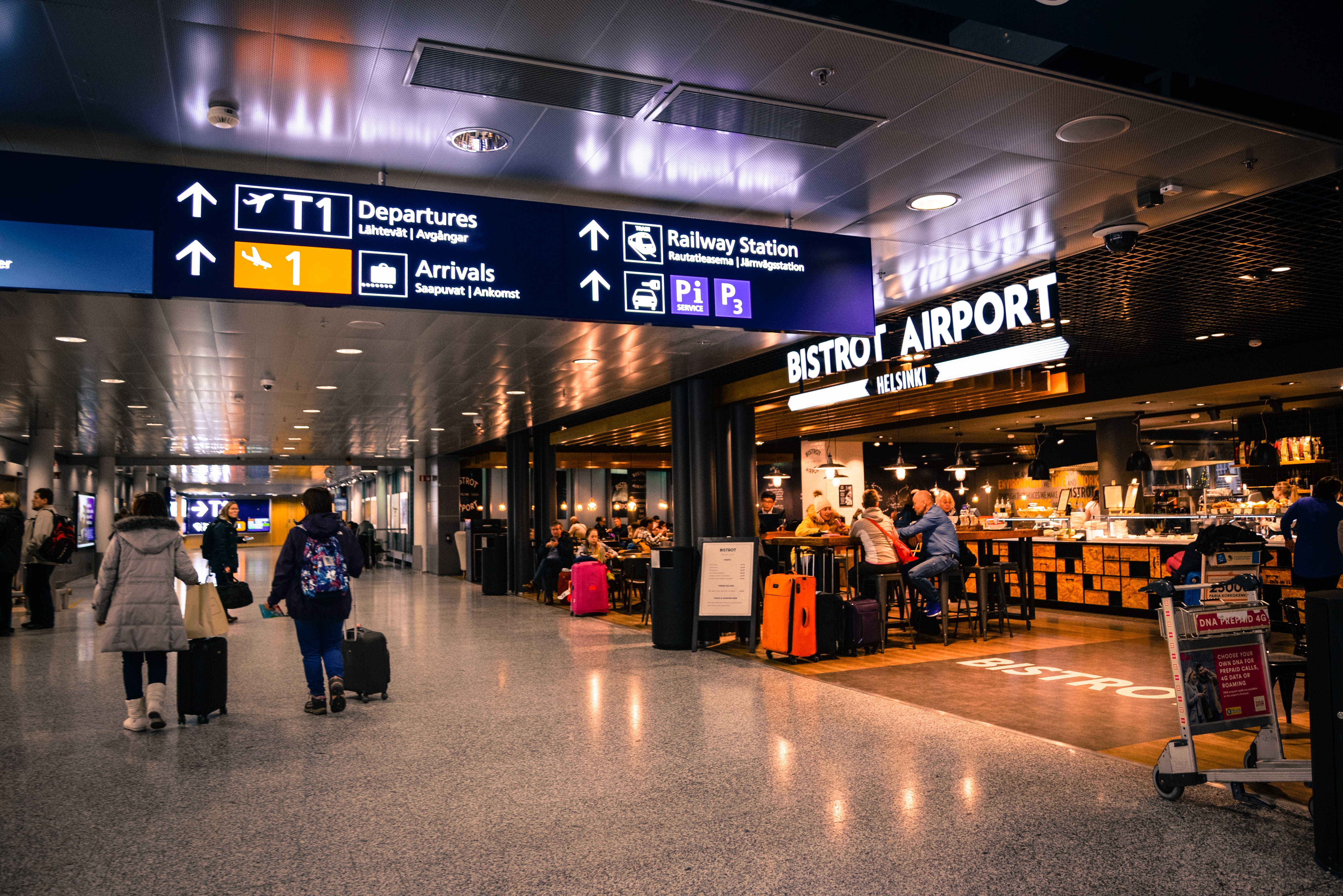
This image is used for illustrative purposes only.
At a Glance
Eleven countries (nine EU member states plus Norway and Iceland) have signed a joint letter demanding binding Schengen visa restrictions on Russian nationals.
More than 477,000 tourist visas were issued to Russians in 2025 — roughly 77% of the 620,000+ total Schengen visas granted, with France leading the bloc at nearly 180,000.
The coalition also calls for a visa ban on Russian veterans who fought in Ukraine, and a shared EU mechanism to identify them at the border.
The letter shaking Brussels
Sweden launched the initiative. Johan Forssell, Sweden’s minister for migration and asylum, rallied the Czech Republic, Denmark, Finland, Estonia, Latvia, Lithuania, the Netherlands, and Poland — joined, outside the EU, by Norway and Iceland, both members of the Schengen travel zone.
In early June 2026, the group sent a joint letter to Kaja Kallas, the EU’s High Representative for Foreign Affairs and Security Policy — the bloc’s closest equivalent to a foreign minister — and to Magnus Brunner, the European Commissioner for Migration, ahead of a June 4 meeting of EU justice and interior ministers in Luxembourg.
Forssell put it bluntly: “I don’t want any more shopping weekends. I don’t want any more luxury trips to Europe while Ukrainians are dying on the battlefield.”
Numbers that fuel the pressure
“I don’t want any more shopping weekends. I don’t want any more luxury trips to Europe while Ukrainians are dying on the battlefield.”
— Johan Forssell, Sweden’s minister for migration and asylum, Luxembourg, June 4, 2026
The data behind the coalition’s push comes from the Schengen Barometer — a confidential internal European Commission monitoring document shared among member states to track visa issuance across the passport-free zone. The document has itself become a political flashpoint: in early 2026, figures on Russian visa issuance were quietly removed from a new edition of the Barometer, prompting eight EU countries to formally request an explanation.
The numbers, once made available, tell a clear story. EU countries issued more than 620,000 Schengen visas to Russian nationals in 2025, a jump of roughly 10% over 2024. Of those, more than 477,000 — about 77% — were tourist visas, up 8.4% from the previous year. Business trips and family visits accounted for most of the remainder.
France leads the tally at nearly 180,000 visas issued in 2025, a sharp increase from 2024. Italy ranks second with nearly 160,000 (a slight decline), followed by Spain at nearly 100,000 (roughly stable year-over-year). Nearly three-quarters of all Russian visa applications were handled by France, Italy, and Spain — countries located far from Europe’s eastern flank, and with powerful tourism industries.
For the signatories, these figures expose a fundamental policy inconsistency. The EU suspended its visa facilitation agreement with Russia in 2022, following Moscow’s invasion of Ukraine, then banned the issuance of multiple-entry visas in November 2025 — requiring Russians to reapply for every trip. But the common guidelines have been applied very unevenly across member states.
A two-speed Schengen zone
That fragmentation is precisely what the letter targets. Some countries — Estonia foremost among them — have stopped issuing visas to Russian citizens entirely. Others, notably the EU’s largest member states, continue to grant tens of thousands each year.
Igor Taro, Estonia’s interior minister and a member of the liberal Eesti 200 party, frames the stakes plainly: “These travel privileges entail significant security risks. Nationals of an aggressor state should not have access to benefits that are unavailable to them at home, due to the crimes committed by their country.”
The letter also raises a geopolitical coherence argument: diverging national practices weaken the EU’s collective leverage over Moscow and send contradictory signals about the bloc’s resolve — at the very moment Russia is intensifying strikes against Ukrainian civilian infrastructure.
The signatories flag one additional concern: the movement of hundreds of thousands of Russian military personnel — some of whom have served in Ukraine — through a Schengen zone that lacks a shared mechanism either to identify them or to deny them entry.
What the eleven countries are asking for
The coalition makes four concrete requests to EU institutions:
Establish new binding visa restrictions on Russian tourists, applicable uniformly across all member states.
Monitor the effective enforcement of existing guidelines, to end visa shopping — the practice of applying for a Schengen visa in whichever member state has the most permissive rules.
Provide member states with regular aggregated statistics on visa issuances to Russian nationals.
Develop a shared mechanism to identify and exclude Russian veterans who fought in Ukraine.
Estonia says it has already barred 2,000 former Russian combatants from its territory, working in coordination with Ukrainian security services. Taro called on his EU counterparts to “act in concert on this matter.”
Analysis: the cost of fragmentation
Solidarity as leverage — and as weakness
The Russian visa question exposes a structural tension in how the European Union is built: the Schengen zone guarantees free movement internally but leaves external entry policy largely in national hands. Each member state retains authority over its own visa issuance, making any binding harmonization politically fraught.
Opponents of the initiative raise a legitimate point: larger member states receive far more visa applications than smaller ones, simply because of geography and demand. And those Russians most responsible for the war are already subject to targeted EU sanctions — a tourist with a Russian passport is not a Kremlin decision-maker.
But that framing may miss the deeper issue. The question may be less about security than about symbolism and political coherence. Allowing nationals of a state waging war against a country seeking EU membership to travel freely across European territory is a contradiction that Brussels may not be able to indefinitely paper over.
A precedent worth watching
This Swedish-led push is not the first of its kind. Since 2022, the Baltic states, Poland, and Finland have progressively tightened their own rules, sometimes going well beyond common EU guidelines. If that centrifugal tendency continues without a shared framework, the Schengen zone could fragment further — a paradox for a measure meant to reinforce it.
The European Commission is now being asked to arbitrate. The June 4 ministerial meeting produced no formal decision, but the coalition is explicitly requesting that the institutions put forward a concrete proposal to relaunch the debate.
The Bottom Line
Can Europe continue to define itself as a unified bloc against Russian aggression while maintaining differentiated entry policies based on which Russian passport is presented at its borders? The European Commission’s response — or its silence — will reveal much about the EU’s capacity to translate declaratory solidarity into operational coherence.
Sources: Euronews · France Info · Schengen Barometer (via Euractiv / Ukrainska Pravda)