
EU proposes to put Patriarch Kirill back on sanctions list
The EU is targeting Russia's Orthodox Church leader for the first time since Hungary vetoed his blacklisting in 2022.

A new government in Budapest removes a key obstacle — but a final deal among all 27 member states is far from certain.
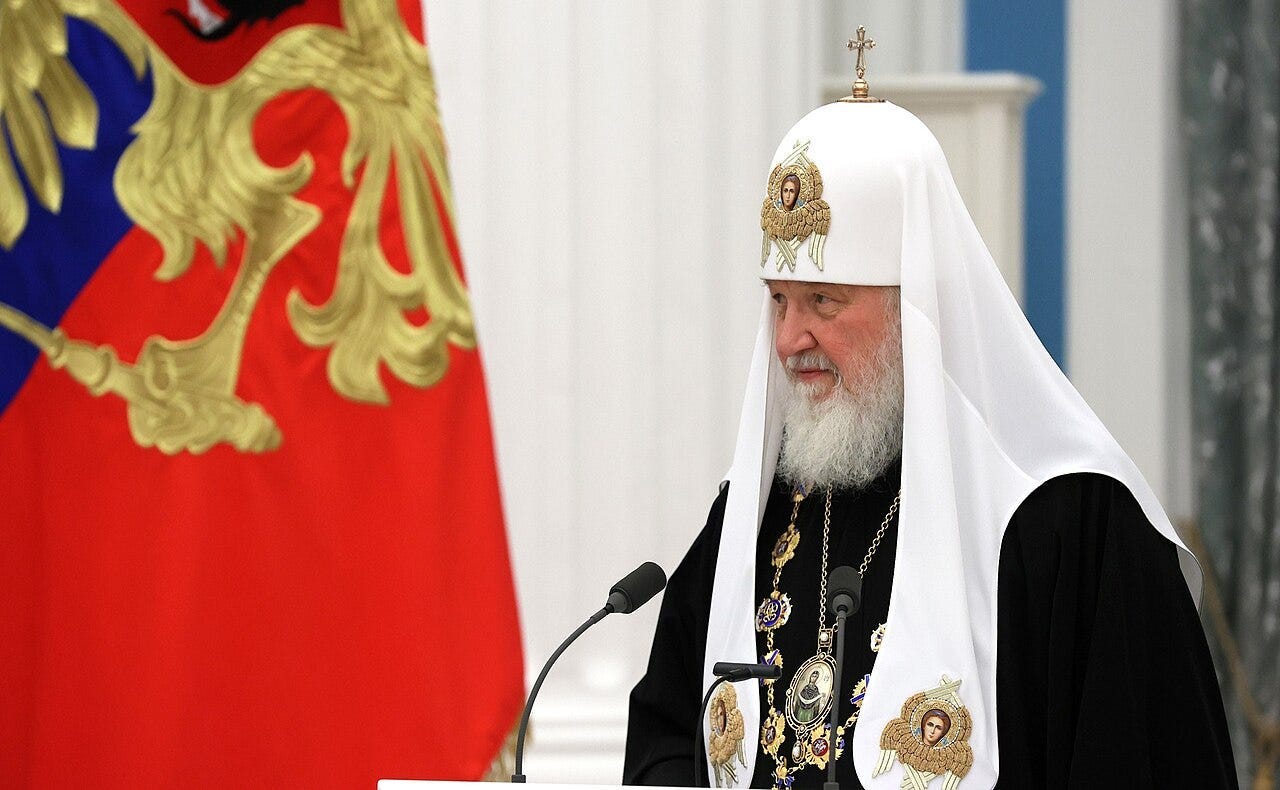
This image is used for illustrative purposes only.
Russia’s most powerful religious figure is back in Brussels’ crosshairs. For the first time since Hungary blocked the move four years ago, Patriarch Kirill — head of the Russian Orthodox Church — has been included in the European Union’s latest proposed sanctions package, according to three diplomats with knowledge of the negotiations. The proposal is the EU’s 21st sanctions round against Russia since the 2022 invasion: a move heavy with symbolism, fragile in its politics.
At a Glance
Kirill’s name was added to the EU’s 21st sanctions package, proposed Tuesday June 9, 2026, according to three diplomats — the first such inclusion in a formal proposal since 2022.
His blacklisting was vetoed in 2022 by Hungary under then-Prime Minister Viktor Orbán, who framed the move as an infringement on religious freedom; Budapest’s new government under Péter Magyar has signaled it will no longer stand in the way.
A final agreement among all 27 EU member states remains uncertain — the unanimity requirement could still lead to his name being dropped to secure a broader deal.
How a four-year veto finally collapsed
Kirill, the patriarch of Moscow and head of the Russian Orthodox Church, is no ordinary religious figure. Under his leadership, the Church published a document calling for the elimination of Ukrainian independence and describing Russia’s invasion as a “holy war.” The EU accuses him of serving as a theological mouthpiece for the Kremlin’s war machine.
Brussels first attempted to put him on its blacklist in 2022. Hungary — then led by Prime Minister Viktor Orbán — exercised its veto, presenting the measure as an attack on religious freedom. The move sparked widespread outrage among other member states.
The case lay dormant until last month, when Hungary’s new government signaled it would no longer block the measure — a reversal that European officials moved quickly to exploit by adding Kirill’s name to the latest proposal.
The architecture of a system built to fail slowly
The EU’s Russia sanctions regime requires unanimous agreement from all 27 member states. That’s the source of its institutional weight — and its structural vulnerability. Any single country can delay, water down, or kill any measure outright.
In 2022, Hungary was the veto. With Budapest’s position reversed, that particular obstacle has in principle been cleared. But other capitals could still balk at sanctioning a religious leader — a politically charged step in countries with large Orthodox Christian populations such as Bulgaria, Cyprus, or Greece.
The EU is targeting a deal on the full package before July 15, 2026. The stakes extend well beyond Kirill. A scheduled automatic review of the cap on Russian oil prices falls on that same date, and failure to reach agreement on the broader package could derail that core mechanism of the EU’s economic pressure campaign against Moscow.
When religion becomes a weapon of war
For a reader in Boston or Toronto, Kirill’s role may seem remote. It isn’t. The Russian Orthodox Church, of which the patriarch is both spiritual and administrative head, counts an estimated 100 million faithful — primarily in Russia, Ukraine, Belarus, and their global diasporas. His endorsement of the invasion provides theological cover for a military operation, comparable in symbolic weight to a major American denomination publicly blessing a U.S. war.
Brussels is not sanctioning the Orthodox faith. It is targeting an individual who, in the EU’s own terms, has used his position to legitimize a war of aggression. The distinction is narrow but legally decisive.
The bottom line
Whether Kirill’s name survives the final round of negotiations or gets dropped to secure a deal, this episode lays bare a structural tension at the heart of Europe’s sanctions architecture: its effectiveness depends on political unity, but the unanimity requirement turns every member state into a potential veto player. That tension predates Kirill — and will long outlast him.
The real question isn’t whether the EU can sanction a patriarch — it’s how long the unanimity rule will continue to constrain Europe’s geopolitical ambitions.
Sources: Euronews