
EU fertilizer plan puts Brussels' farm credibility on the line
The EU's emergency fertilizer plan redirects existing farm subsidies as prices surge 70%. The real question is whether Brussels is buying time — or solving the problem.

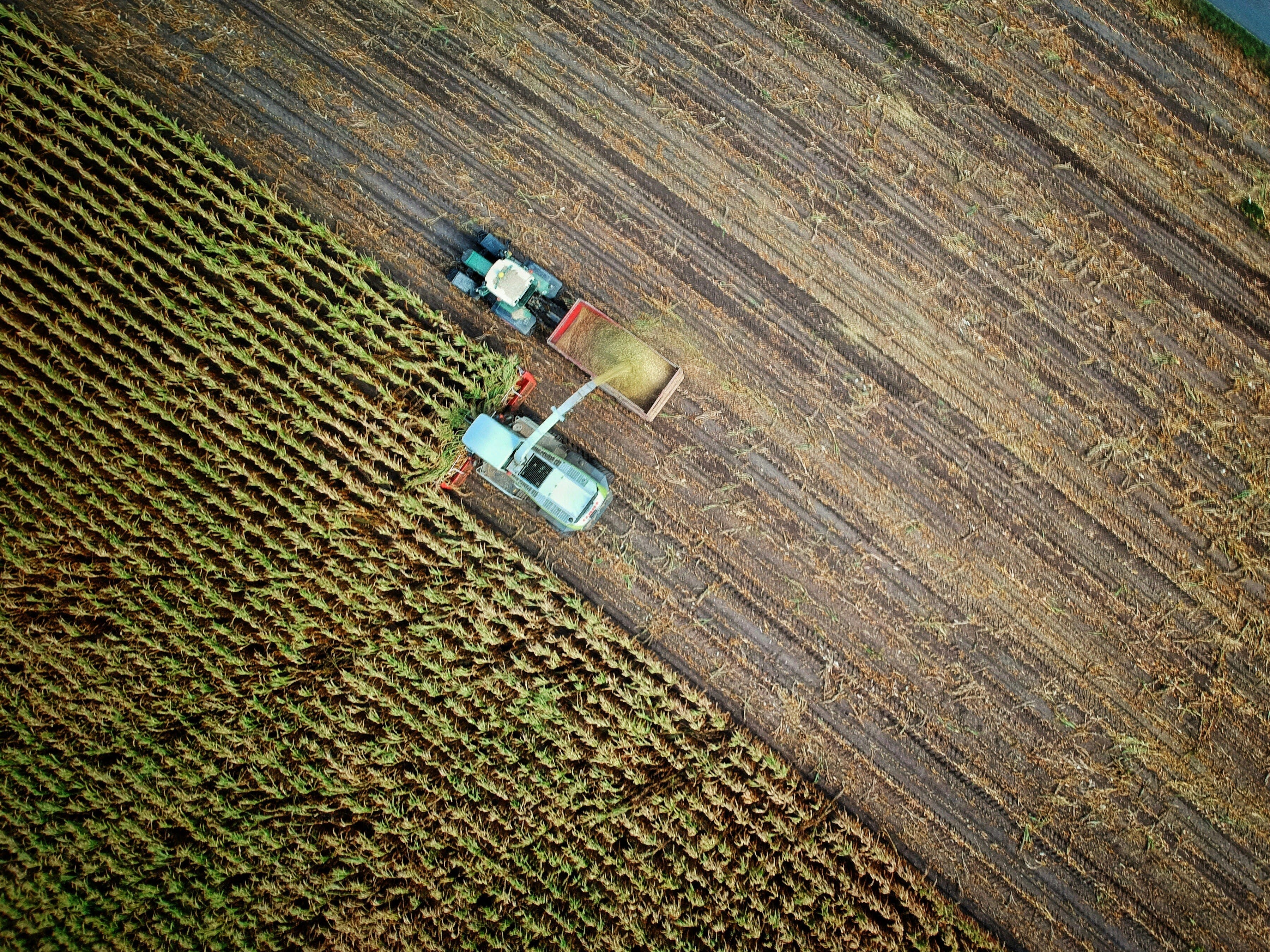
This image is used for illustrative purposes only.
At a Glance
Nitrogen fertilizer prices have jumped 70% above their 2024 average, driven by the closure of the Strait of Hormuz amid the ongoing Middle East conflict
The European Commission — the EU’s executive arm — is proposing to redirect existing farm subsidies rather than inject new money, offering early payments to farmers who cut their use of synthetic fertilizers
The plan lands just months before an end-of-2026 target for EU leaders to agree on a seven-year agricultural budget, as rural areas across the bloc swing toward populist parties
Why now? The pressure of a political calendar
The timing is deliberate. On May 19, the European Commission presented this plan in the middle of negotiations over the 2027–2034 Multiannual Financial Framework (MFF) — the EU’s seven-year budget, which will determine how much each European farmer receives through the end of the decade. EU heads of state have set a target of late 2026 to reach agreement, though MFF negotiations have historically stretched beyond self-imposed deadlines. Every week of mounting agricultural discontent before that date weakens the Commission’s negotiating position.
Brussels knows this playbook well. Since 2024, convoys of tractors have blocked the entrances to the European Parliament, clogged national highways in France, and gridlocked wholesale markets in Germany. Those mobilizations forced the EU’s executive to walk back several environmental regulations. A new wave of rural anger — this time fueled by surging input costs — would be politically unmanageable heading into the budget endgame.
What the fertilizer plan contains — and what it doesn’t
The plan works by redirecting existing funds within the Common Agricultural Policy (CAP) — the EU’s farm subsidy program, which functions roughly like a Farm Bill but distributed across 27 member states. No new money is being created. Farmers who adopt practices that reduce synthetic fertilizer use — including a shift toward bio-based alternatives — would become eligible for advance payments and emergency funds.
The CAP’s agricultural crisis reserve, endowed with at least €450 million ($490 million) annually, is the most immediately deployable lever. Christophe Hansen, the Luxembourgish commissioner for Agriculture, has signaled his intention to at least double the €200 million still available in that reserve. Final budget figures were still under discussion at the time of the plan’s presentation.
A senior Commission official also floated the mobilization of additional EU budget funds to boost agricultural research — without specifying amounts, which suggests this component of the plan remains more of a political signal than a firm financial commitment.
The structural vulnerability that the fertilizer crisis exposes
The underlying problem is structural, not cyclical. EU domestic fertilizer production is currently running 10 to 15% below its pre-invasion level — that is, before Russia’s full-scale invasion of Ukraine in February 2022, which triggered a natural gas price shock. Gas is the primary feedstock for nitrogen fertilizers, and when prices spiked, several European plants temporarily suspended production. Now, the closure of the Strait of Hormuz — the critical waterway through which much of the region’s energy exports flow — has reopened a supply vulnerability the EU identified as strategic but has yet to fully address.
Europe’s dependence on fertilizer imports is, for the agricultural sector, what dependence on Russian gas was for the energy sector: a structural fragility that successive crises reveal before adequate medium-term fixes are in place.
Commissioner Hansen acknowledged the bloc’s current limitations directly, going so far as to raise the possibility of revisiting existing nitrogen application limits if the crisis were to persist — a significant political signal, given that those caps are embedded in longstanding EU environmental regulation.
The political dimension no one names outright
The fertilizer plan is also a response to an electoral dynamic that European officials are watching with growing unease: the rise of far-right and populist parties in rural constituencies across the EU. In France, Germany, Austria, and Italy, farmers have become an increasingly contested electoral base, with nationalist movements framing Brussels’ environmental agenda as the primary source of agricultural hardship.
A plan that conditions aid on the adoption of greener practices — reducing synthetic fertilizers, shifting to bio-based alternatives — might seem counterintuitive in this context. But the Commission’s logic runs differently: demonstrating that the green transition can be financially accompanied, rather than bureaucratically imposed, in hopes of undercutting the populist narrative that casts Brussels as the villain of rural decline.
Environmental advocates are unconvinced. Four Brussels-based NGOs issued a joint statement arguing that the Commission’s CAP proposal within the current budget framework already fails to adequately fund nature protection and agro-ecosystem restoration. The Commission has not directly rebutted that critique, preferring to highlight the near-term relief provisions.
The bio-based fertilizer question illustrates the tension well. Industry estimates suggest that replacing 20 to 40% of synthetic fertilizers with bio-based alternatives could meaningfully reduce costs during price spikes — while delivering environmental co-benefits. But bio-based products currently cost more for farmers than conventional fertilizers. Without sustained pricing policy or long-term support mechanisms, the incentive structure could remain largely theoretical.
The bottom line
The Commission is buying political time with redirected funds and research pledges. That may be enough to navigate the budget negotiations without triggering a new wave of rural protest. But the harder question lingers: if Europe fails to rebuild a competitive domestic fertilizer production base — which requires industrial and energy policy decisions that go well beyond this plan — it will face the same crisis at the next supply shock. And by then, the CAP crisis reserve may no longer be full.
Sources: Euronews