
EU eyes minimum age for social media access
Ursula von der Leyen has signaled that Brussels could legislate as early as this summer to bar minors from social media platforms.

The political intent is clear — but the technical means to enforce it remain deeply contested.
At a Glance
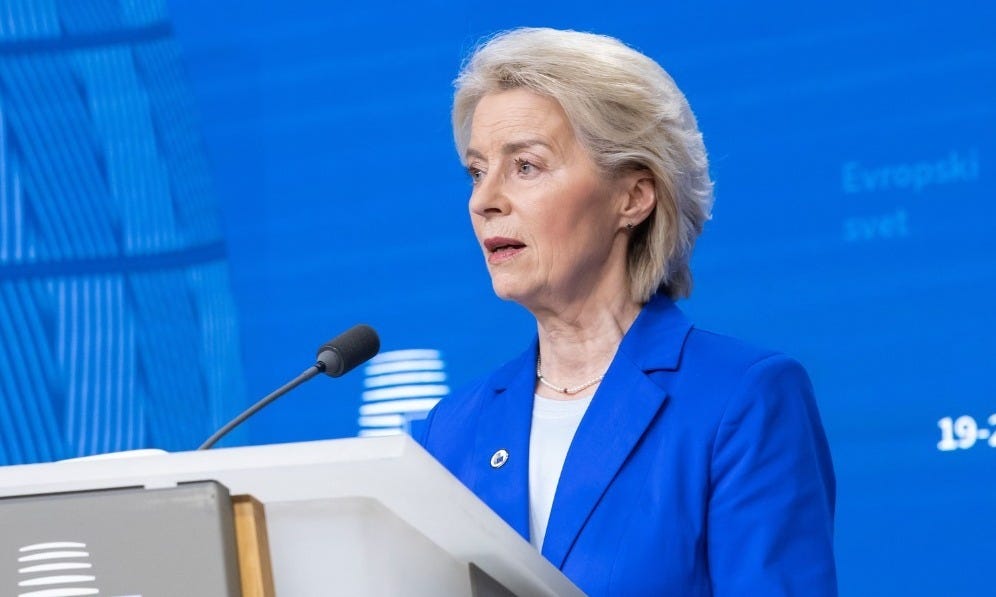
On May 12, 2026, European Commission President Ursula von der Leyen announced in Copenhagen that a legislative proposal on age-gating for social media could be introduced before the end of summer, pending recommendations from an EU expert panel on child safety online
Current EU law leaves each of the bloc’s 27 member states free to set its own minimum age for social media access — a patchwork that a harmonized European rule would replace
An age-verification app developed at the EU’s request has already been challenged by security researchers who say they found significant vulnerabilities in its design
A political signal, not yet a law
Speaking in Copenhagen on May 12, 2026, at a summit on artificial intelligence and children, Ursula von der Leyen — president of the European Commission, the EU’s executive arm — put forward the idea of “deferred access” to social media for minors, meaning a minimum age threshold below which platforms would be barred from granting sign-up, and suggested that a legislative proposal along these lines could be submitted before summer’s end. She was careful to condition the announcement on the findings of a European expert committee on child safety online, whose report is expected in the coming months.
This is not yet a draft bill. It is a deliberate political signal sent to member states and platforms alike: the era of fragmented national self-regulation may be approaching its end.
A regulatory patchwork Brussels wants to fix
Under current European law, each EU member state sets its own rules on the minimum age at which minors may access social media. The result is a patchwork: some countries have set no limit at all, others defer entirely to the platforms’ own terms of service — which virtually no one reads and no one enforces. France has been pushing actively for 15 as the minimum age, a position it is now championing simultaneously at home and at the European level.
A bloc-wide harmonized rule would change the landscape fundamentally. For platforms, a single European standard would replace up to 27 different national obligations. For member states, it would shift political accountability toward Brussels — a prospect that cuts differently depending on each government’s relationship with digital regulation and with its own electorate.
Age verification: the enforcement problem no one has solved
The announcement immediately surfaces the question that every proponent of age limits tends to sidestep: how do you verify a user’s age without building a mass digital identity registry? The Commission has promoted an age-verification app developed at its request, billed as meeting the world’s highest privacy standards and described as “coming soon.” Security specialists quickly claimed to have identified serious vulnerabilities in the app’s code — an embarrassing setback for a tool meant to serve as the technical backbone of future legislation.
This is not a peripheral detail. Without a robust verification mechanism, any minimum-age law risks becoming a statement of intent rather than an enforceable rule. The alternatives on the table — credit card verification, ID-based checks, parental delegation — each carry practical limits or data-protection implications that European regulators themselves struggle to accept.
Analysis: four tensions the announcement leaves unresolved
Four structural tensions undercut the announcement’s apparent simplicity.
① The political timing. The choice of Copenhagen — capital of a country with a strong track record on digital policy — as the venue for this announcement may have been designed to project momentum and credibility at a moment when the expert panel has not yet reported. The sequence is notable: France pushing at home, other member states watching, the Commission moving to set the terms of debate before the legislative window narrows ahead of the summer recess.
② The age threshold. No specific limit has been formally proposed. France advocates 15. These are not arbitrary numbers — each year of age difference represents an entire cohort of teenagers affected, and a meaningfully different enforcement burden for platforms. The expert committee will need to weigh in, and it is plausible that its recommendations will become the principal fault line in negotiations among member states with very different demographic profiles and cultural attitudes toward parental authority and digital access.
③ Platform economics. Meta, TikTok, Snapchat and their peers already operate voluntary age-declaration mechanisms that users routinely bypass, according to observations by multiple regulatory bodies. A binding legal obligation would cut into their business model: minors would represent a significant share of user engagement on those platforms. Platforms are likely to argue for shared responsibility with parents rather than exclusive corporate liability — and that argument may prove to be the central fault line in the legislative negotiation.
④ The real question: protection or control? No advocate of this measure frames it this way — which is precisely why the question deserves to be asked. A generalized age-verification system, even an anonymized one, constitutes an unprecedented digital identification infrastructure for Europe. The technical safeguards announced have already been challenged. The line between a child-protection tool and a population registry is not theoretical — it depends entirely on the robustness of the legal and technical guarantees put in place, and on their durability across future political cycles. Europe enacted the GDPR to protect personal data. It enacted the Digital Services Act to regulate harmful content. It is now moving to regulate access itself. Whether those three layers of regulation reinforce one another — or create a surveillance architecture no one intended — is a question worth watching.
The bottom line
Brussels has regulated data with the GDPR, harmful content with the DSA, and is now targeting access itself.
Can Europe protect children online without constructing, piece by piece, an identification infrastructure that future governments — less well-intentioned ones — could one day turn against every user on the network?
Sources: France Info · AFP