
EU energy imports: the Iran war's hidden dependency shift

The EU is pointing to a 1.2% drop in LNG imports since the Iran conflict began — but the headline figure conceals a reshuffle of suppliers that may have deepened Europe’s geopolitical exposure at the very moment it claims to be building resilience.
At a Glance
American LNG now accounts for 60% of EU imports — up from 56% a year ago — making the United States Europe’s dominant gas supplier during a crisis it had no hand in creating.
Russian LNG deliveries to the EU rose between 16% and 25% year-on-year depending on the period measured, a quiet reversal of the decoupling drive launched after Moscow’s 2022 invasion of Ukraine.
Of the €60 billion Europe has spent responding to the energy shock triggered by the Iran war, as little as €2 billion — roughly 3.3% — may have gone toward electrification, the only structural measure that permanently reduces fossil fuel dependence.
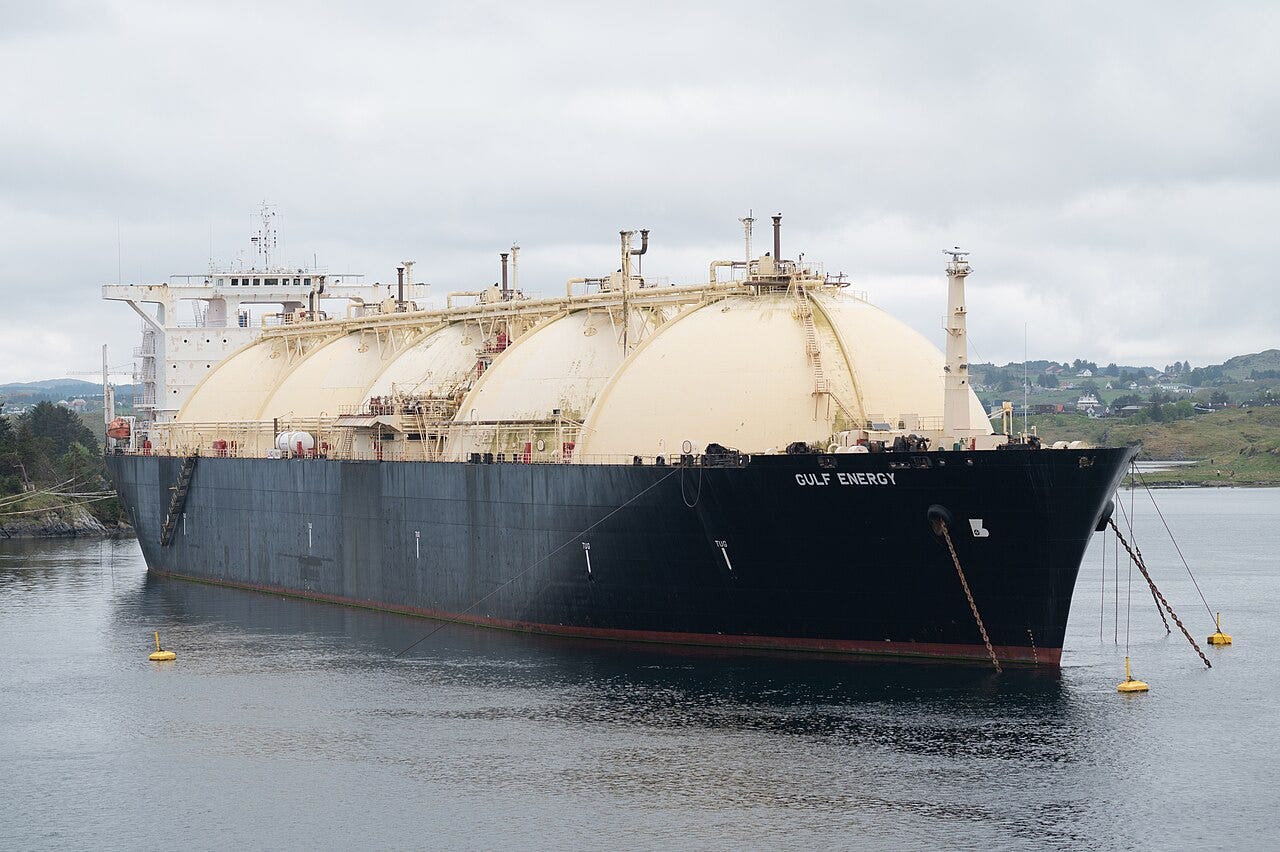
This image is used for illustrative purposes only.
One hundred days into the war in Iran, the European Union has a number it can point to: a 1.2% decline in liquefied natural gas imports since March 2026. Add in the United Kingdom’s 20% drop and the trend looks, at first glance, like a European energy system learning to adapt.
Look more closely at the numbers, and a different picture emerges. What the EU has reduced is its exposure to one region — the Gulf, where Iran’s military pressure on the Strait of Hormuz has disrupted Qatari shipments. What it has expanded is its dependence on two suppliers whose geopolitical interests diverge from Europe’s in ways that could matter enormously: the United States and Russia. The real question isn’t whether Europe is importing less. It’s who now holds the key to European energy supply.
What the headline numbers hide
The analysis by the IEEFA — the Institute for Energy Economics and Financial Analysis, an independent research group that tracks energy markets and the transition away from fossil fuels — covering the first hundred days of the Iran conflict shows deep divergence among EU member states.
While the European average points to a modest decline, Germany — the bloc’s largest industrial economy and its biggest LNG importer — increased its purchases by 72% year-on-year between March and May 2026. Italy, already at risk of missing its 2030 emissions targets, and Belgium, a major redistribution hub for gas across northern Europe, also raised their imports over the same period.
These three countries are not marginal players. Germany’s industrial gas demand alone carries enough weight that any sustained increase in its fossil fuel imports signals a structural pressure, not a short-term blip. The EU-wide average is pulled down by countries that have already moved furthest in their energy transition — Spain chief among them, where low-carbon sources supplied 75% of electricity in 2025, according to the energy think tank Ember. The aggregate hides a growing fault line between those managing the crisis with alternatives and those absorbing it by deepening their fossil exposure.
From Tehran to Washington and Moscow
The IEEFA data make this recomposition visible in precise terms.
Iran’s effective control of the Strait of Hormuz — the narrow waterway through which most of Qatar’s LNG exports travel — did reduce European purchases of Qatari gas. But that missing volume wasn’t replaced by renewables or demand reduction. It was replaced, overwhelmingly, by American and Russian supplies.
Between March and May 2026, the United States accounted for 60% of EU LNG imports, up from 56% a year earlier (some Q1 estimates put the figure closer to 63%; 60% reflects the March–May average). Norway surged 84%, Algeria 11%. And Russia — whose gas the EU formally committed to phasing out following the invasion of Ukraine in 2022 — saw its LNG deliveries to Europe rise between 16% and 25% year-on-year, depending on the measurement window: Q1 official IEEFA data show a 16% increase; the broader March–May period yields 25%. The direction is unambiguous either way.
A word of caution on the Russian figures: they come against a depressed baseline, since volumes had already fallen sharply after 2022. But the direction of movement carries geopolitical significance regardless of base effects. It would be premature to characterize this as a coordinated Kremlin strategy rather than opportunistic commercial behavior. What is clear is the effect: Russia is quietly rebuilding its foothold in Europe’s energy geography at the precise moment a new crisis might have been expected to accelerate the break.
The American dimension is different in nature, but no less consequential. A 60% market share in EU LNG imports is not a neutral commercial relationship — it is a position of structural leverage. At a time when transatlantic relations are navigating friction over trade and defense burden-sharing, that dependency is a variable that neither Brussels nor Washington can entirely ignore.
€60 billion spent — but not on fixing the problem
EU member states and the bloc’s institutions have mobilized more than 210 emergency measures in response to the Iran energy shock, generating a combined bill estimated at €60 billion (approximately $65 billion at current exchange rates).
According to Alice Moscovici, a researcher at the Institut Jacques Delors — a Paris-based European policy think tank founded in the tradition of the former European Commission president Jacques Delors — as little as €2 billion of that total, roughly 3.3%, may have been directed toward electrification measures. That figure, drawn from a researcher’s public statement rather than a published audit, should be treated as an indicative estimate rather than a confirmed accounting. But the underlying pattern it points to is consistent with how European governments have historically responded to energy crises: by subsidizing consumption rather than transforming it.
Price-support measures — tariff caps, household subsidies, emergency transfers — protect citizens from immediate bill increases. They do not reduce gas demand. They preserve the import volumes that created the vulnerability in the first place. Electrification does the opposite: installing a heat pump permanently reduces household gas consumption; rooftop solar cuts power bills over decades; an electric vehicle eliminates fuel imports for its lifetime.
Consumer behavior is already moving in that direction, with or without policy support. Heat pump sales rose 25% in France, Germany, and Poland in the first months of 2026. UK-based energy supplier Octopus Energy recorded a 51% spike in sales in the first three weeks of March compared with the previous month. British government data show that March 2026 saw the highest monthly total of domestic solar installations since 2012. These are market signals. They have yet to be matched by public investment at anything approaching comparable scale.
Why Spaniards pay less than Italians — and what it means
The gap between member states isn’t just about how much gas each country imports. It’s about how deeply fossil fuel prices are embedded in their electricity markets — and that requires understanding a market mechanism called the merit order.
In most European electricity markets, prices are set at each moment by the last, most expensive power plant needed to meet demand — a system loosely comparable to how U.S. airlines price seats: the cost of the last unit sold sets the price for all units. In countries where that last-needed plant is typically a gas-fired facility, electricity prices track gas prices closely. When gas markets spike — as they have since the Iran conflict began — electricity follows.
Countries that have built substantial renewable capacity are starting to displace that dynamic. When solar and wind output is high, they push gas plants lower in the dispatch order, reducing the marginal price. Spain, with 75% of its electricity from low-carbon sources, is experiencing this in measurable terms.
Data from the European Climate Neutrality Observatory — an EU-funded research body tracking member states’ progress toward climate targets — show that across the first five months of 2026, the ratio between electricity prices and gas prices was more than twice as favorable in Spain as in Italy or Poland, countries still heavily reliant on fossil-fueled generation.
The countries that invested in transition are, right now, paying less for energy and absorbing geopolitical shocks better. The countries that deferred that investment are paying the double cost of high prices and continued vulnerability.
Analysis
A pattern four years in the making
The Iran crisis is not the first time Europe has announced a structural break from fossil fuel dependence. After Russia invaded Ukraine in February 2022, the European Commission launched REPowerEU — a plan to cut Russian gas imports by two-thirds within a year and achieve full independence from Russian fossil fuels by 2030. Renewable energy targets were raised, permitting procedures accelerated, and emergency LNG infrastructure fast-tracked. Four years later, the aggregate import dependency has not fundamentally changed — it has changed address. The response to the Iran shock reproduces the same logic: replace the supplier, preserve the system.
Who benefits from the status quo
The 3.3% electrification share of emergency spending is not an administrative accident. It reflects a distribution of political and economic interests within the EU. Member states whose industrial bases are deeply integrated with natural gas — Germany and Italy foremost — have historically resisted acceleration of the fossil transition, in part because the costs are concentrated and immediate while the benefits are diffuse and long-term. LNG terminal operators, gas grid companies, and petrochemical industries have durable lobbying presence in Brussels and in national capitals. And governments that have shielded households from energy price increases through subsidies have, in doing so, stabilized a demand base that perpetuates import dependence.
The inequality the market is already pricing
The merit order gap between Spain and Italy is not a future risk — it is a present reality. A Spanish manufacturer running an electric-intensive process is, right now, paying structurally less for that process than its Italian counterpart. As the EU competes globally on industrial competitiveness, this internal energy price divergence is a variable that will compound over time. The countries that treated the 2022 and 2026 crises as windows to accelerate transition are building a structural advantage; those that used them to buy time are accumulating a structural disadvantage.
The question no one is officially asking
The language of “energy resilience” has become standard Brussels vocabulary. But resilience implies the capacity to absorb a shock without structural damage. Transferring 60% of LNG supply to a single partner — the United States — during a period of transatlantic friction over trade and defense, while simultaneously allowing Russian LNG volumes to recover, raises a question that the data from these hundred days make difficult to avoid: at what point of supplier concentration does the EU acknowledge it has rebuilt, in American form, the same dependency it spent four years trying to dismantle in Russian form?
The bottom line
The Iran war has done what the Ukraine war began: it has revealed that Europe has no structural answer to fossil fuel supply shocks — only substitution strategies. The real break has not happened. It did not happen with REPowerEU in 2022. It has not happened with the 210 emergency measures of 2026. It will only happen when member states begin directing emergency energy spending toward reducing demand rather than rerouting supply.
What remains open: how many supply shocks — Russian in 2022, Iranian in 2026 — does it take before the substitution logic gives way to an exit logic? And who, within the EU, gets to decide that threshold — markets, member states, or Brussels?
Sources: Institute for Energy Economics and Financial Analysis (IEEFA) · Euronews · Ember · European Climate Neutrality Observatory (ECNO) · Institut Jacques Delors