
Energy giants accused of greenwashing across Europe
Four of Europe's biggest energy suppliers — Engie, Eni Plenitude, Shell, and TotalEnergies — are facing a coordinated legal and administrative offensive spanning eleven countries.

On June 16, 2026, consumer organizations filed a joint complaint with the European Commission and national authorities, alleging that these companies have deceived customers with false environmental promises.
At what point does a “climate commitment” become a sales tactic?
At a Glance
The European Consumer Organisation (BEUC), the EU’s leading consumer advocacy body, together with 12 organizations from 11 countries, filed a coordinated administrative complaint with the European Commission and national authorities against Engie, Eni Plenitude (the retail energy arm of Italy’s state-owned ENI group), Shell, and TotalEnergies for misleading environmental claims.
In France, the CLCV (Consommation, Logement et Cadre de Vie, France’s main consumer protection association) filed a separate civil lawsuit before the tribunal judiciaire de Nanterre — roughly equivalent to a U.S. district court — against Engie, targeting its environmental marketing claims. The two actions — administrative and civil — run in parallel and reinforce each other.
TotalEnergies was already convicted on October 23, 2025 by a Paris civil court for deceptive commercial practices linked to its carbon-neutrality advertising — a landmark ruling that gives the new complaints significant legal weight.
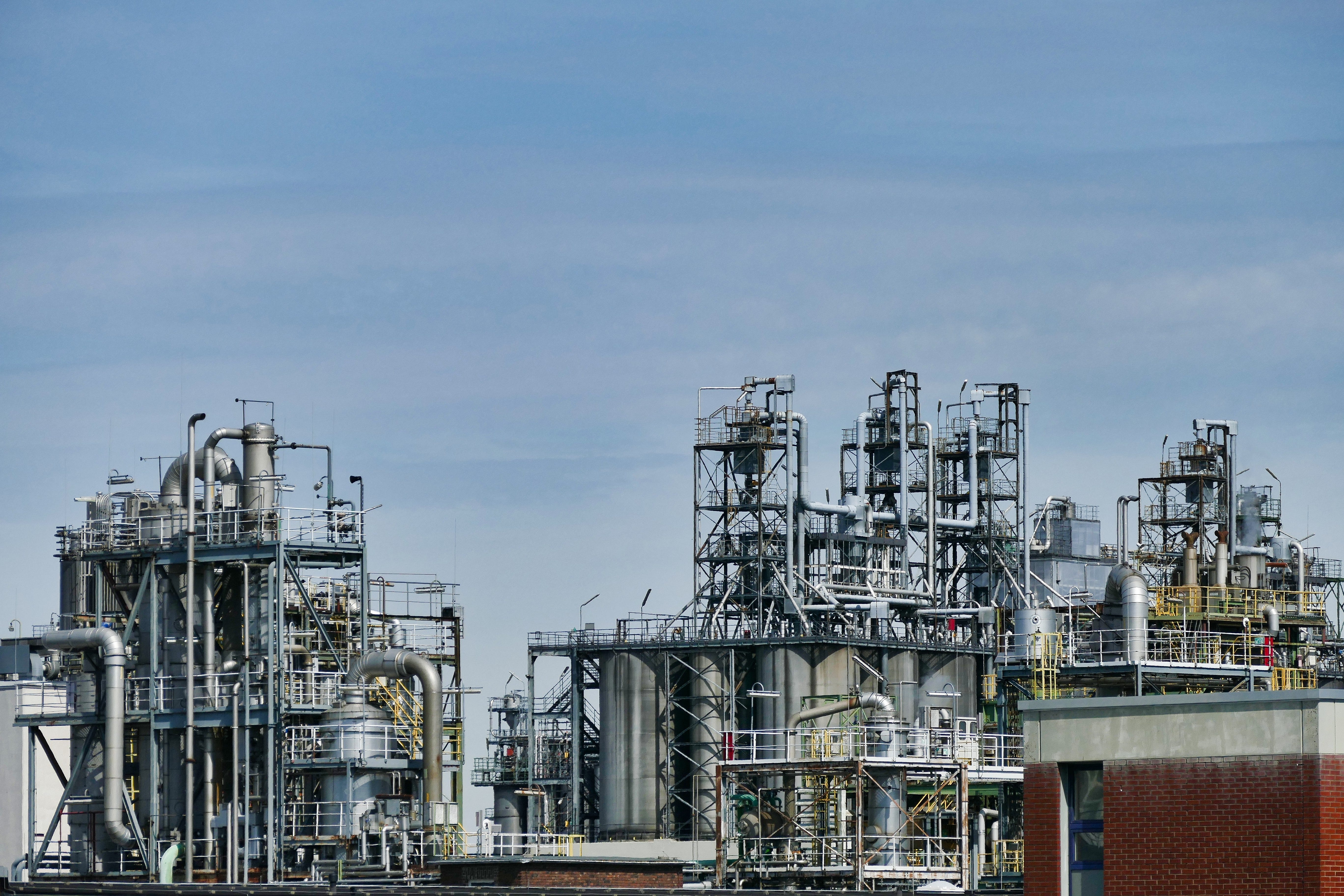
This image is used for illustrative purposes only.
A two-track strategy
The architecture of this campaign is deliberately layered. On one track: an administrative complaint filed with the European Commission and with national consumer protection authorities in each of the eleven participating countries. This is the EU-level lever, coordinated by BEUC — the Brussels-based umbrella group that represents consumer associations before EU institutions.
On the other: a direct civil lawsuit in France. The CLCV filed before the tribunal judiciaire de Nanterre — France’s civil court system — targeting Engie specifically for “misleading commercial practices” related to its environmental claims.
This dual approach is no improvisation. BEUC and its affiliates have used the same administrative complaint mechanism before, previously targeting plastic bottle manufacturers and airlines. Energy is the third front — and the most politically exposed.
Selling green on fossil foundations
The core accusation is pointed: these companies allegedly charged premium prices for contracts marketed as “green energy” or for fossil-fuel products dressed up with environmental claims that the consumer groups say are misleading.
The organizations are demanding three things from regulators: force these suppliers to stop using deceptive green marketing claims; impose fines if they continue; and require the companies to compensate consumers who paid a green premium based on claims that cannot be substantiated.
The central legal concept is “misleading commercial practices” — a standard embedded in European consumer law under the EU’s Unfair Commercial Practices Directive. This is not a criminal fraud charge; it is a challenge to the truthfulness of marketing arguments, on terrain where courts have grown less forgiving.
A precedent that changes the landscape
The legal context matters enormously here. On October 23, 2025, the Paris civil court convicted TotalEnergies for deceptive commercial practices — following a complaint brought by the NGOs Greenpeace France, Les Amis de la Terre France, and Notre Affaire à Tous — over advertising that promoted the company’s commitment to carbon neutrality by 2050.
That ruling was a landmark: for the first time in France, a court found that a carbon-neutrality pledge used as a marketing argument could constitute a deceptive practice if it lacked verifiable, robust foundations. The four companies now facing complaints are in a structurally more vulnerable position as a result. The plaintiffs have a domestic court ruling to anchor their case before the European Commission.
A business model running out of time
Behind the complaints lies a deeper tension — and a ticking regulatory clock. The standalone Green Claims Directive, which would have imposed the most stringent substantiation requirements on environmental marketing, was withdrawn by the European Commission in June 2025 following political pushback over its potential burden on smaller businesses. But its withdrawal has not left a regulatory vacuum.
From September 27, 2026, the Empowering Consumers for the Green Transition Directive (EU 2024/825) becomes enforceable across all EU member states. Under its terms, generic environmental claims such as “eco-friendly” will be prohibited unless supported by recognized excellent environmental performance, and sustainability labels must be based on third-party certification or established by public authorities. Claims that a product has a neutral, reduced, or positive impact on greenhouse gas emissions — when those claims rely on carbon offsetting — will be explicitly banned.
The complaints filed on June 16 could therefore serve as an early stress test, filed just 103 days before that enforcement deadline. If national consumer protection authorities open formal investigations, they will effectively be road-testing the legal logic that becomes mandatory law in September.
For consumers, the stakes are concrete: how many people signed “green” energy contracts and paid a green premium on the strength of environmental claims that may prove unfounded? That question — which the plaintiffs raise explicitly — is not resolved by fines alone. It implies individual consumer compensation, a remedy still rare in European consumer law. Under EU consumer enforcement rules, fines of up to 4% of annual turnover in the relevant member states may apply.
For the major energy companies, pressure is mounting from every direction: shareholders, regulators, NGOs, and now civil courts. As of publication, none of the four targeted companies had issued a public response to the accusations.
The bottom line
The question is not only whether these four companies misled their customers. It is whether the entire premium “green energy” market can be reconciled with the reality of a European power mix still heavily dependent on fossil fuels. With a new enforcement regime weeks away, the window for self-correction is closing. What will be on trial — before courts and regulators alike — is not just the marketing copy of four corporations. It is the whole model of profiting from a transition that has not yet happened.
Sources: France Info · France Info (Oct. 2025) · CLCV · European Consumer Organisation (BEUC) · European Commission (ECGT Directive)