
easyJet faces Italian antitrust probe over baggage fee opacity
Italy's competition authority opens a formal investigation into easyJet's online booking practices — a case that exposes a structural flaw at the heart of Europe's low-cost aviation market.

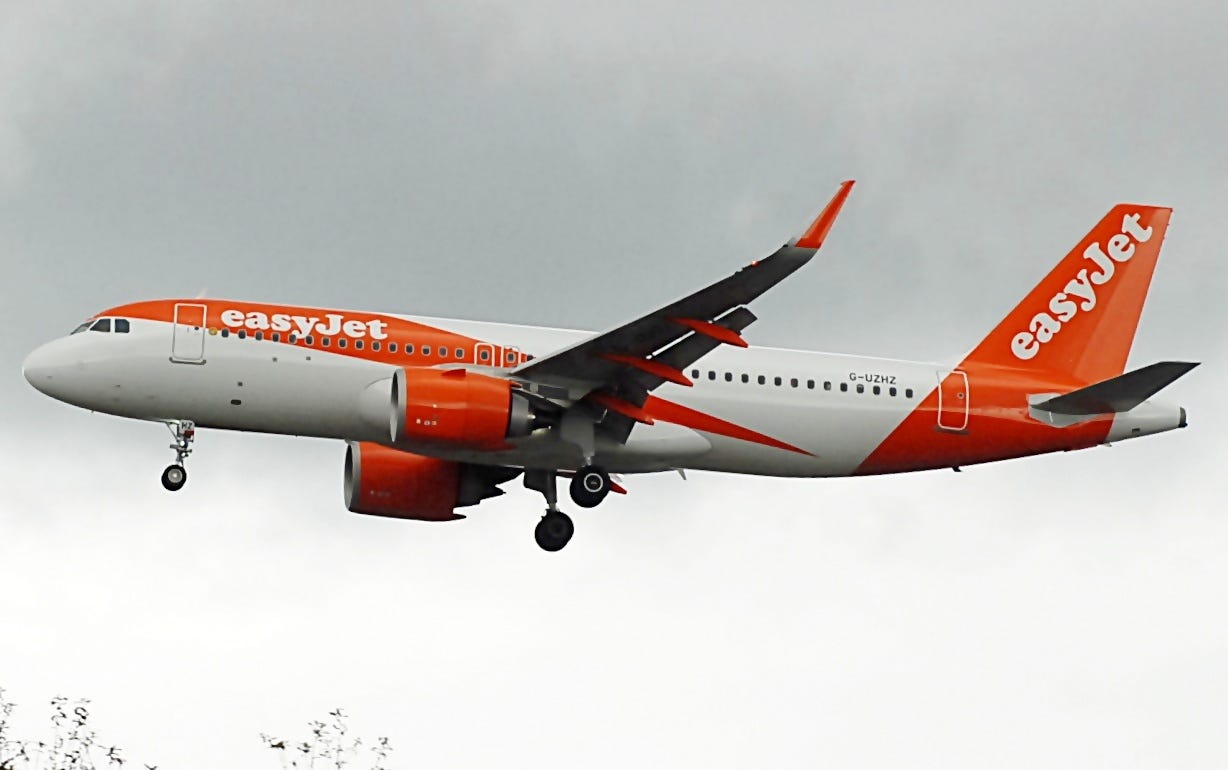
This image is used for illustrative purposes only.
At a Glance:
Italy’s competition authority, the AGCM, opened a formal investigation into easyJet on May 26, 2026, over allegedly unfair commercial practices related to how baggage fees are displayed online
The regulator says easyJet’s booking system pre-selected a baggage package for both legs of a round trip and displayed only an average price — making it difficult for customers to opt out for a single flight segment
This is not easyJet’s first run-in with Italian regulators: the carrier was fined €2.8 million in 2021 for refusing cash refunds during the pandemic
You think you’re booking a flight. You’re actually purchasing a product you never chose.
Italy’s competition watchdog, the Autorità Garante della Concorrenza e del Mercato (AGCM) — roughly equivalent to the Federal Trade Commission in its consumer protection role — launched a formal investigation into easyJet on May 26, 2026, targeting how the airline presents baggage fees on its website and mobile app. The core allegation: a pre-selected add-on package combining checked luggage and sports equipment for round-trip flights, displayed as a single average price — regardless of whether the passenger intended to use it.
How the booking trap works
The mechanism the AGCM describes operates through inertia. EasyJet’s platform defaulted, for any round-trip booking, to a bundle covering checked baggage and sports equipment for both legs of the journey. The displayed price was a blended average across the entire service — not a per-segment cost. For any passenger wishing to add luggage for only one leg, the process required interrupting the booking flow to manually change this setting, a step most users were unlikely to notice or successfully complete.
The investigation will determine whether this configuration constituted a genuine restriction on consumers’ ability to make fully informed choices. In the broader framework of European consumer law — including the EU’s Unfair Commercial Practices Directive — such arrangements may qualify as misleading commercial practices. EasyJet has not issued any public statement on the proceedings.
Italy’s record against low-cost carriers
The AGCM has built one of Europe’s more aggressive track records in pursuing the low-cost aviation sector. In May 2021, the authority fined easyJet €2.8 million — alongside Ryanair and Volotea, a Spanish low-cost carrier — after all three refused to offer cash refunds for flights canceled when Italy lifted its COVID-19 travel restrictions, issuing vouchers instead. EasyJet challenged the decision, but Rome’s Regional Administrative Court rejected its appeal in February 2025.
The Ryanair case signals how far the regulator is prepared to go. In December 2025, the AGCM imposed a €255 million fine on the Irish carrier — an exceptional figure by any European standard — for abuse of dominant position on domestic Italian routes. The charge: a systematic strategy to shut travel agencies out of purchasing its tickets, using facial recognition checks, payment blocks, and mass account deletions. Ryanair immediately announced it would appeal.
Analysis: pricing transparency as Europe’s blind spot
The easyJet case is not an isolated incident. It exposes a structural tension at the heart of the low-cost air travel business model across Europe.
The price displayed at the entry point of a booking process almost never reflects the price ultimately paid. Seat selection fees, cabin baggage fees, checked luggage fees, check-in fees, payment processing fees: each item is an independent revenue line, engineered for low visibility. This is what behavioral economists call drip pricing — the deliberate, incremental disclosure of additional costs as the purchase process advances, precisely when the consumer is already psychologically committed to the transaction.
European regulators have tried to respond. The EU’s Digital Services Act and the 2019 Omnibus Directive, which member states were required to transpose into national law by 2022, impose stricter online pricing transparency requirements. But their application to the aviation sector remains uneven across EU countries, and national regulators like the AGCM remain the primary enforcement lever.
For a North American reader, the closest analogy would be a mobile carrier that pre-checks insurance and service bundles during an online contract renewal — practices that the FTC and several U.S. states have increasingly pursued under the label of dark patterns: interfaces deliberately designed to produce unintended consumer decisions.
For a carrier of easyJet’s scale — one of Europe’s largest low-cost operators, transporting tens of millions of passengers annually — even marginal per-booking opacity across its Italian routes could generate significant revenue. That is precisely the math Italian regulators appear determined to challenge.
The bottom line
The question this investigation raises goes beyond easyJet’s compliance. It is structural: can national regulators, even the most aggressive among them, meaningfully constrain a business model whose viability depends on monetizing consumer inattention? And if Italy is moving faster than its European neighbors, is it because its legal framework is more robust — or because other regulators have simply not yet decided to open this front?
Sources: Euronews · AGCM (Autorità Garante della Concorrenza e del Mercato)