
Did France's justice system fail Lyhanna?
A girl vanishes. Her body is found a week later in an abandoned grain silo. The prime suspect had accumulated multiple rape complaints from minors — and had never once been called in for questioning.

France is in shock, its leaders furious — and the inquiry has only just begun.
At a glance
Lyhanna, an 11-year-old middle schooler from Fleurance, a small town in the Gers department of southwestern France, disappeared on May 29, 2026. Her body was formally identified on June 5 through DNA analysis.
The prime suspect, Jérôme Barella, a 41-year-old local man, had been the subject of several complaints for rape and sexual assault against minors — including a 2025 complaint for the rape of a 10-year-old girl — without ever having been questioned by investigators.
President Emmanuel Macron condemned what he called a malfunction; Justice Minister Gérald Darmanin called it “an immense failure” and threatened disciplinary sanctions against judicial officials.
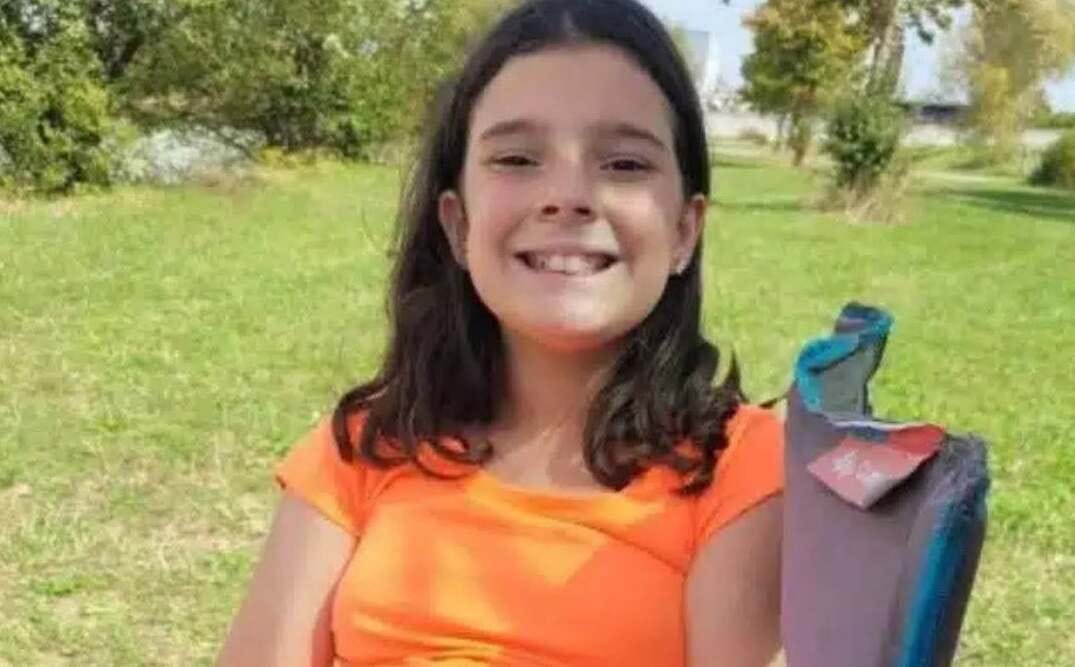
This image is used for illustrative purposes only.
The facts: a cascade of ignored complaints
On May 29, 2026, Lyhanna left her middle school in Fleurance — a small rural town in the Gers, a department in southwestern France — and climbed into a car driven by Jérôme Barella. She never came home. On June 4, her body was found inside the silo of an abandoned agricultural site in Puycasquier, roughly ten miles away — a site where Barella had worked eight years earlier. On June 5, the chief prosecutor of Agen confirmed the identification through DNA comparison. The cause of death had not yet been established.
What has thrown France into an institutional crisis is what the investigation revealed about the period before the disappearance: Barella, a 41-year-old father, had been the subject of multiple complaints for rape and sexual assault against minors — including a complaint filed in the Haute-Garonne department in 2025 for the rape of a 10-year-old girl — without ever being summoned for questioning. A judicial file existed. Red flags had been raised. None of them triggered an operational response.
Cassiopée: the system that was supposed to know everything
At the center of the technical failure lies Cassiopée, the central case-management software of the French judicial system, built in 2008. When a complaint is filed with the police or gendarmerie (France’s national police force covering rural areas), it is eventually transmitted to the local prosecutor’s office and entered into Cassiopée — a database accessible to all magistrates that tracks personal details, contact information, and the full procedural history of anyone who has ever appeared in a case, including those closed without prosecution.
In theory, Barella’s name should have appeared in the system multiple times. In practice, his profile triggered no priority alert. Why? According to Manon Lefebvre, national secretary of the Syndicat de la magistrature, France’s magistrates’ union, profiles accumulating multiple closed cases are absolutely not exceptional. The volume of cases is such that magistrates are forced to make a “hierarchy of urgency.” Aurélien Martini, deputy secretary-general of the Union Syndicale des Magistrats, another judicial union, added that the main criterion for prioritizing a case file is not the number of prior complaints but whether ongoing contact exists between the suspect and a potential victim — a logic designed primarily for domestic violence cases.
Jean-Pierre Rosenczveig, a retired magistrate and former president of the juvenile court of Bobigny — a position he held from 1992 to 2014 — went further. Two databases could have flagged Barella in the 2025 case: the TAJ (Traitement des Antécédents Judiciaires, France’s national criminal records database maintained by law enforcement) and Cassiopée. They may have been consulted, he acknowledged, but were poorly interpreted. The deeper structural problem: the files “are not performant enough,” critical information “is not entered into them,” and they “are not consulted effectively.”
A political crisis that goes beyond individual tragedy
The response from France’s executive branch was swift and unusually blunt. Speaking from Montenegro, President Macron said he was “shocked” and condemned what he described as a dysfunction, adding that he did not want to hear “any argument based on resources” in this case.
On Friday evening, speaking on TF1, France’s leading commercial broadcaster, Justice Minister Gérald Darmanin went further. Calling the situation “an immense failure” [translated from French], he acknowledged that the judiciary had not been able to protect the girl and that the handling of the complaints had fallen short. Pending the outcome of an ongoing administrative inquiry, he announced his intention to pursue disciplinary sanctions against magistrates for “failures” and “professional misconduct.”
This punitive rhetoric deserves scrutiny. The administrative inquiry has not yet concluded. No magistrate has been formally implicated. The presumption of innocence extends to public officials as well as suspects. What is established, however, is that the system fell short — not through malice, but through overload, under-resourcing, and the inadequacy of its tools. As of the time of publication, no statement had been made by Barella’s defense.
Analysis: a systemic failure, not an individual fault
The Lyhanna case is not — or not only — the result of individual human error. It exposes a fragile institutional architecture at multiple levels.
The first is resources. Rosenczveig noted that while France’s justice budget received annual increases of 8% for four consecutive years under Éric Dupont-Moretti, who served as Justice Minister from 2020 to 2024, the last major structural investment in judicial capacity may date back to 1981. According to Rosenczveig, France would appear to lag behind Germany, Spain, and Italy in its ratio of magistrates to population. Overburdened prosecutors do not triage cases by objective dangerousness but by procedural urgency.
The second failure is technological. Cassiopée is an 18-year-old piece of software whose limitations have been documented for years. It centralizes data but does not analyze it. It generates no automatic alert when an individual accumulates multiple complaints for sexual violence against minors. Software designed to streamline judicial administration cannot substitute for an active policy of identifying and prioritizing high-risk profiles.
The third failure is structural: France’s complaint-investigation-follow-up chain suffers from geographic fragmentation that allows a mobile suspect to dilute his judicial history across multiple jurisdictions. Barella is linked to complaints filed across at least two departments — Haute-Garonne in the southwest and Côtes-d’Armor in the northwest. No single prosecutor’s office had a consolidated view of the full profile. Prior cases in France had already drawn attention to the same structural weaknesses without producing lasting reform.
The bottom line
The question is not whether magistrates failed — the inquiry will determine that. The question is whether the framework in which they work was ever designed to succeed.
Lyhanna’s death asks something that no disciplinary sanction can answer: can a democracy that claims to protect children afford to manage predatory profiles with aging software, under-resourced prosecutors, and a judicial architecture that rewards the geographic mobility of a suspect?
Sources: France Info · AFP · France 2