
Chinese espionage in Germany: couple arrested in Munich
A German husband and wife were detained Wednesday on suspicion of funneling classified military technology data to Beijing.

The case lays bare the reach and sophistication of Chinese intelligence operations inside Europe.
At a Glance:
A married couple of German nationality was arrested on May 20, 2026, in Munich and brought before the Federal Court of Justice in Karlsruhe — Germany’s highest federal criminal court — on charges of espionage for China
The two suspects allegedly cultivated contacts within research circles in aerospace, aeronautics, computer science and artificial intelligence, using covers that included posing as interpreters or automotive industry employees
The arrest is the latest in a string of Chinese espionage cases in Germany, including two convictions handed down in 2025 and early 2026
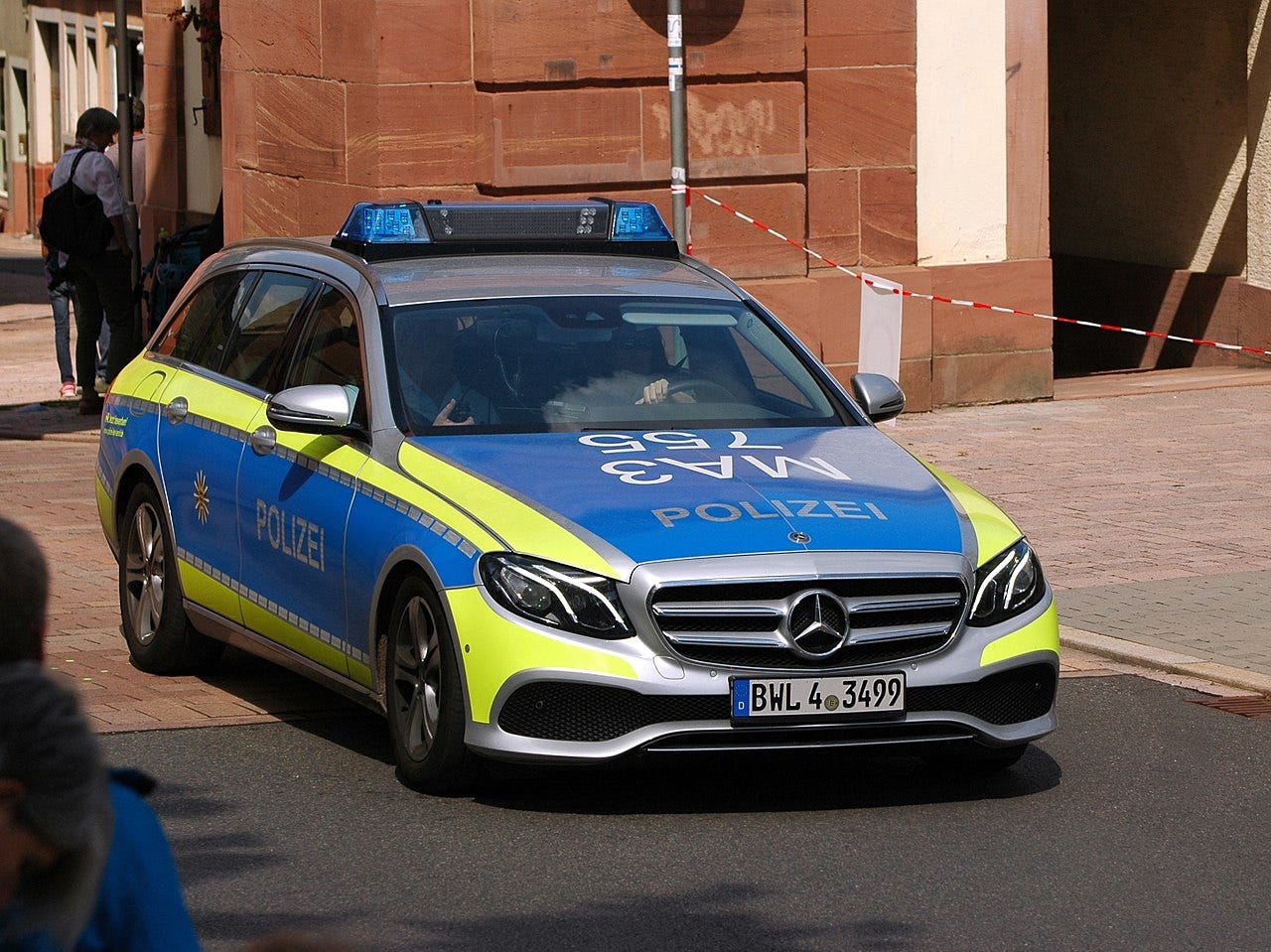
This image is used for illustrative purposes only.
A sophisticated cover operation
Germany’s Federal Prosecutor’s Office announced Wednesday the arrest of a married couple — both German nationals — alongside searches carried out in Munich. The two are accused of gathering intelligence on advanced dual-use technologies — dual-use: those with both civilian and military applications — on behalf of Chinese intelligence services.
What distinguishes this case from previous ones is the method. Rather than directly targeting laboratories or government agencies, the pair allegedly cultivated contacts with researchers active in sensitive sectors — aerospace, aeronautics, computer science, artificial intelligence — using covers that included, at times, posing as interpreters or employees of an automotive firm. The precise range of identities and approaches used remains under investigation. Investigators have not specified how long the network was active, nor the extent of the data the couple may have accessed.
The absence of details on the sensitivity of the intelligence obtained — whether deliberate or a reflection of where the investigation stands — suggests the inquiry is still in its early stages. It would be premature to draw conclusions about the actual damage to Germany’s industrial security.
A systematic espionage target
Germany has for several years been among the Chinese intelligence community’s primary targets in Europe — and not by accident. As the continent’s largest economy, a major technology hub, and one of Beijing’s most important trading partners, it concentrates precisely the kind of assets China has sought to acquire through non-conventional means: patents, industrial know-how, defense-related data.
The recent record makes for sobering reading. In September 2025, a former parliamentary aide to far-right Alternative für Deutschland (AfD) member of parliament Maximilian Krah — himself suspected of financial ties with Beijing and stripped of his parliamentary immunity that same month — was sentenced to four years and nine months in prison for spying for China. In February 2026, a U.S. citizen and former civilian employee at an American military base in southwestern Germany received a two years and eight months prison sentence for offering his services to Chinese intelligence. These are not isolated incidents: they trace the contours of a long-term, methodically pursued influence operation.
What this case reveals about Chinese strategy
The approach described in this investigation — social cultivation rather than institutional penetration — could signal a tactical evolution worth taking seriously. Where earlier operations targeted civil servants or politically exposed figures, this one appears to have aimed at researchers operating below the radar: less protected, less familiar with security protocols, but potentially just as well-informed.
This hypothesis, unconfirmed at this stage by authorities, deserves attention in the design of Europe’s industrial counter-intelligence policies. Academic circles and private research laboratories would appear to be a structurally vulnerable link — often less regulated on security matters than public administrations or large corporations. That could make them a preferred point of entry for adversarial services.
The operation’s sophistication lay not in its technology but in its social invisibility — and that is a harder vulnerability to legislate away.
For European governments and industries alike, the implications are concrete. Research partnerships, academic exchanges, and the open culture of scientific collaboration — all central to Europe’s innovation model — are precisely the environments that operations of this kind are designed to exploit. The economic cost of undetected technology transfers is, by definition, difficult to quantify; the strategic cost could be considerably higher.
The bottom line
Germany arrests, prosecutes, and documents. But the investigation announced Wednesday is barely hours old — searches ongoing, witnesses being heard across multiple states. What this case has already established is a question of method: when the threat operates through ordinary social contact rather than institutional breach, do Europe’s legal and security frameworks have the tools to detect it before it takes root?
Sources: Franceinfo · AFP