
China trained Russian troops for Ukraine
European intelligence agencies have confirmed that China's military trained Russian soldiers in drone warfare — and some have fought in Ukraine.

Beijing’s declared neutrality has been seriously undermined.
At a Glance
In late 2025, roughly 200 Russian soldiers — and potentially several hundred according to broader EU sources — trained at People’s Liberation Army (PLA) facilities across six military sites in China, receiving instruction in drone operations, electronic warfare, and modern combat simulations.
A classified bilateral agreement, signed by senior Russian and Chinese military officers in Beijing on July 2, 2025, formally established the program — verified by Reuters from reviewed documents.
Some of those soldiers were deployed to the Ukrainian front as early as early 2026, including in command positions and within Russia’s elite Rubicon drone warfare unit.
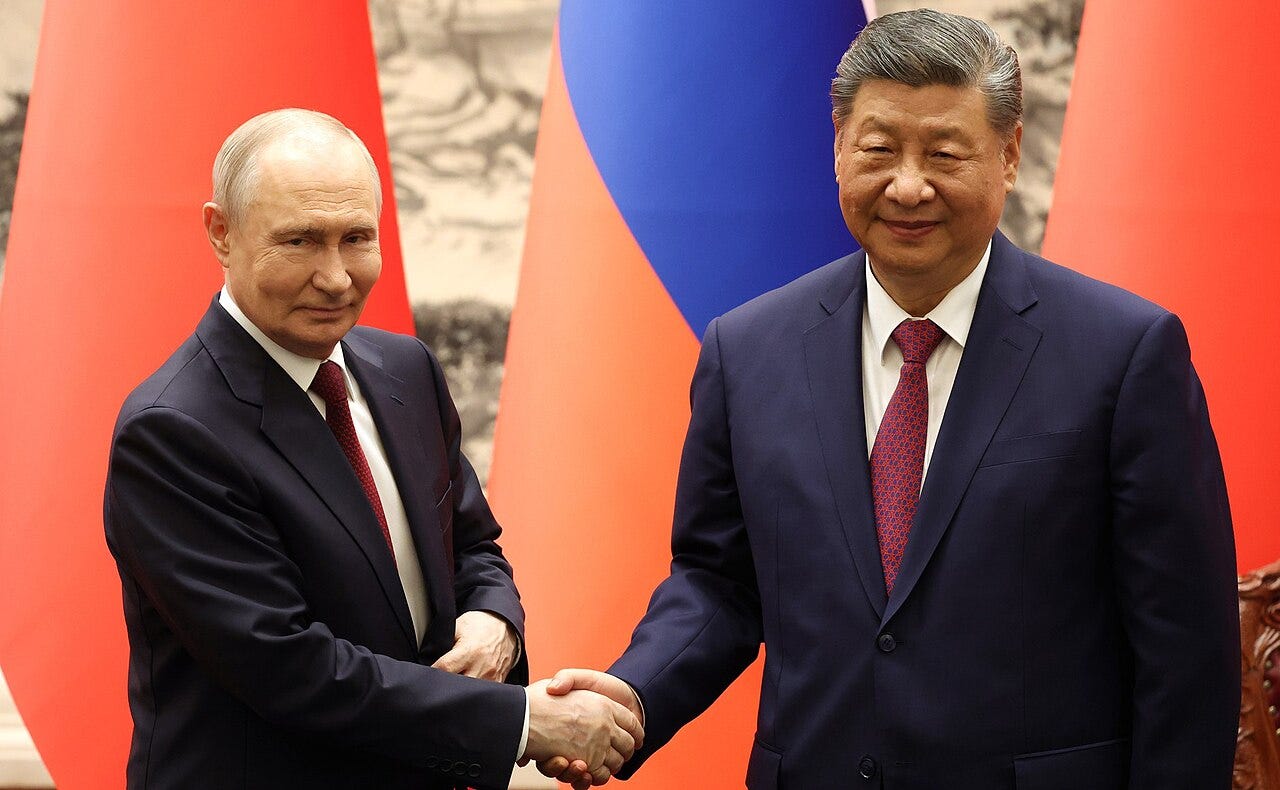
This image is used for illustrative purposes only.
A structured program, not improvisation
This was not an informal exchange between friendly officers. It was formalized in a classified bilateral agreement, signed in Beijing on July 2, 2025, by senior officers from both countries. The document — drawn up in both Russian and Chinese — authorized the deployment of Russian military personnel to Chinese military facilities in Beijing, Nanjing, Shijiazhuang, and Yibin, among other locations. The Shijiazhuang facility houses the People’s Liberation Army Ground Forces Army Infantry Academy.
The training corresponded precisely to the demands of the Ukrainian front: FPV drone operations, directing 82mm mortar fire using reconnaissance drones, electronic countermeasures against enemy drones, and low-altitude air defense. An internal Russian military report from December 2025 described one session involving roughly 50 personnel at the Shijiazhuang facility. Participants ranged in rank from junior sergeant to lieutenant colonel — suggesting the goal was to train instructors who could then pass these skills on to their own units.
Among those trained were members of Rubicon, Russia’s elite frontline drone warfare unit.
What the EU confirms — and what it doesn’t
On June 12, 2026, a senior European Union official confirmed that China had trained “hundreds” of Russian soldiers — particularly in drone warfare — and that some had since been deployed to Ukraine. Reuters, drawing on documents reviewed by three European intelligence agencies, put the figure at roughly 200; the broader EU assessment suggests the total may be higher. The confirmation came nearly four weeks after Reuters and German newspaper Die Welt first published the story on May 19, coinciding with the aftermath of Vladimir Putin’s state visit to Beijing (May 20, 2026), where he and Chinese President Xi Jinping signed a declaration further deepening Sino-Russian “strategic coordination.”
The EU has confirmed the facts. It has not, as of this writing, announced specific diplomatic measures in response. That calculated restraint may reflect the difficulty of sanctioning China further without disrupting already-strained trade ties — though that connection remains a hypothesis, not an established fact.
The program was mutual. According to the same intelligence sources, approximately 600 People’s Liberation Army soldiers spent time at Russian military bases in 2024 and 2025, training in armored warfare, artillery deployment, and air defense systems. Both militaries have also been sharing intelligence on Western-supplied weapons captured on the battlefield — including U.S.-made HIMARS rocket launchers and Patriot air-defense systems, German-made Marder armored vehicles, and American Abrams main battle tanks.
Drones: the war’s decisive technology — and the pivot of cooperation
Since 2022, drones have become arguably the most consequential weapon on the Ukrainian battlefield. Both sides rely heavily on unmanned systems for reconnaissance, targeting, direct strikes, and electronic warfare. Russia has rapidly built out a domestic drone industry, drawing heavily on Chinese components and expertise. Russian military communications, some of which have been leaked, have acknowledged the degree to which Chinese suppliers underpin their weapons systems.
Training Russian instructors in China follows the same logic: this isn’t just about transferring hardware. It’s about transferring operational know-how. By producing officers who will in turn train entire battalions, the program multiplies the reach of a cooperation whose full scale remains difficult to assess from the outside.
Analysis: a neutrality seriously undermined
Since 2022, Beijing has maintained a consistent public line: neutrality in the conflict, calls for peace, and a firm refusal to supply lethal weapons to Moscow. That posture served a precise function — allowing China to preserve its economic relationships with the West while backing a strategic partner viewed as useful to reshaping the global order.
The disclosure of a structured military training program makes that position increasingly untenable. Hosting Russian soldiers in PLA academies, under an agreement signed by senior officers, is no longer in the gray zone of dual-use component exports. It amounts to direct, deliberate, and documented military cooperation.
The question now facing European capitals is what to do about it. The European Union has sanctioned Russia with unprecedented intensity since 2022. It has been far more cautious with China — its second-largest trading partner. That asymmetry may become harder to sustain as Sino-Russian military cooperation becomes more concrete, and more documented.
The Bottom Line
Since 2022, the Ukraine war has rested on an implicit assumption: Russia fights, China provides economic backing, but the line into operational military cooperation holds.
That line now appears to have been crossed.
The real question is no longer whether Beijing has seriously undermined its declared neutrality — the evidence suggests it has. It is whether Western democracies are prepared to draw consequences, and which ones.
Sources: Reuters · Die Welt via Arab News · Euronews · Le Temps · IFRI · France Diplomatie