
Carbon tax money for farmers: Brussels' great policy pivot
The EU may redirect carbon market revenues to farm subsidies amid a fertilizer crisis — a pivot that quietly rewrites European climate policy.

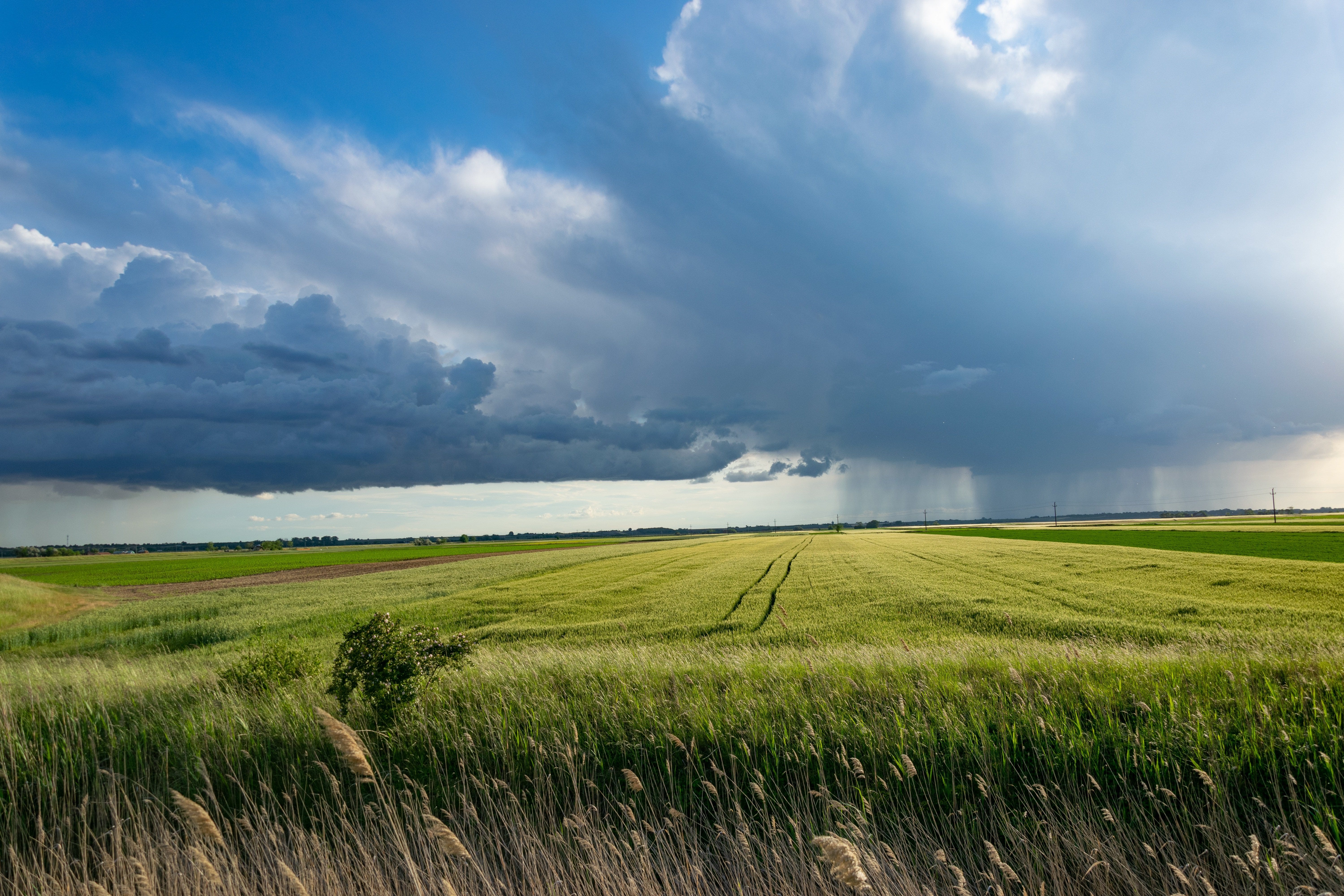
A leaked internal working document from the European Commission — the EU’s executive arm — reveals an unusual strategic reversal: revenues from the EU’s carbon market, known as the Emissions Trading System (ETS), could be redirected toward agricultural subsidies. Fueling the reversal: a fertilizer price crisis compounded by disruptions to the Strait of Hormuz — a critical waterway through which approximately 30% of global fertilizer trade flows — amid ongoing regional conflict in the Middle East. Brussels is expected to unveil its action plan on May 19.
At a glance:
The European Commission is considering using ETS revenues to shield farmers from surging prices for nitrogen-based fertilizers, whose production relies on natural gas for up to 80% of its costs
The plan includes slowing the phase-out of free carbon allowances for the fertilizer sector — a measure estimated to generate an additional €4 billion ($4.4 billion at current rates) for the EU carbon market
The proposal also envisions green ammonia corridors, strategic stockpiles, and carbon contracts for difference (CfDs), a financial instrument designed to guarantee a minimum price for low-carbon production — signaling that EU agricultural policy is increasingly being shaped by geopolitical logic
A geopolitical shock at the root of the fertilizer crisis
Nitrogen-based fertilizers are manufactured using natural gas, which accounts for up to 80% of their production costs. European output was already under strain following Russia’s invasion of Ukraine in 2022, and then again after the EU introduced 50% tariffs on Belarusian and Russian fertilizers in June 2025. Before those duties took effect, Russia supplied roughly 30% of the EU’s fertilizer imports, according to Eurostat — a dependency concentrated among the bloc’s largest agricultural economies: Poland, France, Germany, Spain, and Italy.
The closure of the Strait of Hormuz added a second shock, disrupting nearly a third of global fertilizer shipments. Together, these pressures have driven up production costs across European farming in ways Brussels can no longer absorb politically.
How the carbon market (ETS) would fund farmers
The Commission’s proposal works in two stages. First, it would slow the scheduled phase-out of free carbon allowances currently allocated to the fertilizer sector under the ETS — the EU’s cap-and-trade system, functioning similarly to California’s carbon market or the Regional Greenhouse Gas Initiative (RGGI) on the U.S. East Coast. Under that model, heavy industry must purchase permits to emit greenhouse gases. Slowing the phase-out would allow these industries to emit more for longer, while generating an estimated €4 billion in additional carbon market revenues. The catch: the fertilizer sector would be required to invest those gains in bio-based, circular, or low-carbon fertilizer alternatives — a condition explicitly laid out in the leaked draft.
Second, those revenues would be used to cushion the price spike faced by farmers. The Commission is also considering deploying the Carbon Border Adjustment Mechanism (CBAM) — effectively a carbon tariff applied to imports entering the EU since January 1, 2026 — to protect European producers from cheaper, high-emission fertilizers manufactured abroad without comparable carbon costs. In January, France and Italy jointly requested that imported fertilizers be exempted from CBAM charges, arguing the measure would help preserve the competitiveness of their domestic agricultural sectors.
Winners, losers — and an unresolved tension
The pivot carries a structural contradiction the Commission’s document raises implicitly but does not resolve. The ETS was designed to penalize industrial emissions and channel the resulting revenues back into the green transition. Redirecting those funds toward agriculture — a sector that has, until now, been exempt from the system — could provoke a backlash from energy-intensive industries, which pay into the mechanism without receiving comparable benefits.
Environmental groups are pushing the Commission in a different direction. A coalition including the Center for International Environmental Law, the European Environmental Bureau, and IFOAM Organics Europe, the international federation of organic agriculture movements, sent an open letter to six European commissioners urging them to use the upcoming fertilizer strategy as a turning point rather than a lifeline for the existing model. Lisa Tostado, campaigner on agrochemicals and fossil fuels at the Center for International Environmental Law, argued that the EU’s action plan on fertilizers should mark the moment the bloc stops trying to patch a fossil fuel-dependent model and begins scaling the agroecological solutions that already exist.
The Commission’s implicit defense rests on conditionality: the slowdown in free allowances is framed as contingent on verifiable investment in sustainable alternatives. Whether that condition proves enforceable — or becomes another aspirational clause in EU climate architecture — remains an open question.
The bottom line
Can the EU charge industry for its carbon emissions and redistribute those revenues to a sector that bears none of the same costs — without eroding the instrument’s credibility?
Brussels is presenting this plan as a pragmatic response to a sectoral emergency. But what is really at stake on May 19 is a question of doctrine: the answer Brussels gives in the coming weeks will say a great deal about what the European Green Deal has quietly become.
Sources: Euronews · Eurostat · Center for International Environmental Law · European Environmental Bureau · IFOAM Organics Europe