
Canadian LNG deal: Germany signs, Europe moves on from Russian gas
Germany's SEFE signs a Canadian LNG supply deal for the Ksi Lisims terminal — a strategic milestone in Europe's long-running energy decoupling from Russia and the Middle East.

Four years after the Russian gas shock, Germany has not finished rewiring its energy dependency. On May 27, 2026, Berlin took another step: SEFE (Securing Energy for Europe) — the German state-owned energy group created when Berlin nationalized Gazprom’s German subsidiary in 2022 — is set to sign a liquefied natural gas purchase agreement with the Ksi Lisims project, a floating LNG export facility under development on the British Columbia coast in western Canada. The volume at stake: up to one million metric tons per year. That amounts to roughly one-eighth of Germany’s total LNG imports in 2025, which reached 106 terawatt-hours, according to the Bundesnetzagentur — Germany’s federal energy regulator, the equivalent of a Federal Energy Regulatory Commission (FERC) for the country’s grid and gas networks.
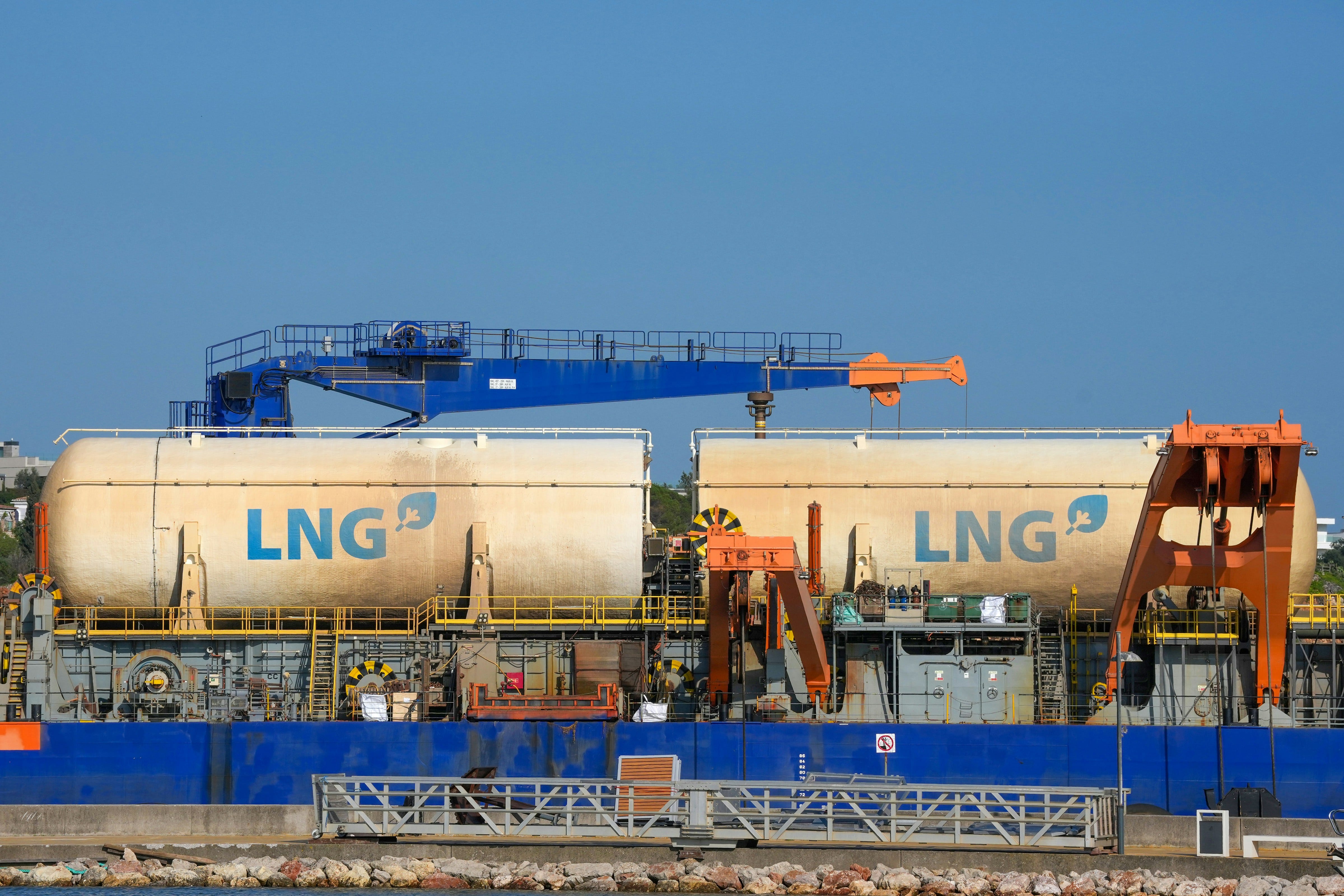
This image is used for illustrative purposes only.
At a Glance
SEFE, the German state-owned energy group born from the nationalization of Gazprom’s local subsidiary, is set to sign a deal to import up to one million metric tons of Canadian LNG per year from the Ksi Lisims floating export facility.
The agreement is a key step toward a final investment decision on the $10 billion Canadian (approximately €6.6 billion) project, with first deliveries expected in the early 2030s at the earliest.
The backdrop is twofold: the ongoing effort to replace Russian pipeline gas since 2022, and mounting energy risks from the Iran conflict, which led Berlin to halve its 2026 growth forecast to 0.5% of GDP.
The anatomy of an unfinished energy breakup
Before Russia’s invasion of Ukraine in February 2022, Germany was one of Europe’s largest importers of Russian natural gas, delivered via the Nord Stream pipelines. When Moscow sharply cut deliveries in retaliation for Western sanctions, Berlin found itself in an unprecedented position: scrambling to build floating storage and regasification units (FSRUs) — offshore vessels that receive LNG by ship and convert it back to gas — to keep the lights on. The Wilhelmshaven terminal, opened in December 2022, became the flagship of that emergency response.
Four years on, the infrastructure exists. The dependency, however, has simply shifted: from Russian pipeline gas to LNG imported by ship from a diversified group of suppliers including the United States, Qatar, and Norway. The Ksi Lisims deal fits squarely into that diversification logic — with an added political dimension. Canadian Prime Minister Mark Carney has set a target of doubling non-U.S. trade within a decade, seeking to reduce Canada’s near-total dependence on American markets for its oil and gas exports. The German-Canadian agreement reflects a convergence of interests: Berlin wants reliable, politically stable suppliers; Ottawa wants alternative buyers.
The Middle East as accelerant
This agreement comes against a backdrop of compounding fragility. The conflict between Israel and Iran — which erupted in 2025 and has since drawn in several regional actors — raises the prospect of disruptions to energy flows through the Strait of Hormuz, a chokepoint through which a significant share of the world’s LNG transits. For an economy as exposed to energy prices as Germany’s — whose heavy industries (chemicals, steel, automotive) are acutely sensitive to input costs — that uncertainty translates directly into macroeconomic risk.
In April 2026, the German government revised its growth forecast for the year down to 0.5% of GDP, from an earlier 1%, citing energy shocks linked to that conflict. The latest private-sector activity indicators point to continued contraction in both manufacturing and services — though Germany’s ifo business climate index posted an unexpected rise in May 2026, which could suggest a modest stabilization in expectations, without it being possible to establish that formally at this stage.
Ksi Lisims: an infrastructure that doesn’t exist yet
The SEFE-Ksi Lisims agreement is not yet a delivery guarantee. The consortium behind the project — whose floating facility would be located on Pearse Island, British Columbia, near the Alaskan border — holds the necessary permits but has not yet taken a final investment decision (FID), the step that would greenlight construction. The project is valued at $10 billion Canadian (approximately €6.6 billion), and first deliveries are not expected before the early 2030s at the earliest. British Columbia Premier David Eby stated that securing long-term offtake agreements with buyers is a critical prerequisite before the FID can be made.
The consortium has already signed supply agreements with a Shell subsidiary and with French energy major TotalEnergies. SEFE’s entry as a customer strengthens the project’s commercial credibility and could accelerate the decision timeline — the accumulation of offtake contracts followed by an FID being the standard pathway for any large-scale LNG development.
Analysis: a reshaping energy geopolitics
What is at stake in this agreement goes beyond volume. Germany is signing with a fellow NATO member, operating under a stable legal framework and sharing democratic values, at a moment when a supplier’s geopolitical reliability has become a procurement variable in its own right — as significant as price or logistics capacity. It is also worth noting that SEFE, as a global LNG trader, retains the flexibility to schedule cargoes across its portfolio: not every molecule contracted from Ksi Lisims will necessarily reach a German regasification terminal, but the agreement secures Germany a claim on North American supply at a time when that matters most.
The trajectory is structural. Europe is in the process of rebuilding its energy architecture under conditions of forced diversification, driven by two successive shocks: Russia in 2022, and the Middle East in 2025-2026. North American LNG — American first, and now potentially Canadian — is positioning itself as a durable alternative, with all the implications that entails for costs (seaborne LNG remains more expensive than pipeline gas) and industrial competitiveness.
For Canada, this opening toward Europe represents a strategic inflection. Dependence on a single market — the United States — is a vulnerability that the Carney government is explicitly seeking to reduce, in a context of persistent trade tensions across the Atlantic. The Ksi Lisims-SEFE agreement could indicate that Canada is moving toward a posture as a global energy exporter — even if the FID remains pending and construction timelines have yet to be confirmed.
For the European Union as a whole, the agreement reflects a broader pattern: member states most exposed to energy insecurity — Germany, Poland, the Baltic states — are locking in long-term supply deals, trading flexibility for predictability. That is a coherent choice. It is also an expensive one.
The Bottom Line
The German-Canadian deal is a supply contract. But it points to something deeper.
Europe has not finished paying the bill for its historical energy dependencies — and it knows it.
The real question is not whether Canadian LNG will one day arrive at Wilhelmshaven. It is what price German — and European — industry is prepared to pay for energy security, and whether that price is compatible with long-term competitiveness against economies that are not asking themselves the same question.
Sources: Euronews · Associated Press · Bundesnetzagentur