
Bulgaria cuts off public weapons stockpiles to Ukraine

Sofia’s new government has formally ended direct military transfers to Kyiv — a decision that lays bare the fractures running through the EU and NATO over how long European solidarity can hold against the pull of domestic politics.
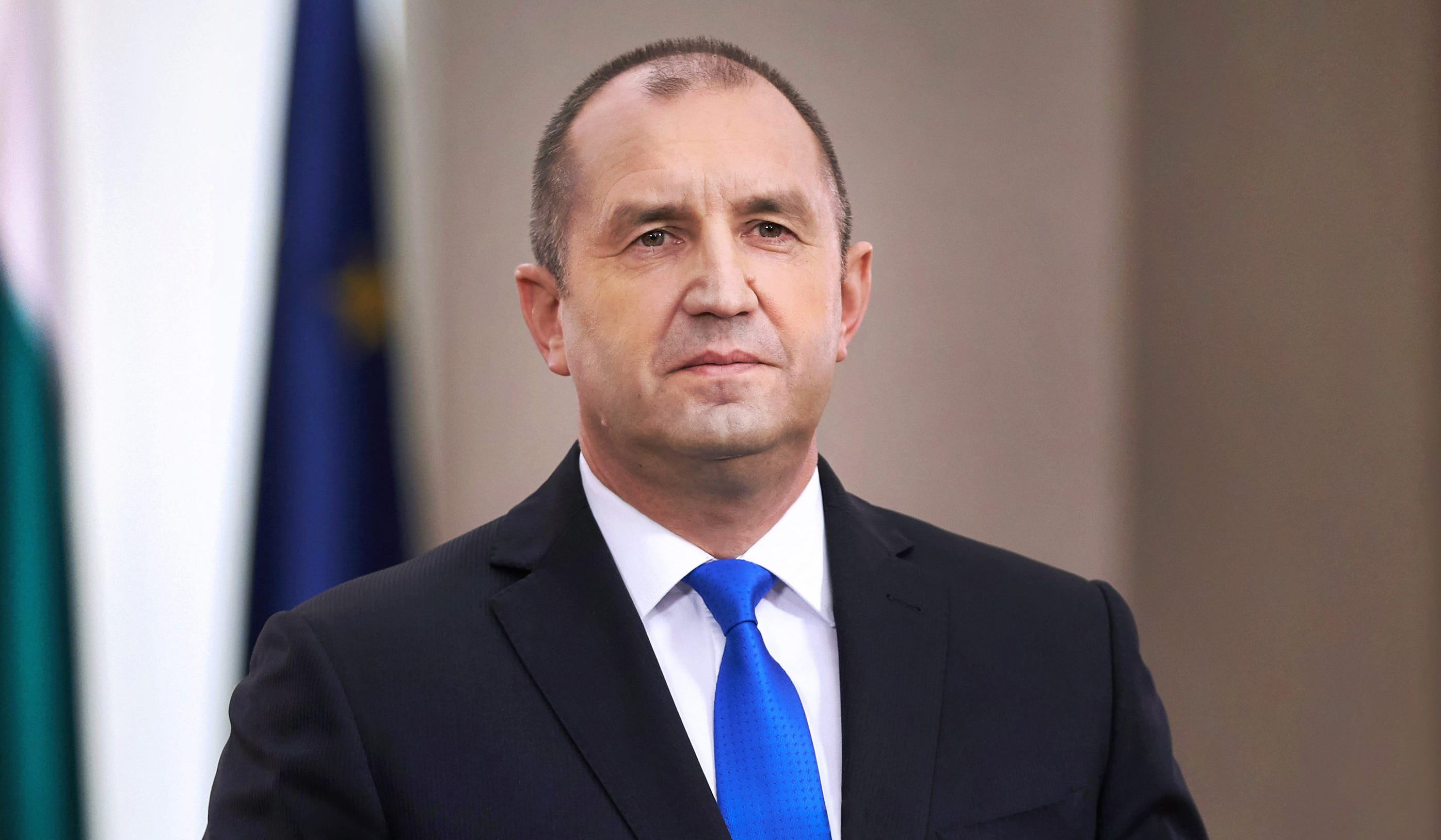
This image is used for illustrative purposes only.
At a Glance
Bulgaria has officially ended deliveries of weapons from its public military stockpiles to Ukraine. The move was announced June 9, 2026, by Defense Minister Dimitar Stoyanov and reaffirmed the following day by Prime Minister Roumen Radev.
Radev, who took office in May 2026 after his Progressive Bulgaria coalition’s victory in the April 2026 elections, is pushing for a negotiated settlement with Moscow. “We have already given enough,” he said, citing the socioeconomic toll the war has inflicted on Bulgaria.
The decision does not affect Bulgaria’s arms industry, which continues to supply Soviet-era-compatible ammunition to Ukraine indirectly through EU member states — a supply chain that has only grown since 2022.
The announcement and its origins
The decision came in two steps. On June 9, 2026, Dimitar Stoyanov, Bulgaria’s defense minister, announced that Sofia would no longer deliver weapons from its public military stockpiles to Ukraine. The following day, Prime Minister Roumen Radev — Bulgaria’s head of government since his Progressive Bulgaria coalition won the April 2026 parliamentary elections — reaffirmed the decision and placed it in its political context.
“We have already given enough, while our country continues to suffer socioeconomic losses because of this bloody war.”
He has made clear he regards a military solution to the conflict as unworkable and has positioned his government firmly in favor of direct dialogue with Moscow.
Until now, Bulgaria had supplied Kyiv with air defense systems and surface-to-air missiles, financed through the European Peace Facility — the EU’s reimbursement mechanism that compensates member states for military equipment delivered to third countries.
What this decision does not cover
Radev’s announcement does not end Bulgaria’s industrial contribution to Ukraine’s war effort. Bulgarian factories specializing in ammunition compatible with Soviet-era weapons — still widely used by the Ukrainian military — have expanded substantially since 2022. Their output flows to EU member states, which transfer it onward to Ukraine. That indirect supply chain falls entirely outside the scope of government stockpile transfers and is unaffected by the new policy.
The scale of that industrial role is not trivial. Bulgaria has emerged as one of Europe’s significant producers of Soviet-caliber munitions, and partnerships such as that between Bulgarian manufacturers and Germany’s Rheinmetall — aimed at scaling up 155mm artillery shell production — illustrate how deeply the country’s defense industry has been drawn into the broader European war economy, even as its government moves to distance itself politically.
The distinction matters: Bulgaria remains, in practice, an indirect supplier of ammunition to Ukraine. What Sofia is stopping is the direct, government-to-government flow of hardware — the kind that is politically visible and nationally attributable.
Why this matters beyond Bulgaria
A political signal, not just a logistics decision
Bulgaria’s move points to a structural fault line running through both the EU and NATO. On one side: member states that have anchored their strategic posture on sustained military support for Kyiv. On the other: those that — for historical, economic, or electoral reasons — are gravitating toward a negotiated exit from the conflict.
Bulgaria has long maintained close cultural and religious ties with Russia, rooted in part in a shared Orthodox Christian heritage. For much of the post-Cold War period, Sofia was also heavily dependent on Russian natural gas — though Bulgaria has moved to diversify its energy supply since 2022, reducing that dependency considerably. These historical factors may help explain why Radev’s pro-dialogue stance fits within a longer tradition of Bulgarian foreign policy toward Moscow, even as the country remains a full member of both NATO and the EU.
The European Peace Facility: a mechanism under strain
Bulgaria’s decision also exposes a structural weakness in the EU’s military support architecture. The European Peace Facility is not a centralized defense budget — it is an a posteriori reimbursement scheme that depends entirely on the willingness of member states to make deliveries in the first place. When a government decides to stop, the mechanism has no enforcement tools.
The question Sofia is forcing onto the table is this: does the EU have the institutional capacity to sustain coherent military solidarity when national interests diverge? At this point, the answer would appear to be no.
Real-world impact on Ukraine
In the near term, the operational impact of Bulgaria’s decision is likely limited: private Bulgarian industrial channels remain active, and the transferable portion of Sofia’s public military stockpiles may already have been largely exhausted. But the symbolic weight is real. Each EU member state that formalizes a partial withdrawal from military support eases the collective pressure on those that remain committed — and hands a legitimizing argument to voices in other European capitals calling for a negotiated end to the war.
The Bottom Line
Bulgaria is not the first EU member to qualify its support for Ukraine, and it is unlikely to be the last. The question Radev’s decision raises is not really about Bulgaria — it is about Europe: how long can collective solidarity mechanisms hold when domestic electoral logic pulls in a different direction? And if the unified front begins to fray at the edges, what remains of the idea of a Europe capable of shaping the outcome of a war on its own continent?
Sources: France Info · AFP