
Britain's Channel raid on Russia's shadow fleet

On Sunday morning, in a narrow and heavily monitored stretch of water between Britain and France, Royal Marines commandos and specially trained officers from the National Crime Agency (NCA), the UK’s lead law enforcement body against organized crime, boarded a sanctioned Russian oil tanker, the Smyrtos. Six hours, Chinook, Merlin, and Wildcat helicopters, a Royal Air Force maritime patrol aircraft, and two Royal Navy warships — a frigate and a minehunter — all for a single cargo of oil. The scale of the operation says as much about the stakes as the seizure itself. Behind this one tanker lies one of the quieter, more effective tools funding Russia’s war in Ukraine.
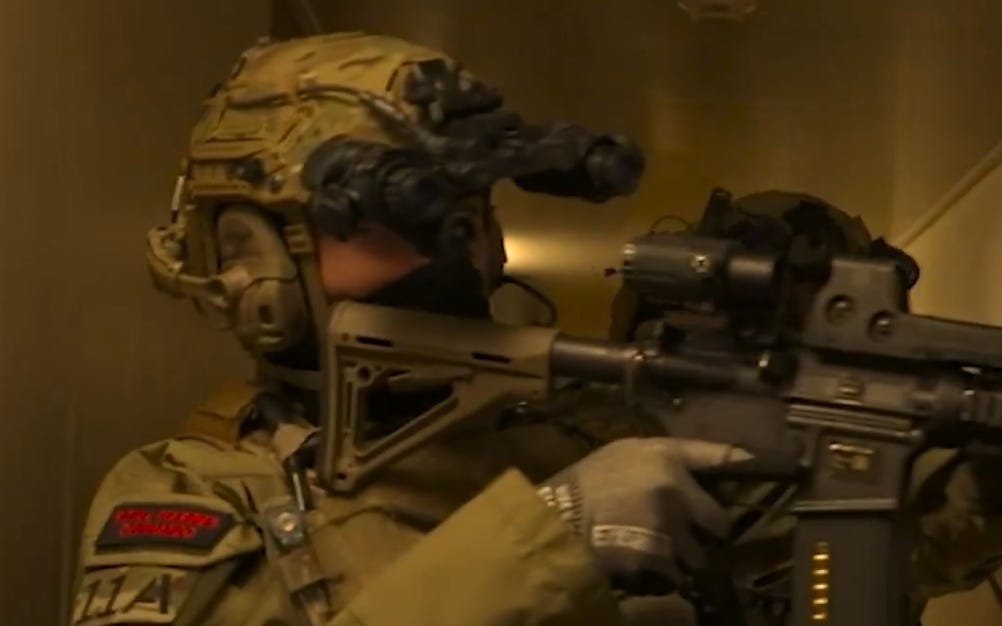
This image is used for illustrative purposes only.
At a glance
The UK carried out its first solo interception of a Russian shadow-fleet oil tanker on Sunday, working in close coordination with France.
The operation came days after a new UK defense secretary took office and amid a separate, ongoing US-Israel war with Iran that has rattled energy markets.
The vessel, flying the flag of Cameroon and which Ukrainian intelligence says has exported oil from Russia’s Far East since March 2025, will now be held and monitored off the English coast.
How the operation unfolded
The UK Ministry of Defence described the operation as a first: Britain had never before led a boarding of this kind on its own. In the early hours of Sunday, Royal Marines commandos and NCA officers boarded the Smyrtos, which flies the flag of Cameroon. The six-hour operation drew on significant air support — Chinook, Merlin, and Wildcat helicopters, plus a P-8 maritime patrol aircraft — along with two Royal Navy warships: the frigate HMS Sutherland and the minehunter HMS Ledbury.
The tanker will now be escorted to an anchorage off England’s south coast, where British authorities will monitor it for safety and environmental risks. London said the boarding was carried out under its sanctions powers and in line with international maritime law, in close coordination with France — a detail that matters, since controlling traffic through the Channel depends on constant cooperation between the two countries.
The shadow fleet’s quiet role in financing Russia’s war
To get around Western sanctions that tightly restrict the shipping and insurance of its oil, Moscow has spent years building a parallel fleet of aging tankers with murky ownership and often without proper insurance. Shell companies, flags of convenience, and ships that change names and routes: these vessels are designed to disappear from regulatory radar while continuing to export Russian crude.
The cost of this effort is not trivial. According to a resolution adopted by the European Parliament, the EU’s directly elected legislative body, Russia has spent roughly €9 billion building this shadow fleet, turning it into a financial lifeline for its war effort. The UK government says it has now sanctioned more than 500 vessels linked to this network, and that Russia’s oil and gas revenues fell by roughly 24% in 2025 compared with the previous year. The European Parliament has also warned that these uninsured vessels pose serious risks to maritime safety and coastal ecosystems — risks that, according to London, Sunday’s operation was also meant to address.
The Smyrtos itself illustrates how the system works: according to Ukraine’s military intelligence service, the vessel normally operates out of the port of Kozmino in Russia’s Far East and has been exporting petroleum products since March 2025 — more than a year of activity before this first interception.
Why now: a political and energy-market calendar
This operation didn’t happen in a vacuum. In March 2026, the UK government announced that British forces would be authorized to board and seize shadow-fleet vessels passing through its waters — a shift toward a more assertive posture. That announcement came against the backdrop of a series of temporary US Treasury waivers, repeatedly extended since March 2026, allowing countries to buy Russian oil and petroleum products already loaded on tankers at sea — part of Washington’s effort to cool energy prices that had spiked amid the war the United States and Israel were waging against Iran.
The operation also came just three days after Dan Jarvis was appointed the UK’s Secretary of State for Defence, replacing John Healey, who resigned. A former Parachute Regiment officer who had served as security minister since 2024, Jarvis praised the personnel involved, saying the operation required “skill, professionalism, and courage” and that it struck “a new blow against Putin’s illegal war.” Prime Minister Keir Starmer called the operation a success that delivered “a new blow to Russia.”
In Kyiv, Ukrainian Foreign Minister Andrii Sybiha praised British “leadership,” sharing a message from UK Foreign Secretary Yvette Cooper calling to “keep increasing the pressure” on Moscow. France, Belgium, Finland, and other European countries have also recently seized vessels suspected of evading sanctions — a sign that the practice is spreading across the continent, even without a shared, coordinated doctrine.
What a single interception really shows
One seizure does not make a policy. But this move, presented as a British first, could mark a broader shift — from a sanctions regime built on lists and insurance bans to one of physical interdiction, carried out in public and framed as a political statement.
The timing raises questions. This interception came just days after Washington extended, once again, a temporary waiver letting buyers access Russian oil already at sea — part of its effort to calm energy markets rattled by the US-Israel war against Iran. London and Paris appear to be signaling, through action, that easing pressure on energy markets doesn’t mean easing pressure on Moscow’s war financing — a gap in emphasis between allies that could, over time, become a source of friction in transatlantic sanctions strategy. American readers may recognize the pattern from Washington’s own periodic seizures of sanctioned Iranian oil tankers: a similar mix of legal authority, naval assets, and political messaging, often more symbolic in scale than systemic in impact.
A question of scale remains. Estimates of Russia’s shadow fleet range from roughly 500 to over 1,000 vessels, many of which have already been renamed and reflagged repeatedly to dodge sanctions lists. Does one dramatic interception in the Channel meaningfully change Moscow’s economic calculus, or is it primarily a political signal — high in symbolism, but a meaningful precedent nonetheless? The answer will likely depend less on this single operation than on whether it’s repeated — and on whether Europe can turn one striking moment into a sustained policy. As of this writing, Russian authorities had not publicly responded to the interception.
The Bottom Line
A frigate, a minehunter, a squadron’s worth of helicopters, a patrol aircraft, and six hours of work for a single oil tanker.
That’s the show of force — striking, almost disproportionate. That may be the point. The open question is whether Europe has the naval, human, and diplomatic resources to repeat this against a fleet numbering in the hundreds — or whether the Channel will remain, for Moscow, a costly exception rather than a deterrent precedent.
Sources: Euronews · France 24 · European Parliament · Al Jazeera