
Brexit at Ten: Populism Won. Europe Didn't Fall.
Ten years after the British referendum, Europe's far right has reshaped the continent's politics — but the first real cracks are beginning to show.

At a Glance
France’s far-right Rassemblement National (RN) held just 2 seats in the National Assembly at the time of the Brexit vote in June 2016 — a figure that rose to 8 after the 2017 legislative elections, then to 89 in 2022, and stands at 123 today, more than any other single party. Germany’s far-right AfD held zero seats in the Bundestag in 2016; it now holds around 150, making it the chamber’s second-largest party.
A 2026 study by economists at Stanford, King’s College London, and the University of Nottingham estimates that Brexit has reduced UK GDP by 6 to 8% compared to what it would otherwise have been.
On April 12, 2026, Viktor Orbán — the architect of European illiberalism — lost Hungary’s parliamentary elections after 16 uninterrupted years in power.
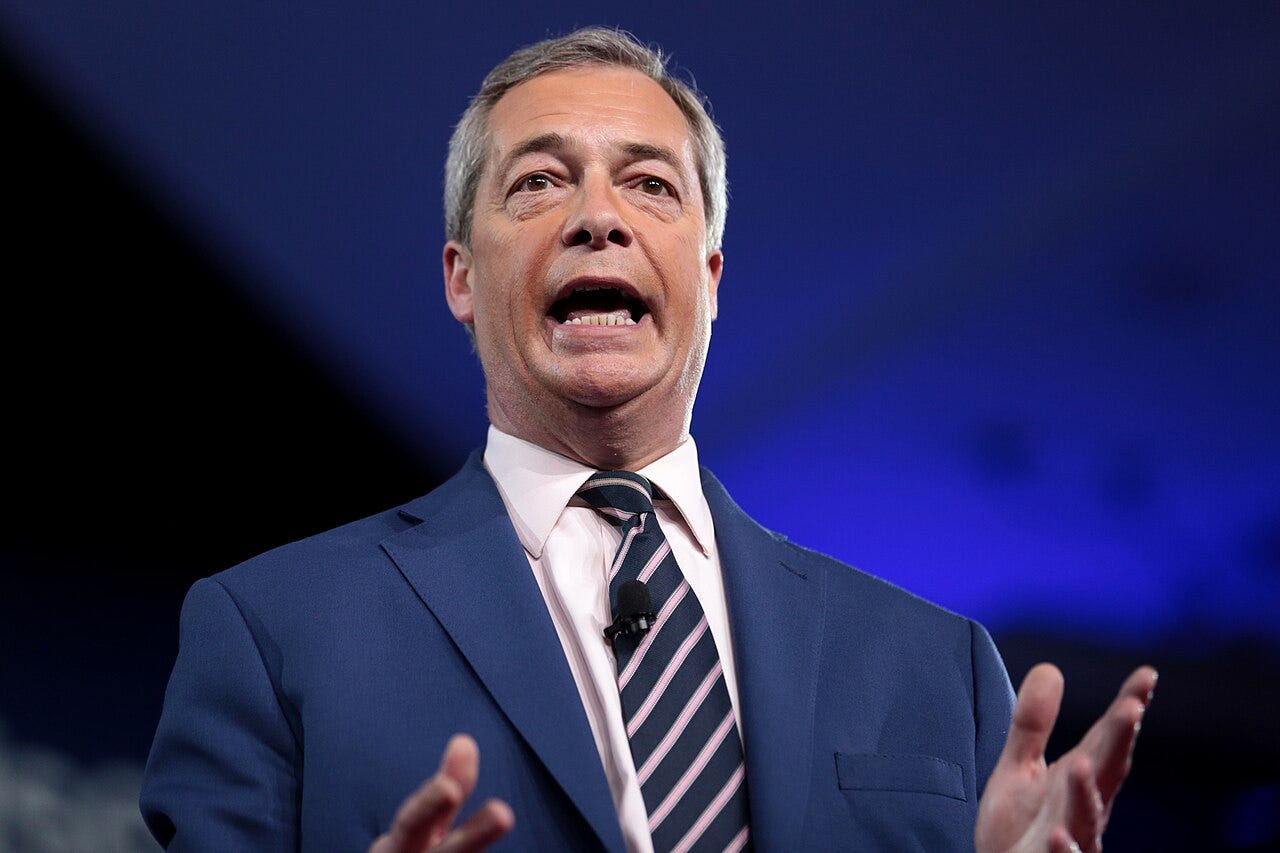
This image is used for illustrative purposes only.
On June 23, 2016, 52% of British voters chose to leave the European Union. That night, Marine Le Pen celebrated. Nigel Farage exulted. Viktor Orbán praised the result. What few commentators had anticipated was that Brexit would not be an anomaly — it would become a turning point: a moment that legitimized a political vocabulary and rewrote the boundaries of what was possible in European politics. Ten years on, the data are unambiguous: right-wing populism has gained ground across nearly all of Europe. But in the spring of 2026, that same shift may have just suffered its most serious setback yet.
The Brexit blueprint
What the 2016 vote accomplished went far beyond the question of British EU membership. It legitimized a political vocabulary — mass sovereigntism, rejection of elites, hostility to immigration — that had until then been confined to the margins of European politics. Nigel Farage, the principal architect of the “Leave” campaign, and Boris Johnson, who would go on to become prime minister, embedded this register into mainstream British politics.
The ripple effect across the Channel was rapid and well-documented. According to data published by the Pew Research Center on May 28, 2026, the Rassemblement National (RN), France’s far-right party led by Marine Le Pen, held just two of the National Assembly’s 577 seats at the time of the Brexit vote in June 2016 — rising to 8 after the 2017 French legislative elections, then to 89 in 2022, and reaching 123 today, more than any other single party. The Alternative for Germany party (AfD), a far-right formation, held zero seats in the Bundestag, Germany’s federal parliament, in 2016 — no far-right party had been represented there since World War II. It now holds around 150 of 630 seats, making it the chamber’s second-largest party. In Italy, Giorgia Meloni became prime minister after her Brothers of Italy party won parliamentary elections in 2022.
The UK’s economic reckoning — a lesson for the continent?
For a decade, Brexit supporters argued that recovered sovereignty would offset the friction of leaving the EU’s single market — the world’s largest trading bloc. The economic record, now quantified, is harsh. Research published in 2026 by economists at Stanford University, King’s College London, and the University of Nottingham estimates that UK GDP is 6 to 8% lower than it would have been without Brexit. Business investment is down 12 to 18% below pre-referendum levels. UK goods exports are estimated to be roughly 10 to 15% lower than they would otherwise have been.
These figures come alongside a telling political shift: UK Prime Minister Keir Starmer, leader of the Labour Party, has publicly acknowledged that Brexit caused “deep damage” to the British economy and has pledged to deepen ties with Europe. Ten years after the referendum, the United Kingdom finds itself paradoxically trying to rebuild bridges with the partner it left behind.
Could this pragmatic reversal spread to continental far-right movements? That would be getting ahead of the evidence. In France, Germany, and the Netherlands, these parties had already quietly shelved explicit calls for a “Frexit” or “Dexit” — their own departures from the EU — long before the British balance sheet became this stark, without moderating their agenda on migration, institutional reform, or fiscal policy.
Marine Le Pen, the appeal trial, and the EU funds case
In France, the legal trajectory of Marine Le Pen, a three-time French presidential candidate (2012, 2017, 2022) and the longtime figurehead of the RN, illustrates another dimension of the current moment: the relationship between populist movements and the rule of law.
In March 2025, a French criminal court convicted Le Pen of misusing European Parliament funds. The case centered on allegations that parliamentary aides, paid from EU budgets, had in fact been doing work for the RN party between 2004 and 2016. She was sentenced to four years in prison — two under house arrest with an electronic bracelet, two suspended — a €100,000 fine (approximately $116,000 at current exchange rates), and a five-year ban from holding or seeking public office, effective immediately.
Le Pen denied all wrongdoing and appealed. Her appeal trial ran from January 13 to February 11, 2026, before the Paris Court of Appeal, which announced it would deliver its ruling on July 7, 2026. If the original sentence is upheld, Le Pen will be barred from the 2027 French presidential election; if the ban is lifted or reduced on appeal, her presidential ambitions would revive. Should she remain ineligible, RN president Jordan Bardella, the party’s current chair, is widely expected to run in her place.
It is worth noting the defense’s arguments: Le Pen’s lawyers told the appeals court that European Parliament rules on the use of parliamentary staff were unclear at the time, and that she had no intention of committing an offense. The court of first instance itself found that Le Pen and her co-defendants did not personally enrich themselves.
Hungary: the counterexample that asks hard questions
On April 12, 2026, Viktor Orbán — Hungary’s prime minister since 2010 and the intellectual godfather of European illiberalism — conceded defeat in parliamentary elections after 16 consecutive years in power. His challenger, Péter Magyar, leader of the Tisza party (Respect and Freedom), won more than 53% of the vote against 37% for Orbán’s Fidesz party, in an election marked by a record turnout of approximately 78% — the highest since the collapse of communism in Hungary in 1989.
Orbán had entered the election with formidable structural advantages: extreme gerrymandering, extensive use of state resources for partisan ends, and near-total dominance over the country’s media. Magyar’s victory was built on two focused messages: the corruption of the Orbán government and Hungary’s dismal recent economic record under Fidesz rule.
The defeat echoes far beyond Budapest. Orbán had become an international reference for nationalist right politics — admired by Donald Trump, studied by formations ranging from the AfD to segments of the American conservative movement. His electoral fall does not signal the end of European populism, but it demonstrates that its grip on voters is not irreversible — provided that an opposition is disciplined, credible, and focused on concrete grievances.
A permanent fixture, not a passing wave
The Pew Research Center concludes that, regardless of any individual election outcome, right-wing populist parties have become a permanent fixture of the European political landscape, significantly disrupting the continent’s politics. That diagnosis is more nuanced than a simple narrative of victory or defeat.
What has changed since 2016 is not only the size of these parties — it is the normalization of their themes. Immigration, anti-elite sentiment, and distrust of European institutions now structure the debate inside parties that do not belong to the far right. That shift in the center of gravity of European politics may prove to be the most durable consequence of the past decade.
But the decade has also produced its own corrections. Hungary shows that an electorate can turn against an illiberal government when economic costs and corruption become intolerable. The United Kingdom itself — Brexit’s birthplace — is seeking to re-engage with Europe. These reversals do not validate predictions of a general populist retreat, but they attest that liberal democracies retain self-correcting mechanisms, provided that a credible opposition knows how to activate them.
The bottom line
Ten years after Brexit, Europe has not collapsed into authoritarianism. But it has shifted its center of gravity.
Populist parties do not govern everywhere — but everywhere they constrain those who do. The evidence of the past decade cuts both ways: right-wing movements have become embedded in European politics in ways that would have seemed implausible in 2015, yet the Hungarian election shows they can still be defeated at the ballot box when voters prioritize governance over grievance. The real test for the coming decade is whether Europe’s established parties can address the concerns that have driven populist support — on economic security, migration, and institutional accountability — without abandoning the liberal foundations that define the European project. That question remains open.
Sources: Pew Research Center · Econofact · UK in a Changing Europe · France 24 · Reuters · PBS News · AP News · BBC News