
Bolloré's bid to control French cinema
As Canal+ moves to take over France's third-largest theater chain, 600 filmmakers are sounding the alarm — right as Cannes opens its doors.

At a Glance:
Nearly 600 French film industry professionals signed an open letter in Libération on May 11, 2026, warning against the growing concentration of Canal+ — controlled by billionaire Vincent Bolloré — across the entire French filmmaking chain.
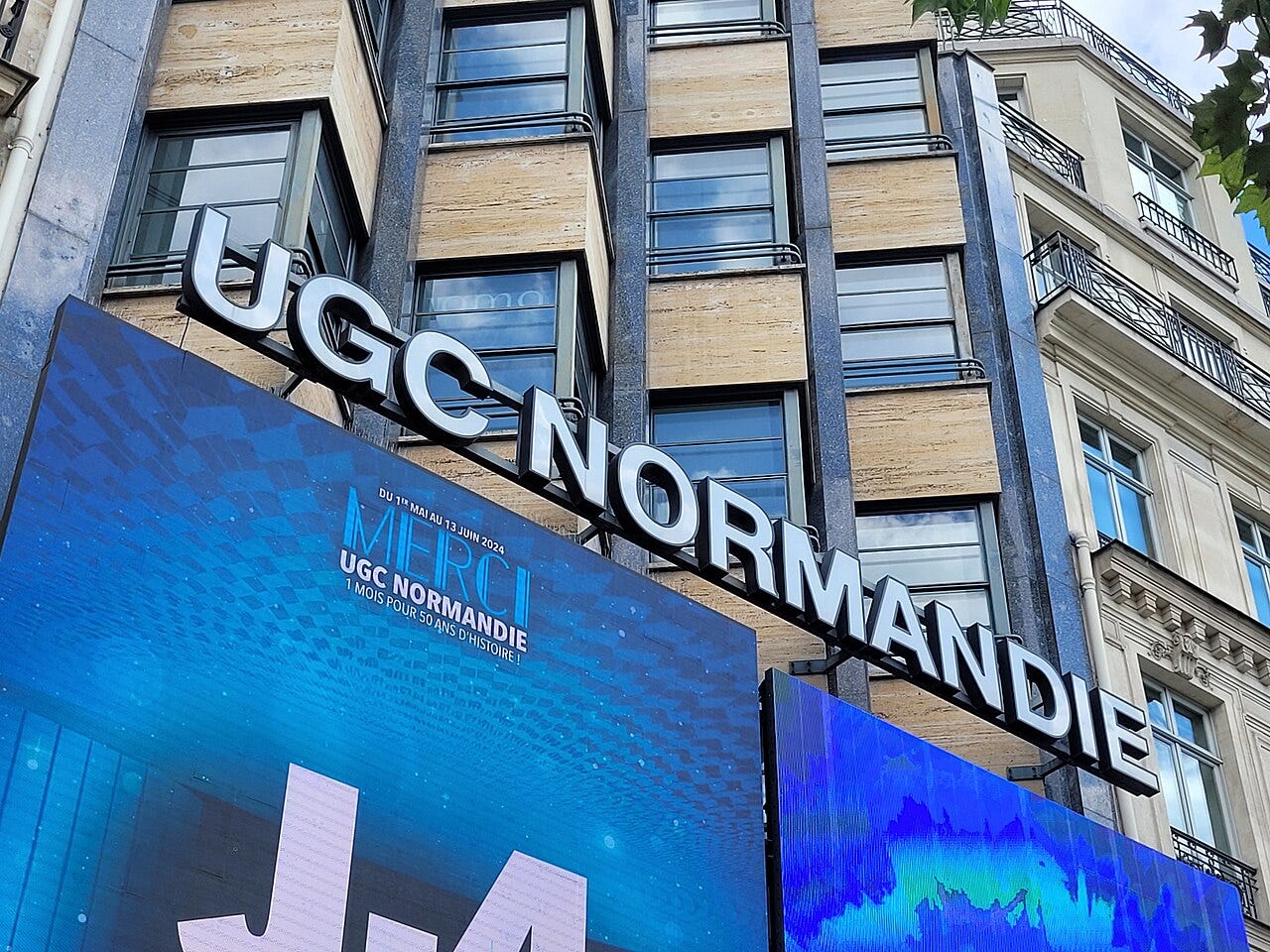
The trigger: Canal+’s acquisition of a 34% stake in UGC, France’s third-largest theater network, in October 2025, with an option to take full control by 2028.
Bolloré, who already controls Canal+, StudioCanal, CNews and Europe 1, has rejected all accusations of editorial interference, dismissing his critics as a self-serving establishment elite.
A sector breaks its silence at Cannes
The timing is as deliberate as it is symbolic. As the Cannes Film Festival opened its 79th edition, 600 French film industry professionals — directors, actors, technicians and producers — published an open letter in the left-leaning daily Libération. Signatories include actresses Juliette Binoche, Adèle Haenel and Blanche Gardin, actors Swann Arlaud and Jean-Pascal Zadi, documentary photographer and filmmaker Raymond Depardon, and director Arthur Harari. The collective, which calls itself “Zapper Bolloré” — roughly, “Switch Off Bolloré” — spans every corner of the industry.
The letter is not a vague expression of unease. It targets a specific transaction: Canal+, whose controlling shareholder is Vincent Bolloré, acquired a 34% stake in UGC, France’s third-largest cinema chain, in October 2025, with a stated intention to acquire 100% of its shares by the end of 2028. For the signatories, this deal would complete a vertical integration that has been years in the making. Bolloré already controls StudioCanal, one of Europe’s major film production and distribution companies, and Canal+ remains the single largest private funder of French cinema. Over the 2025–2027 period, Canal+ has committed to investing a minimum of €480 million (approximately $530 million) in the sector.
The logic of a full vertical takeover
The UGC deal is not an isolated move. Sylvie Robert, a senator from the center-left Socialist Party and a member of the French Senate’s culture committee, describes it as part of “the same mechanism at work for a decade now” [translated from French]. She sees a deliberate strategy of full vertical integration — fund, produce, distribute, project — with cinema representing the third front, after news media and book publishing. The eviction earlier this year of Olivier Nora, the longtime CEO of Grasset, one of France’s most prestigious literary publishers owned by Hachette (itself part of Vivendi’s broader media holdings), had already triggered a wave of protest from the publishing world. Bolloré’s camp has disputed that characterization.
The structural concern is clear-cut. By controlling production, distribution and exhibition simultaneously, the group could shape which films get made, which get wide releases, and which quietly disappear. France’s Bureau de liaison des organisations du cinéma (BLOC), an industry coordination body, has already flagged the risk of a structural imbalance in the cultural marketplace. France’s competition authority will ultimately have to approve — or impose conditions on — Canal+’s path to a majority stake in UGC.
What makes the situation particularly difficult to navigate is that the dependency is already real. In the corridors of French cinema, many acknowledge a paradox that has become nearly impossible to escape: mounting a serious production without Canal+’s financial backing has grown increasingly difficult. That reality explains, at least in part, why the open letter carries 600 names — and not more.
The Bolloré defense: scapegoat or ideological operator?
Bolloré’s own position deserves to be stated precisely. During a hearing before France’s National Assembly in March 2026, he rejected the accusations outright, presenting himself as a scapegoat targeted by an establishment that resents his background and convictions. He denies any editorial interference in his properties.
Some independent analysts support a version of that argument on economic grounds. As one media expert noted, Canal+ has no financial incentive to restrict or skew its programming choices — the commercial risks would be severe. Disney’s well-documented difficulties after it allowed ideological considerations to override audience preferences offer a cautionary parallel. Others take a more liberal view of media consolidation, arguing that market concentration is a structural phenomenon, not a cultural policy.
It is also worth noting that, to date, no documented shift in Canal+’s film financing decisions has been identified, though several observers argue the question merits a dedicated study.
The paradox of subsidized independence
What makes this story structurally different from a standard culture-war dispute is the architecture of French cinema funding itself. Under French law, television broadcasters — Canal+ chief among them — are required to invest a percentage of their revenue in national film production. This mechanism, designed to protect cultural diversity, has created a systemic dependency: the very entity the industry fears is also the one that keeps it alive.
For a reader in Boston or Toronto, the closest analogy would be a scenario in which a single company simultaneously served as the dominant funder of independent American films, owned the country’s major theater chains, and controlled the publishing houses that supply the screenplays — all under the direction of a majority shareholder whose political commitments are documented and openly stated.
The open letter does not claim that anything has changed yet. Its argument is forward-looking: if the influence of this ideological project on film content has so far been discreet, the signatories write, they have no illusions that it will remain so. What is at stake is not the present, but the power structure being built for the years ahead.
That framing may ultimately do more to reopen a legislative debate than to stop any single transaction. France’s competition authority will have its say before Canal+ exercises its 2028 option. Its ruling — and whatever conditions it attaches — will tell us far more about the future of French cinema than any open letter, however long its list of names.
The bottom line
When a single private actor controls the financing, production, distribution and projection of a national cultural industry, who ultimately decides what audiences see — and what never reaches the screen?
France’s competition authority is expected to rule on the 2028 majority option in the coming years. That decision will be the real test of whether the French system can protect cultural pluralism from the logic of vertical integration — or whether it simply ratifies it.
Sources: Libération · France Info · Euronews · Public Sénat · La Libre