
Belfast riots: a city on edge after two nights of racist violence

Two nights of anti-immigrant unrest in Belfast — triggered by a brutal knife attack widely described as an attempted beheading — exposed a political playbook now operating at national scale across the United Kingdom.
At a Glance
On the night of June 8–9, Hadi Alodid, a Sudanese national with refugee status and leave to remain until 2028, attacked Stephen Ogilvie on a residential street in north Belfast in a brutal knife attack involving repeated strikes to the head and neck area, widely described as an attempted beheading. Ogilvie lost an eye; Alodid has been charged with attempted murder, possession of a bladed weapon, and making threats to kill.
Two consecutive nights of anti-immigrant riots followed: masked crowds drove Black families from their homes, torched vehicles and houses; police deployed water cannons both nights.
Anti-immigration populist figures — Tommy Robinson, Nigel Farage, and X owner Elon Musk — immediately activated their networks, triggering a sequence now familiar across the UK: crime, viral video, organized amplification, street violence within 24 hours.
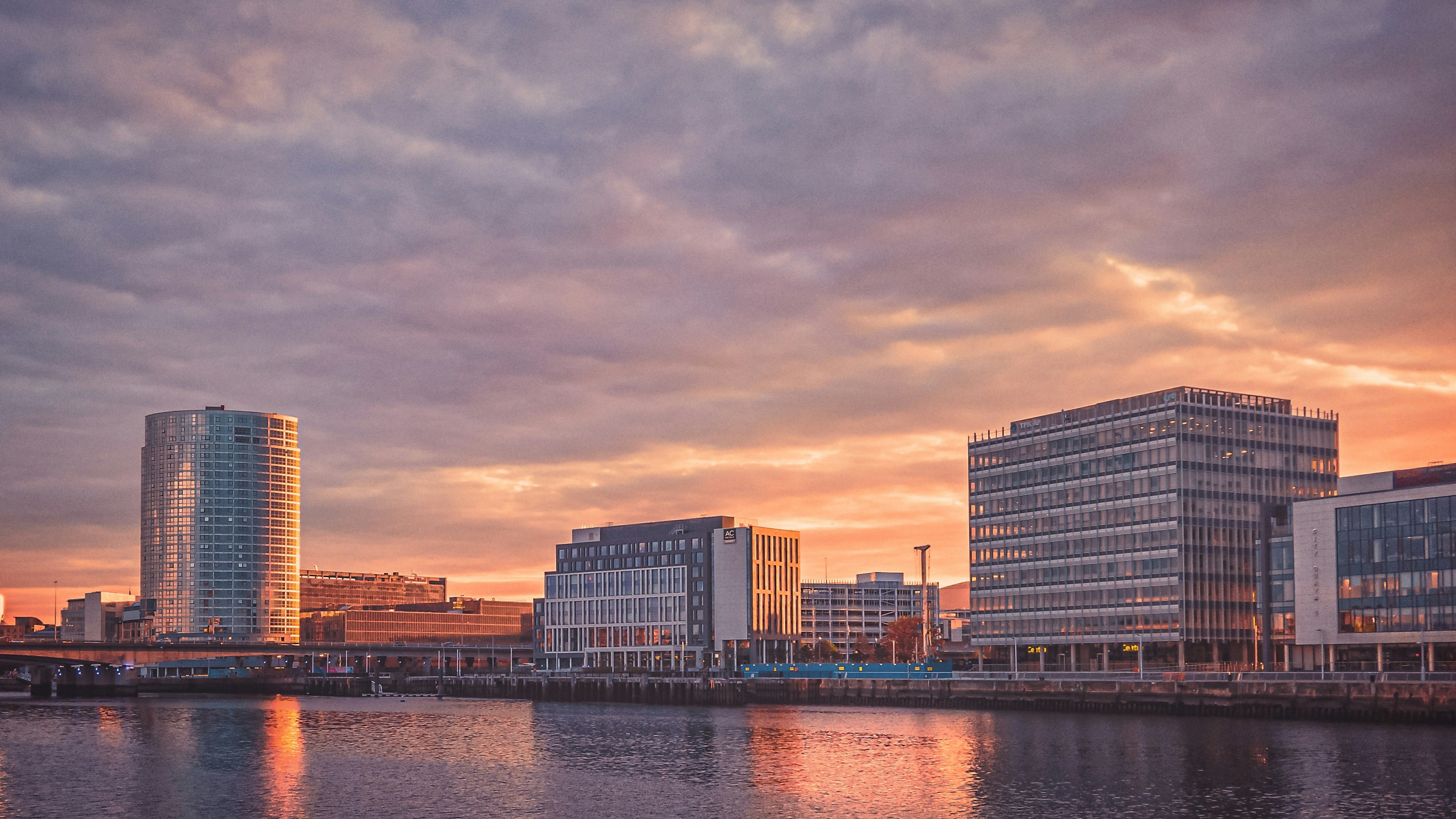
This image is used for illustrative purposes only.
The attack: what happened on Kinnaird Avenue
On the evening of Monday, June 8, at around 10:30 p.m., Stephen Ogilvie, a man in his forties, was attacked on Kinnaird Avenue, a quiet residential street in north Belfast. He lost an eye and sustained severe cuts to his face and back; he remains hospitalized in stable condition. A kitchen knife was recovered at the scene. Bystanders can be seen in footage attempting to pull the assailant away before police arrived.
The suspect was quickly identified: Hadi Alodid, a 30-year-old Sudanese national who had arrived in the United Kingdom in 2023 via Paris and Dublin, with refugee status and leave to remain until 2028. The attack involved repeated strikes to the head and neck area and has been widely described as an attempted beheading, though police charged Alodid with attempted murder, possession of a bladed weapon, and making threats to kill — without formally alleging attempted beheading. He appeared in court Wednesday morning, refused legal representation, and was assisted by an Arabic-language interpreter. He was remanded in custody until July 8. Ryan Henderson, Assistant Chief Constable of the Police Service of Northern Ireland (PSNI) — the region’s law enforcement body — ruled out terrorism; the motive remains unclear.
Ogilvie’s family, in a statement relayed by police, said they were “disgusted” by the riots that followed and thanked the bystanders who intervened. “Many migrants make an extremely valuable contribution to our country,” they added. “We do not want this terrible tragedy used to divide our community or stoke hostility.”
Two nights of violence: the sequence
On Tuesday, June 9, hundreds of masked protesters descended on several Belfast neighborhoods. Vehicles were torched, windows smashed, families of color driven from their homes. BBC footage showed residential buildings ablaze and officers helping one family escape through flames. A crowd of roughly a hundred men forced doors and broke windows across a stretch of north Belfast. “They are targeting them simply because they are Black,” Pastor Jack McKee told the BBC.
On Wednesday, June 10, the city center was spared, but tensions flared in Glengormley, north of the capital, where protesters pelted police with bricks and glass bottles. Water cannons were deployed again. Islamophobic graffiti appeared on storefronts across the area. Police reinforced their street presence and explicitly advised businesses not to close early — projecting normalcy in the face of far-right accounts urging the opposite.
Calls for calm came from across the political spectrum. Michelle O’Neill, First Minister of Northern Ireland — the head of the devolved government, where power is formally shared between unionist and nationalist parties under the 1998 Good Friday Agreement — condemned “masked men burning families in their homes” as “pure disgusting cowardice.” Hilary Benn, the UK Secretary of State for Northern Ireland, said he found it “really difficult to convey the real sense of fear within the ethnic minority community.” UK Prime Minister Keir Starmer pledged that those responsible would “face the full force of the law.”
The political playbook: from crime to crisis in hours
What transforms a criminal assault into a political crisis is speed and method — and in the United Kingdom in 2026, that method is now well-rehearsed.
The attack video spread across social media before police had issued any official statement. Nigel Farage, leader of Reform UK — a right-wing populist party that has surged in national polls — and Rupert Lowe, head of the anti-immigration populist party Restore, publicly demanded information about the suspect’s background. Tommy Robinson, whose real name is Stephen Yaxley-Lennon and who is the country’s most prominent far-right activist, issued calls to protest. On X, Elon Musk encouraged followers to “protest often and loudly.”
The Home Office confirmed the suspect’s refugee status under political pressure — before the legal process had run its course. That confirmation, however accurate, illustrates a tension British institutions have yet to resolve: how to communicate factually about a crime in a media environment where every official statement is instantly captured and repurposed by networks whose goal is less public safety than political destabilization.
Ofcom, the UK’s media regulator, warned platforms Wednesday that they could face legal consequences if their services were used to incite violence or spread hatred. Northern Ireland police separately cautioned that sharing the home addresses of foreign nationals online could “constitute a criminal offense.”
Belfast as the latest chapter in a national pattern
Belfast is not an isolated incident. It is the most recent episode in a sequence that has recurred with troubling regularity since the summer of 2024.
In July 2024, the murder of three young girls in Southport triggered riots in approximately thirty British cities. In June 2025, two Romanian-speaking teenagers accused of a sexual assault in Ballymena — a town northwest of Belfast — set off targeted attacks on immigrant neighborhoods. On June 2, 2026 — just one week before Belfast — Tommy Robinson led a violent demonstration in Southampton following an unrelated murder conviction; twenty-one people were arrested, two already sentenced to nearly three years for public order offenses.
This geography of violence — Southport, Ballymena, Southampton, Belfast — could suggest a mobilization infrastructure capable of converting any violent incident involving a foreign national into a national political event within hours. The regularity of the sequence — crime, viral video, far-right amplification, street violence — is worth naming for what it appears to be, even where centralized coordination cannot be formally established.
Claire Hanna, leader of the Social Democratic and Labour Party, Northern Ireland’s main opposition party, described Tuesday night’s events as a “race-based pogrom.” “The online ecosystem that stoked these tensions will now move on,” she told Reuters, “and it will be the people of Belfast left to pick up the pieces.”
The bottom line
Belfast is burning again. But what is really at stake is not the security of one neighborhood — it is whether British institutions can hold the line between factual truth and its exploitation.
The deeper question is not whether the United Kingdom can prevent crimes committed by foreign nationals. It is whether its democracy can still resist the conversion of every such crime into a made-for-social-media political spectacle — with or without the active encouragement of the platform owners who host it.
Sources: L’Express · RFI · AFP · France 24 · PSNI · Euronews