
Belfast on fire: how the far right weaponizes the knife

A brutal knife attack in a quiet Belfast neighborhood, a Sudanese refugee arrested, a video gone viral — and within hours, the city was burning. Behind the street violence lies a well-rehearsed political playbook.
Editor’s note, June 10, 2026: This article has been updated to reflect that police and prosecutors have formally described the attack as an attempted beheading. The suspect has been charged with attempted murder, possession of a bladed weapon, and making threats to kill. “Knife attack” replaces “stabbing” throughout.
A knife attack on a quiet residential street in north Belfast. A Sudanese man arrested. A video spreading within minutes across social media. It took one night for hundreds of masked protesters to set vehicles ablaze and block roads across the city. Behind the street violence, a political architecture demands to be named.
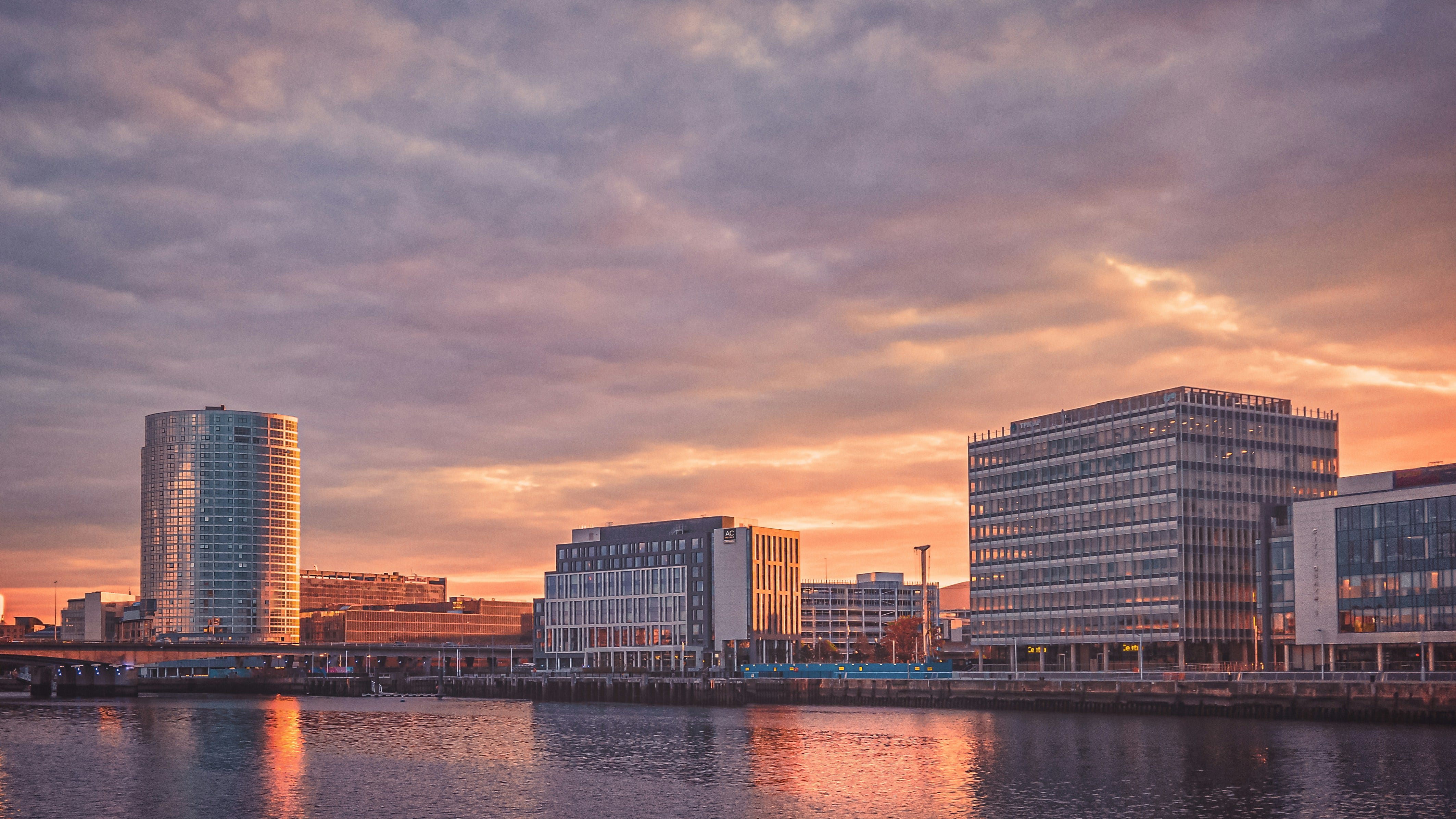
This image is used for illustrative purposes only.
At a Glance
On the night of June 8–9, 2026, a Sudanese national granted refugee status, holding a valid British leave to remain through 2028, was arrested in Belfast on suspicion of attempted murder after a knife attack — formally described by police and prosecutors as an attempted beheading — that left a man in his forties in serious condition.
Far-right figures — including Nigel Farage and Tommy Robinson — immediately mobilized their networks, backed by Elon Musk on X, triggering riots that fit a pattern of anti-immigration violence that has shaken the United Kingdom since the summer of 2024.
Northern Ireland Police ruled out terrorism, confirmed no further suspects were sought, and called for strictly peaceful demonstrations — without managing to contain the unrest on the first night.
The Belfast knife attack: what happened
On the evening of Monday, June 8, at around 10:30 p.m. local time, a man in his forties was attacked on Kinnaird Avenue in a residential area of north Belfast. He was hospitalized in serious condition with severe injuries to his eyes, back, and face. A kitchen knife was recovered at the scene. The suspect was quickly identified and taken into police custody: a Sudanese national granted refugee status, holding a valid British leave to remain through 2028, who had arrived in the United Kingdom in 2023 via Paris and Dublin. He was arrested on suspicion of attempted murder.
Assistant Chief Constable Ryan Henderson of the Police Service of Northern Ireland (PSNI), the region’s law enforcement body, declared the assault a “critical incident” and ruled out terrorism. Police and prosecutors have since formally described the attack as an attempted beheading. The suspect has been charged with attempted murder, possession of a bladed weapon, and making threats to kill. The motive remains unclear.
How a crime becomes a political event
What transforms a criminal assault into a political crisis is speed and method. The video of the attack — showing the assailant striking his victim on the ground — spread across social media before police had issued any official statement. It was picked up and amplified by far-right figures demanding details about the attacker’s identity.
Nigel Farage, the leader of Reform UK, a right-wing populist party that has surged in national polls, and Rupert Lowe, head of the anti-immigration party Restore, publicly demanded information about the suspect’s background. Tommy Robinson — whose real name is Stephen Yaxley-Lennon, the country’s most prominent far-right activist — issued calls to protest. On X, Elon Musk encouraged them to “protest often and loudly.”
The institutional response was swift but failed to contain the surge: Michelle O’Neill, First Minister of Northern Ireland — the head of government of this semi-autonomous region of the United Kingdom, where power is formally shared between unionist and nationalist parties under the 1998 Good Friday Agreement — and Hilary Benn, the U.K. Secretary of State for Northern Ireland, both appealed for calm on Tuesday evening. Prime Minister Keir Starmer called the attack “revolting” on X. Police reinforced their street presence and explicitly advised businesses not to close early — choosing to project normalcy in the face of calls from far-right accounts urging the opposite.
Belfast as the latest chapter in a national pattern
Belfast is not an isolated incident. It is the most recent episode in a sequence that has recurred with troubling regularity since the summer of 2024.
In July 2024, the murder of three young girls in Southport by Axel Rudakubana — a British-born man of Rwandan heritage — triggered riots in approximately thirty British cities, including Northern Ireland. In June 2025, two Romanian-speaking teenagers accused of attempting to rape a girl in Ballymena, a town northwest of Belfast, set off targeted attacks on immigrant-populated neighborhoods, injuring dozens of officers. On June 2, 2026 — just one week before Belfast — Tommy Robinson led a violent demonstration in Southampton following the conviction of Vickrum Digwa for the murder of Henry Nowak, a white student. Twenty-one people were arrested; two had already been sentenced to nearly three years in prison for public order offenses.
This geography of violence — from Southport to Belfast, from Ballymena to Southampton — could suggest that a mobilization infrastructure is at work, capable of converting any violent incident involving a foreign national into a national political event within hours. Without being able to formally establish centralized coordination, the regularity of the sequence — crime, video, far-right networks, riots — is worth naming for what it appears to be.
The rule of law under pressure
The U.K. government finds itself caught between two competing imperatives. On one hand, transparency about the suspect’s identity responds to a legitimate public interest. On the other, yielding to political pressure to disclose that information urgently — before formal charges are brought, before the legal process has run its course — amounts to validating the tactics of those driving the unrest.
The Home Office confirmed the suspect’s status under pressure from political figures. That confirmation, however accurate, illustrates a tension that British institutions have yet to resolve: how to communicate factually about a crime committed by a refugee in a media environment where every official statement is instantly captured and repurposed by organized networks whose goal is less public safety than political destabilization.
The Bottom Line
Belfast is burning again. But what is really at stake is not the security of one neighborhood — it is whether British institutions can hold the line between factual truth and its exploitation. The deeper question is not whether the United Kingdom can prevent such incidents.
It is whether its democracy — national and regional — can still resist the conversion of every violent crime involving a foreigner into a made-for-social-media political spectacle, with or without the active encouragement of the platforms that host it.
Sources: France 24 · AFP · PSNI · Euronews