
Belfast marches against racism after anti-immigrant riots
Thousands marched against racism in Belfast after a week of anti-immigrant violence triggered by a viral video showing a knife attack on a local man.

For a week, Belfast swung between two starkly different images. On one side, streets in the north of the city scarred by thrown bricks, shattered bottles, and a police water cannon. On the other, on Saturday, June 13, thousands of people walking peacefully toward City Hall to insist that hatred does not represent their city. In between, a video, shared online, of a knife attack that was enough to turn a criminal case into a week of anti-immigrant rioting.
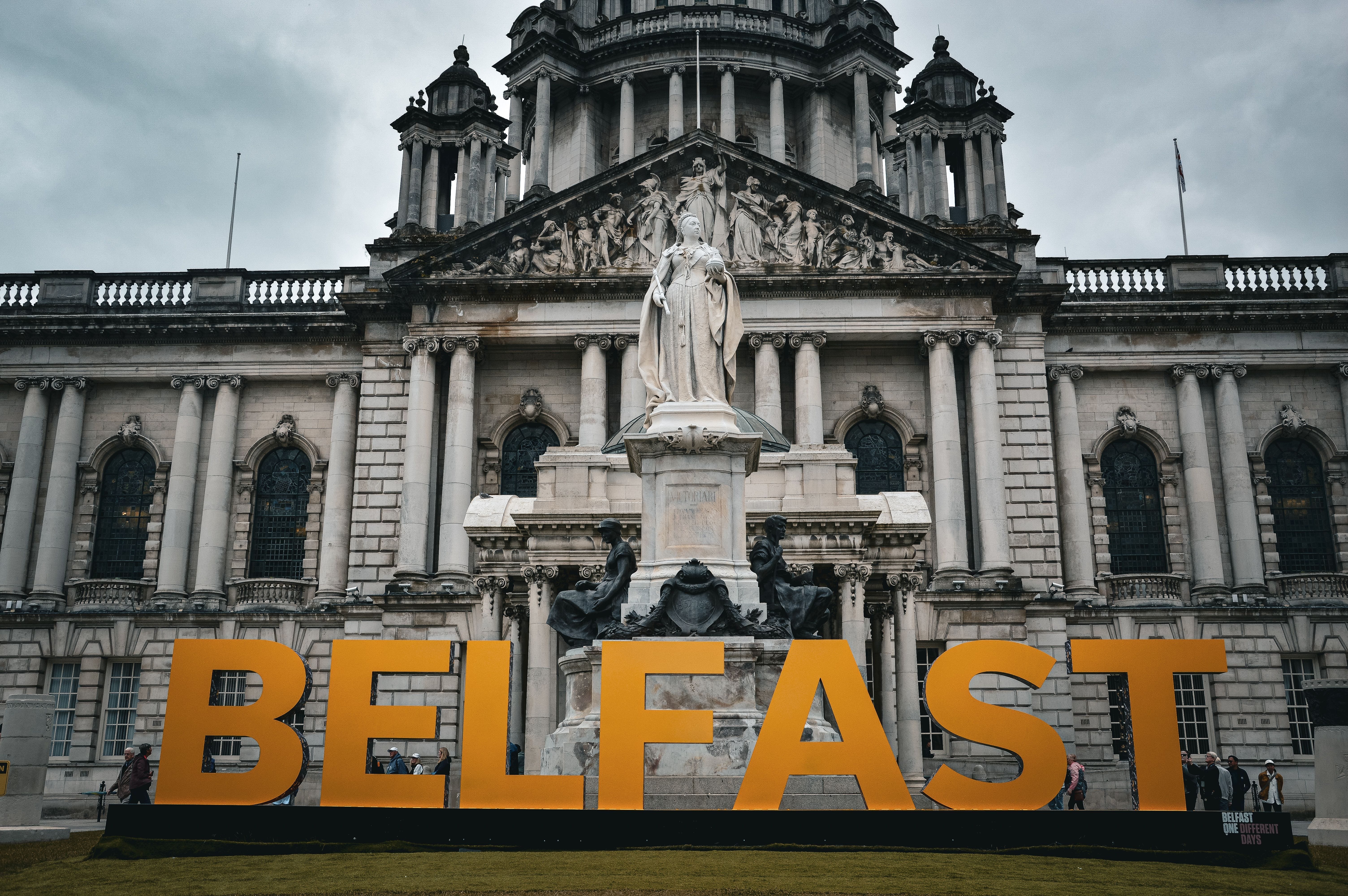
This image is used for illustrative purposes only.
At a Glance
Thousands marched against racism in Belfast on Saturday, organized by United Against Racism in a coalition of more than 120 groups, after a week of anti-immigrant violence.
The unrest followed the online spread of a video showing a knife attack that left a man seriously injured in Belfast; a 30-year-old Sudanese national has been charged with attempted murder.
Northern Irish and British officials have pointed to the role of social media in fueling the violence and are weighing potential criminal charges over the online posting of foreign nationals’ addresses.
A week of tension sparked by a video
It started with an assault on Monday, June 8: a man, Stephen Ogilvie, was stabbed and lost an eye in the attack. His family, who asked that his privacy be respected, said he remained in stable condition. A 30-year-old Sudanese national, Hadi Alodid, was charged with attempted murder, appeared before a judge, and was remanded in custody until a hearing scheduled for July 8.
A video of the assault circulating on social media preceded several nights of anti-immigrant violence in the city. Belfast’s city center was affected first, before a more intense night of unrest shifted to Glengormley, in the north of the Northern Irish capital. Rioters there threw bricks and bottles at police and set fire to at least one trash bin; officers used a water cannon to disperse the crowd.
The pattern is one that has become familiar in cities across the UK and continental Europe: an isolated crime, amplified by a viral video, becomes the pretext for collective violence against an entire community that had nothing to do with the original incident.
A large-scale anti-racism response
Even before Saturday’s rally, there had already been a standoff the previous evening, when anti-racism demonstrators gathered outside City Hall to counter a smaller anti-immigration protest, with police vehicles deployed to keep the two groups apart. Both gatherings dispersed without major incident.
On Saturday, the response grew significantly larger. Organized by the coalition, the march set off from Writer’s Square before arriving at City Hall. Placards carried messages condemning racism and rejecting the rioters’ grievances.
A speaker paid tribute to Ogilvie, drawing applause from the crowd. Hilary Hunter, a 63-year-old Belfast resident, told AFP she felt “really upset” by the week’s events.
Official condemnation and the question of social media
British Prime Minister Keir Starmer called the anti-immigrant riots shocking. In Belfast, Northern Ireland’s justice minister condemned masked rioters she said were exploiting genuine public anger and hurt for purposes that had nothing to do with the communities they claimed to be defending — a diversion, she argued, that was needlessly draining police resources.
The UK’s media regulator, Ofcom, reminded online platforms of their legal obligations regarding content that had contributed to the unrest. Police also warned that posting foreign nationals’ addresses online could constitute a criminal offense — a sign that authorities now treat the online dimension of this kind of crisis as a front in its own right.
Analysis — What Belfast reveals
A communal peace that remains under strain. Belfast carries the legacy of a sectarian conflict that the 1998 Good Friday Agreement formally ended more than a quarter-century ago, but tensions were never fully erased. The speed with which a single assault could trigger collective violence against an entire community is a reminder that the city’s fault lines need only a trigger to resurface — this time around immigration rather than the traditional divide between nationalist and unionist communities.
A power-sharing government under pressure, but united in its response. Northern Ireland is governed by a power-sharing executive bringing together parties with a long history of opposition, with policing and justice devolved to the Northern Ireland Assembly at Stormont since 2010. The Police Service of Northern Ireland (PSNI), the region’s police force, and Northern Ireland’s justice minister — who also leads the cross-community Alliance Party — appeared together with the First Minister and deputy First Minister to call for calm as soon as the violence began. That joint response suggests a shared concern: that unrest of this kind could destabilize an already fragile institutional balance.
A real cost for residents. Beyond the symbolism, each night of rioting ties up police resources already stretched by ordinary duties, and every business or home targeted represents a direct cost to families with no connection to the original case. Saturday’s march, by its sheer scale, could also be read as an attempt to limit that cost by showing that hostility does not reflect the views of most of the city.
The real question: who regulates a digital firestorm? What Belfast illustrates is not just a local public-order crisis, but a dynamic seen, in similar form, in other European countries that have faced anti-immigrant violence following a high-profile crime. The speed at which a video spreads online can now outpace the speed of any institutional response. That British authorities are weighing criminal charges over the online posting of foreign nationals’ addresses suggests they see existing tools as inadequate to the pace of these episodes — a question the European Union, with its own platform-regulation framework, faces as well, without any approach so far proving effective against virality of this kind.
The Bottom Line
A week after the attack, Belfast showed it could mobilize more people for solidarity than for hatred. But Saturday’s march was a response to a dynamic that played out almost entirely online, in a matter of hours, before institutions could react.
Will civic mobilization alone be enough to stop the next high-profile crime — elsewhere in the UK or on the continent — from setting off the same chain reaction? Or has the speed of digital virality simply outpaced the institutions meant to contain it?
Sources: France 24 · France Info · BBC News · Radio-Canada · AFP