
Baltic Wind Power: Poland and Germany challenge Russia

Polish and German officials, gathered at the 4th German-Polish Energy Transition Forum in Berlin, are accelerating massive offshore wind development in the Baltic Sea — with ambitions that could reshape European energy sovereignty.
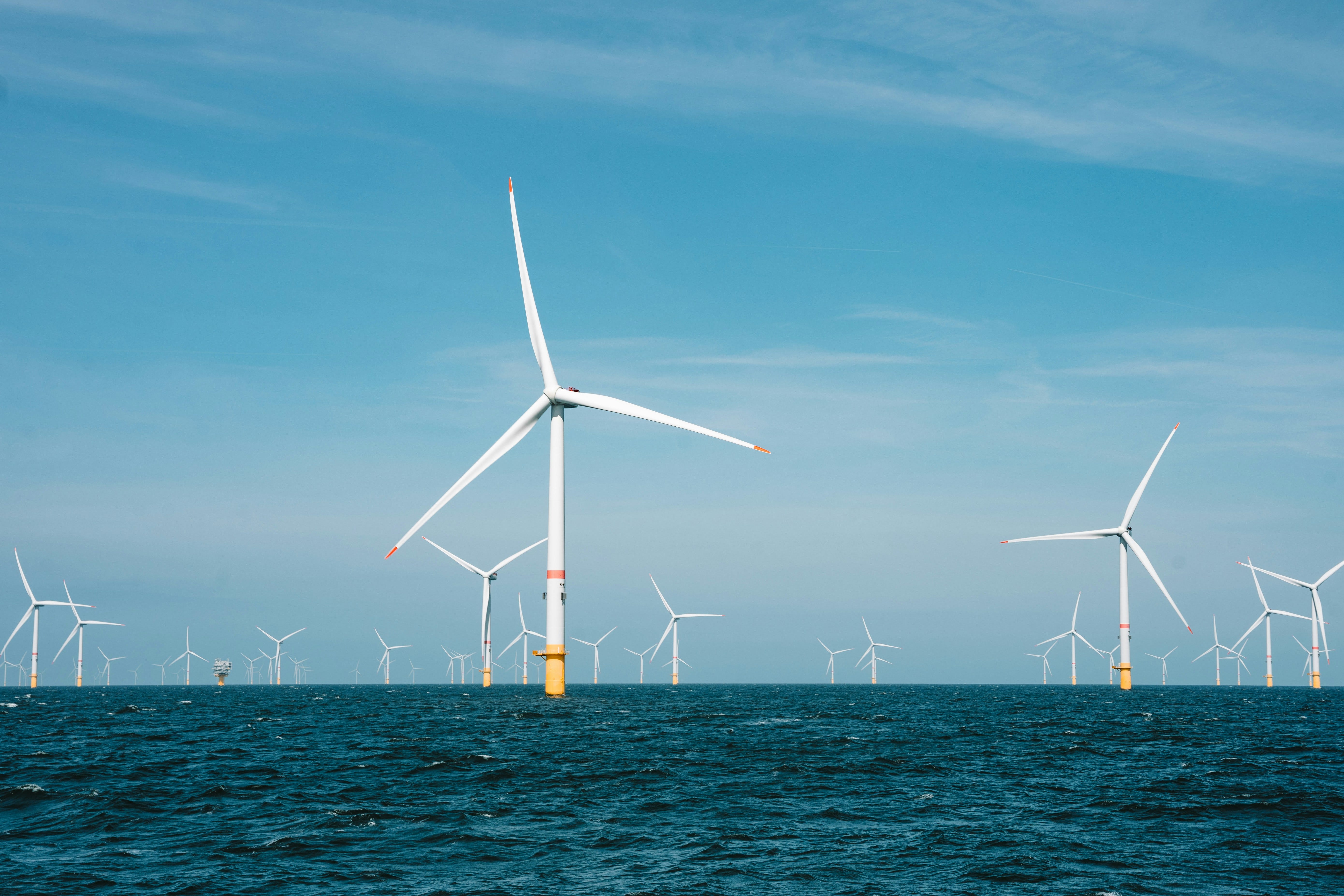
This image is used for illustrative purposes only.
At a Glance
Poland’s first offshore wind farm, Baltic Power, is under active construction 23 miles off its coast and is expected to come online in the second half of 2026 — the opening move in a national target of 5.9 gigawatts of installed offshore capacity by 2030.
Germany, despite having phased out nuclear power and severed ties with Russian gas, has lagged badly in the Baltic Sea; experts at the Berlin forum warned it risks missing a defining strategic opportunity.
The Baltic-German PowerLink — a cross-border interconnector involving Lithuania and Latvia as well — aims to integrate up to 2 gigawatts of offshore wind across the region; a decision on next steps is expected by the end of the third quarter of 2026.
A country that learned its lesson
Poland long ranked among Europe’s most fossil-fuel-dependent economies — reliant on domestic coal and imported Russian gas. Russia’s full-scale invasion of Ukraine made the second option untenable.
“We put ourselves in this position, and we must get ourselves out of it.”
So said Jacek Kostrzewa, President and CEO of Poland’s National Energy Conservation Agency (KAPE), a government-affiliated body tasked with steering the country’s energy efficiency strategy.
Warsaw’s response is a systematic diversification drive: onshore and offshore renewables, storage infrastructure, and sustained investment in civilian nuclear power. The framing offered by Konrad Wojnarowski, State Secretary at Poland’s Ministry of Energy, is deliberate in its simplicity — “strengthening security and ensuring supply.” The cost of inadequate preparation, he warned, would be enormous.
Poland’s economic momentum amplifies its ambition. While several major European economies stagnate, Poland is expected to post real GDP growth of approximately 3.3 to 3.5 percent in 2026, well above the EU average.
Baltic Power: a first farm, a new era
Construction is underway 23 kilometers — roughly 14 miles — off the Polish Baltic coast. Baltic Power, a joint venture between ORLEN Group, a Polish state-controlled energy company, and Canada’s Northland Power, is installing 76 wind turbines rated at 15 megawatts each. All the transition pieces connecting foundations to turbines are already in place. Target: grid connection in the second half of 2026, with a total capacity of 1.2 gigawatts — enough to power roughly 1.4 million Polish homes.
This is only an opening act. Warsaw has outlined a first wave of seven offshore wind farms, targeting 5.9 gigawatts of total capacity by 2030. Should current momentum hold, Poland could surpass 18 gigawatts by 2040, according to WindEurope, the industry’s main trade association. A first competitive auction held in December 2025 already awarded contracts to three additional projects, including the 1,560-megawatt Baltyk 1 project and the 975-megawatt Baltica 9 project. The projected investment is staggering: up to €208 billion (approximately $225 billion at current exchange rates), with Polish domestic firms expected to account for more than 40 percent of the supply chain.
Germany: the strategic latecomer
Across the Baltic, the picture is less comfortable. Germany phased out nuclear power, remained heavily dependent on Russian gas for years, and concentrated its offshore wind development in the North Sea. In the Baltic, its footprint is modest: the Baltic 1 and Baltic 2 wind farms off the coast of Mecklenburg-Western Pomerania, a northeastern German state, do feed the national grid — but represent a limited effort relative to the geopolitical stakes.
The compounding crises — the break with Moscow, Russia’s ongoing war against Ukraine, instability across the Middle East, and shipping disruptions through the Strait of Hormuz — have placed Germany’s energy-dependent economy in a position of growing vulnerability. At the 4th German-Polish Energy Transition Forum, held in Berlin on June 9, 2026, the message from experts was direct: Germany risks squandering a major opportunity if it fails to deepen its engagement in Baltic cooperation.
The interconnect: the keystone of a regional vision
The Baltic-German PowerLink project embodies the region’s wider ambition. Led by grid operators Litgrid (Lithuania), Augstsprieguma tīkls (Latvia), and 50Hertz (Germany), the interconnector would link the three countries and integrate up to 2 gigawatts of Baltic offshore wind into a shared grid. The project has been submitted to the European Network of Transmission System Operators for Electricity (ENTSO-E) for inclusion in its ten-year network development plan, a process that will assess its market impact, security-of-supply implications, and eligibility for EU funding. A decision on next steps is expected by the end of the third quarter of 2026.
It is in this context that Polish-German bilateral cooperation takes on its full strategic weight. Piotr Wiśniewski, Deputy Chairman of the Polish Chamber of Renewable and Distributed Energy (PIGEOR) and Chairman of the supervisory board of EnercoNet, argued that the cross-border infrastructure needed for genuine integration can and will be built — and that regional cooperation would deliver tangible results within two decades.
Analysis: a sea caught between sabotage and sovereignty
The Baltic Sea has, since Russia’s invasion of Ukraine, become a zone of dual pressure. On one side: hybrid attacks attributed to Moscow. Russian-flagged cargo vessels have been suspected of approaching strategic infrastructure — undersea cables, gas pipelines, offshore wind farms — to damage or surveil them. On the other: an energy opportunity of historic proportions.
This tension exposes a structural contradiction in European energy policy. The countries with the greatest incentive to accelerate the transition — Poland, the Baltic states — are precisely those facing the most direct pressure from Russia. Germany, whose dependence on Russian gas was the most documented in Europe, remains the most hesitant to commit to the Baltic.
The dynamic could indicate a quiet geopolitical rebalancing within the EU itself. Warsaw, long seen as a difficult climate partner given its coal dependence, is now positioning itself as a regional driver of the energy transition — with real capital, concrete projects, and a geopolitical urgency that Berlin, paradoxically, has yet to match with equivalent decisions.
The Bottom Line
The Baltic Sea is changing its geopolitical character: from a conduit for fossil fuels and a theater for Russian hybrid operations, it could become a hub of sovereign clean energy for a Europe that can no longer afford to hesitate. The fundamental question is not technical — the projects exist, the capital is moving. It is political: will Germany commit at a scale commensurate with the ambitions of its eastern neighbors, before the window closes?
Sources: Euronews · Baltic Power · WindEurope · Windtech International · RTS