
Baltic on edge: Sweden scrambles jets to intercept Russian fighters
Sweden scrambled fighter jets after Russian Su-24 and Su-34 aircraft skirted its airspace over the Baltic — the latest test of NATO's newest member.

Russia keeps testing NATO’s newest member — and Stockholm is keeping score.
Sweden joined NATO, the 32-member Western military alliance, in March 2024 — ending over 200 years of armed neutrality. It has been living with the consequences ever since.
On June 12, 2026, the Swedish Air Force launched two separate intercepts — one in the southern Baltic, one in the north — each involving a pair of JAS 39 Gripen fighter jets responding to a Russian warplane approaching Swedish airspace. Swedish airspace was not violated. NATO aircraft, including allied fighters, also scrambled to help maintain collective airspace security. By Saturday morning, Sweden’s armed forces had issued a formal statement. The message was clear: what happened was not a one-off.
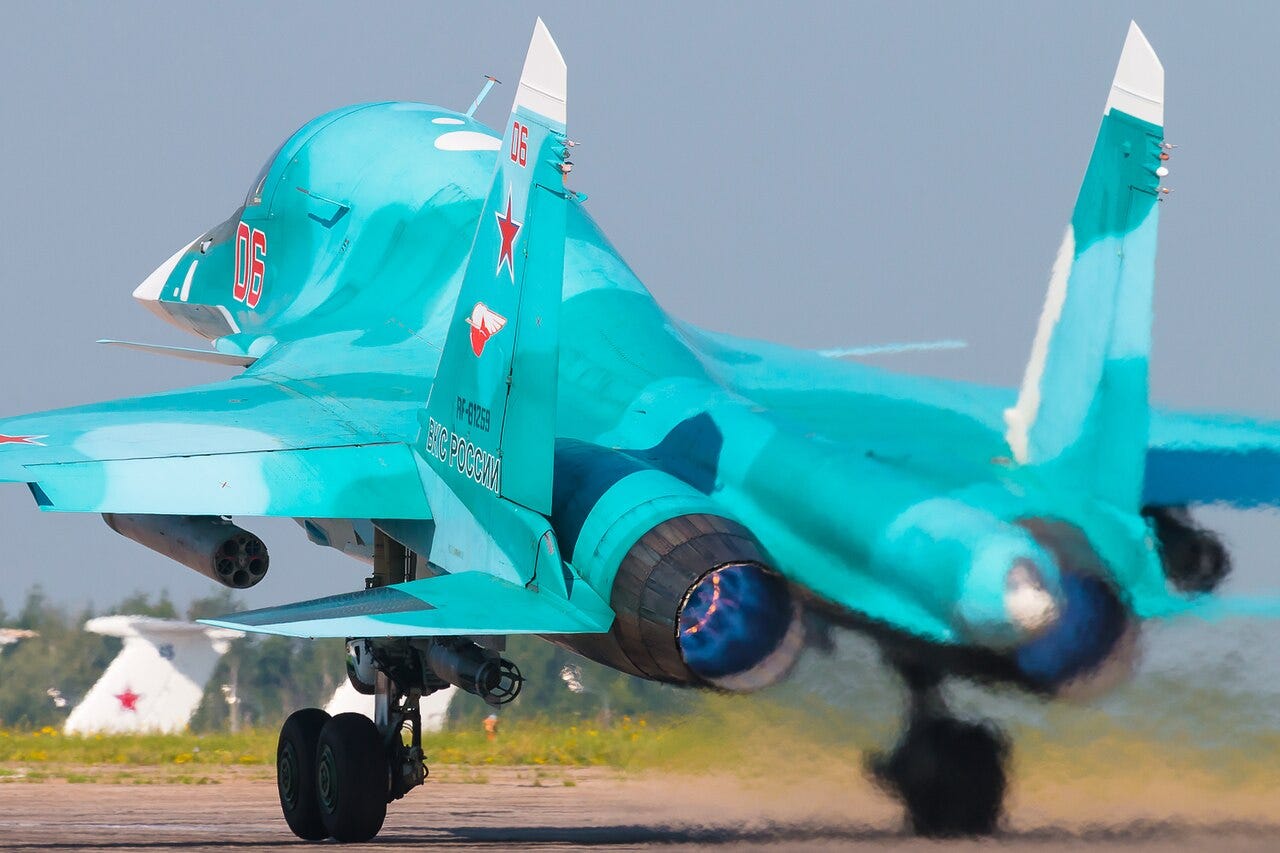
This image is used for illustrative purposes only.
At a Glance
Two separate incidents on June 12 — in the southern and northern Baltic — brought Russian warplanes close to Swedish airspace, with no violation recorded.
NATO aircraft, including allied fighters, joined each Swedish response, underlining that Baltic airspace security is treated as a collective Alliance responsibility.
Sweden’s top joint operations commander called Russia’s behavior “recurring“ and a direct threat to the country’s territorial integrity and security.
A scramble with a strategic subtext
The facts are technical. The meaning is political. On Friday, two Russian combat aircraft — a Su-24 Fencer and a Su-34 Fullback — separately approached Swedish airspace over the Baltic, one from the south, one from the north. Each time, Stockholm launched a pair of Gripen fighters. NATO aircraft joined the intercepts. No physical boundary was crossed. Yet Sweden’s military chose to publicize both operations the following morning — silence, in this context, would have been the more alarming signal.
Vice Admiral Ewa Skoog Haslum, Sweden’s chief of joint operations — a role roughly equivalent to the U.S. Pentagon’s Director of Joint Operations — was direct. According to the official statement issued by Sweden’s armed forces, Russia’s actions were “grave” and amounted to “recurring behavior threatening both our territorial integrity and our security” [translated from Swedish]. This is not the language of a diplomatic misunderstanding. It is the institutional language of a sustained pressure campaign.
Sweden: NATO’s new northern flank — and Russia’s new target
Sweden’s accession to NATO in March 2024 ended over 200 years of military neutrality, a decision driven by Russia’s full-scale invasion of Ukraine in February 2022. The geopolitical consequences were immediate: the Baltic Sea, once shared between neutral states and NATO members, is now almost entirely bordered by Alliance territory — except for the Russian Baltic exclave of Kaliningrad and Russia’s own coastline.
For American readers, the stakes can be framed this way: imagine if Canada suddenly joined a rival military alliance, turning the Great Lakes into a permanent friction zone with Washington on one side and the new alliance on the other. The Baltic is now that space — a sea that NATO effectively surrounds, that Russia views as encirclement, and that both sides are managing with intense, daily attention.
This pattern of aerial probing is not new. Since Russia’s annexation of Crimea in 2014, NATO members have repeatedly reported similar approaches to their airspace boundaries — a practice that has reportedly intensified since the full-scale invasion of Ukraine in 2022. What changed for Sweden in 2024 is that it became part of that target set.
A well-calibrated pressure campaign
Russia’s Baltic strategy follows an identifiable logic: probe responses, map reaction times, and maintain permanent psychological pressure on Nordic capitals. The goal is not to violate airspace — that would constitute an act of war — but to approach close enough to force a full military alert. Repeat until routine. Wait for operational fatigue to set in.
The choice of aircraft reinforces this reading. The Su-24 Fencer is a Soviet-era tactical bomber still widely used for strike missions; the Su-34 Fullback is its more modern successor, a frontline multirole strike aircraft. Neither is a reconnaissance plane. Sending them toward a NATO member’s airspace is a signal, not an accident.
Sweden’s public statement, with its explicit reference to “recurring” behavior, signals that Stockholm is not letting repetition lull it into complacency. The deployment of NATO aircraft in both intercepts on June 12 carries its own message: the Alliance treats Swedish airspace security as a collective responsibility, not a bilateral problem between Stockholm and Moscow.
Analysis: the cost of leaving neutrality behind
Sweden’s NATO membership was framed as a defensive response to an external threat. It is rapidly becoming an active confrontation with that threat. This shift was not unforeseen — it was, in many respects, the Alliance’s stated objective — but it carries real costs for Stockholm.
Sweden must now sustain a permanent alert posture that its historical neutrality made avoidable. Scrambles — emergency takeoffs to intercept unidentified or hostile aircraft — generate genuine operational costs: aircraft hours, crew fatigue, maintenance cycles. Each intercept consumes resources Stockholm had not previously been required to budget for at this frequency.
More broadly, the June 12 incidents illustrate a reality that Nordic publics are beginning to absorb: joining NATO does not deliver calm — it relocates instability to the Alliance’s edge. Sweden is no longer neutral. It is exposed. And Moscow is ensuring it doesn’t forget.
Sweden is no longer neutral. It is exposed. And Moscow is ensuring it doesn’t forget.
The Bottom Line
The Baltic Sea is becoming for northern Europe what the South China Sea is for the Indo-Pacific: a space of calibrated friction, where every move is calculated, every response analyzed, and where escalation remains one miscalculation away. The question is not whether Russia will continue testing Swedish airspace — it will. The real question is how long a 32-member Alliance can sustain a coherent collective response against pressure designed precisely to erode it — one scramble at a time.
Sources: France Info · AFP · Swedish Armed Forces