
Austria's neutrality under pressure
Seventy years after enshrining permanent neutrality, Austria's government is rewriting what that doctrine means — without changing a word of its constitution.

Austria has built its national identity around a single word for seven decades: neutral. Yet Chancellor Christian Stocker, the 66-year-old leader of Austria’s first three-party federal coalition since World War II, declared publicly in 2025 that neutrality cannot substitute for a genuine defense strategy — and pledged to double military spending to 2% of GDP by 2032. In a country that celebrates its Neutrality Act as a national holiday every October 26, that is not a technocratic adjustment. It is a quiet rupture.
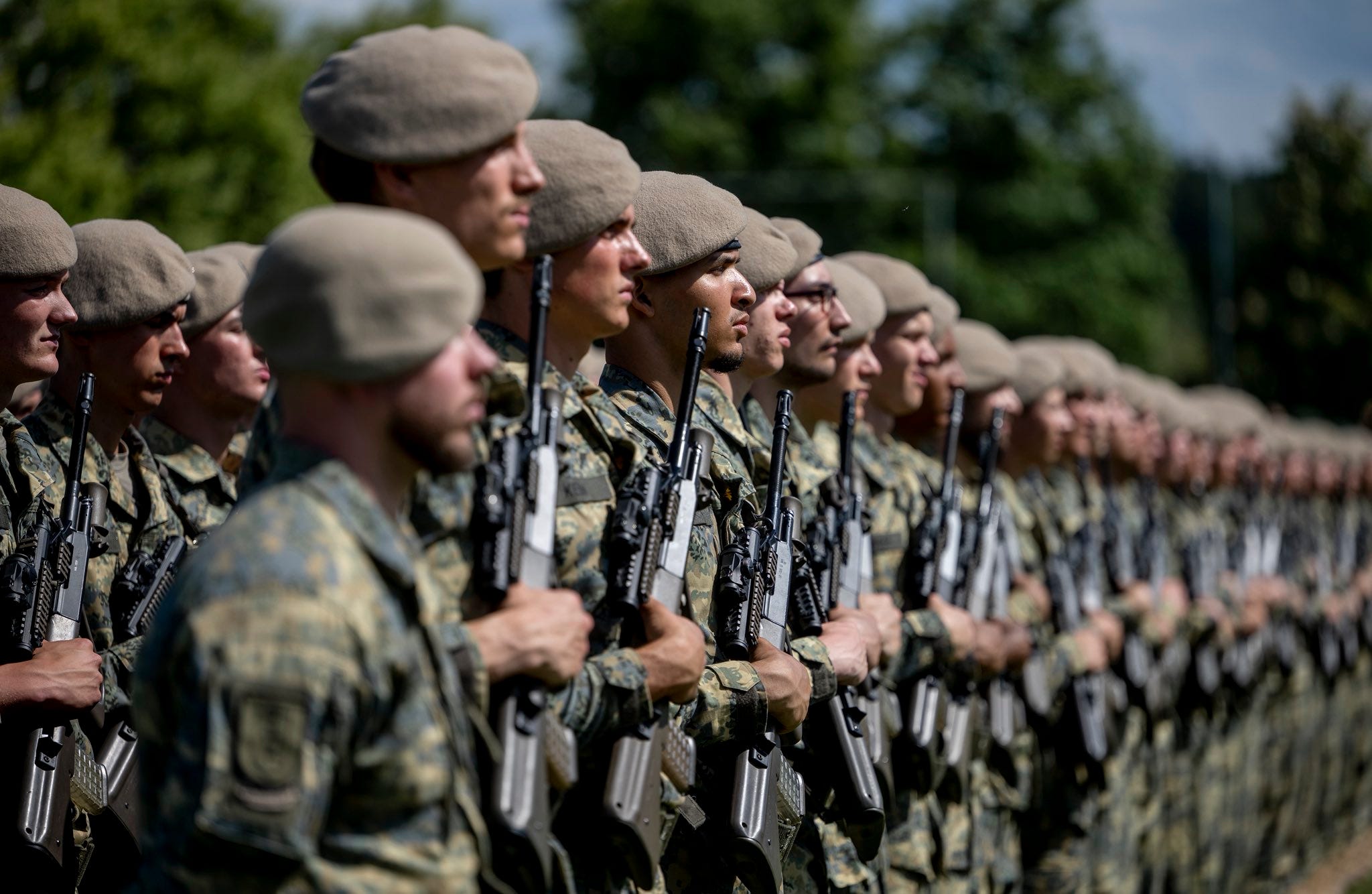
This image is used for illustrative purposes only.
At a Glance
Austria’s constitutional neutrality, adopted in 1955 and still formally in force, faces no legal revision — but Chancellor Stocker’s government is fundamentally shifting the country’s defense posture within that framework.
In September 2025, defense spokespersons from all parliamentary parties agreed that an “honest discussion” about the future of neutrality was now necessary — a rare cross-party signal.
Austria is caught between its growing role in EU defense structures and a far-right opposition that uses neutrality as a shield against support for Ukraine.
A doctrine born of Cold War bargaining
Austrian neutrality was not born of conviction — it was born of negotiation. In April 1955, via the Moscow Memorandum, Vienna agreed to renounce membership in any military alliance and to bar foreign military bases from its territory. In exchange, the four occupying powers — the United States, the United Kingdom, France, and the Soviet Union — withdrew their troops. On October 26, 1955, the Nationalrat, Austria’s parliament, passed the Federal Constitutional Law on Neutrality. Allied soldiers had left the day before.
The model was explicitly based on Switzerland, and it quickly became a diplomatic asset. Vienna positioned itself as a mediation capital, a neutral ground between East and West, host to major international organizations. For decades, neutrality was not a retreat from the world — it was Austria’s way of engaging with it.
The first serious crack came in 1995, when Austria joined the European Union — an organization with its own mutual-defense clause under Article 42(7) of the Treaty of Lisbon. A workaround was found, partly at Ireland’s request, allowing member states with a “specific character” in their security policy to maintain their status. Austria today participates in 10 PESCO projects — the EU’s Permanent Structured Cooperation on defense, roughly comparable to a joint defense procurement and capability-building program among willing EU member states — and contributes to 11 military and civilian missions, including an operation in Bosnia and Herzegovina with more than 200 soldiers.
The Stocker paradox: neutral and rearming
The current government embodies this contradiction openly. Stocker, who has led the ÖVP–SPÖ–NEOS coalition since March 3, 2025 — the ÖVP being Austria’s center-right People’s Party, the SPÖ the Social Democrats, and NEOS a liberal pro-European party — has articulated an unapologetic two-track position. “We are militarily neutral, but that doesn’t mean we won’t invest in our defense,” he said in a May 2025 interview with Euronews. He has reaffirmed plans to bring defense spending from its 2024 level of just 1% of GDP — among the lowest in the EU — to 2% by 2032, and expressed support for Austria joining the European “Sky Shield” air defense initiative.
Beate Meinl-Reisinger, Austria’s minister for European and international affairs and the leader of NEOS, struck a similar balance: she acknowledged the need to “strengthen Europe’s autonomy” in the context of the EU’s €800 billion ($880 billion at current exchange rates) defense plans announced in March 2025, while maintaining that Austria’s constitutional neutrality “clearly applies.”
Austria is not abandoning its neutrality. It is reinterpreting it — quietly, incrementally, under the combined weight of a war on the EU’s eastern flank and a continent that is rearming.
This posture of “active neutrality” — non-membership in NATO, active participation in EU defense structures — could suggest a progressive redefinition of the concept without any formal constitutional revision. The framework stays; its operational content quietly shifts.
Squeezed from two sides
Austria faces pressure from opposite directions. On the European side, the war in Ukraine has made strategic ambiguity increasingly uncomfortable. Finland and Sweden — long cited as comparable models of neutrality — joined NATO in 2023 and 2024 respectively, shrinking the neutral holdouts to a handful. In September 2025, defense spokespersons from all parties in the Austrian parliament jointly called for an “honest discussion” about neutrality’s future — an unusual moment of cross-party alignment.
On the domestic side, the Freedom Party of Austria (FPÖ), led by Herbert Kickl, won 28.8% of the vote in September 2024 — the party’s best result in its history — and now leads the opposition from the right. The FPÖ opposes EU sanctions against Russia and any military aid to Ukraine, invoking Austria’s constitutional neutrality as justification. When Ukrainian President Volodymyr Zelensky was invited to Vienna, Kickl denounced the visit as a violation of Austrian neutrality, insisting that a neutral state must serve as mediator. FPÖ defense spokesperson Susanne Fürst went further, labeling Stocker’s rearmament remarks “an open declaration of war against the foundations of our security and sovereignty.”
It is worth noting that Kickl has consistently denied being pro-Russian, describing the FPÖ’s position as “neutral proximity, not Russian proximity” — and the party has distanced itself from a cooperation agreement it signed with Russia’s ruling party in 2016.
Analysis: neutrality as a domestic battleground
The real question Austria faces is not legal. The 1955 Constitutional Act on Neutrality remains in force, and no actor within the Stocker government is proposing to revise it. The question is political: who gets to define what “being neutral” operationally means?
For an American or Canadian reader, the closest parallel might be a constitutional provision with deep popular resonance — one whose text is stable but whose interpretation is perpetually contested. Austria’s neutrality functions less as a military doctrine than as a national identity marker. Formally altering it would cost far more politically than reinterpreting it pragmatically. Austria is surrounded on all sides by NATO members, yet surveys have shown that only around 21% of Austrians said they would be willing to take up arms to defend their country — one of the lowest rates in Europe.
The economic context adds complexity. Austria has endured three consecutive years of economic contraction or near-stagnation, driven by manufacturing weakness and energy-cost pressures from the Ukraine conflict. Whether Stocker’s rearmament timeline will survive these fiscal constraints remains an open question.
The ECFR — the European Council on Foreign Relations, a pan-European foreign policy think tank — has noted the broader tension: EU member states formally committed to building a “fully-fledged European defence union” are simultaneously expected to honor neutrality statutes drafted when the EU did not exist. That tension has no clean resolution.
The bottom line
Austria is not abandoning its neutrality. It is reinterpreting it — quietly, incrementally, under the combined weight of a war on the EU’s eastern flank, a continent that is rearming, and a government that has chosen pragmatism over doctrine. The real fault line is not between Vienna and Brussels: it runs through Austrian politics itself, between a governing coalition inching toward strategic integration and an opposition that has turned constitutional neutrality into its defining cause. If Austria succeeds in redefining what neutrality permits — without ever renaming it — it will have set a precedent that every remaining neutral state in Europe will have to reckon with.
Sources: Euronews · International Centre for Defence and Security (ICDS) · European Council on Foreign Relations (ECFR) · Austrian Parliament (parlament.gv.at)