
Armenia's pivot westward: Moscow weaponizes trade, Brussels responds
As Armenians prepare to vote Saturday in a pivotal legislative election, Russia has tightened its economic grip while the European Union is deploying financial and symbolic support.

A revealing standoff over a country remaking its geopolitical identity.
At a Glance
Russia imposed import restrictions on Armenian goods in late May — including flowers, officially framed as phytosanitary measures — in what observers see as economic pressure timed to Saturday’s parliamentary vote.
The European Union is responding with a first direct budget support package of more than €50 million (approximately $54 million at current exchange rates) and a symbolic 10,000-flower purchase from Armenian growers.
Saturday’s vote is effectively a referendum on whether Armenians back Prime Minister Nikol Pashinyan’s break with Moscow and pivot toward the West.
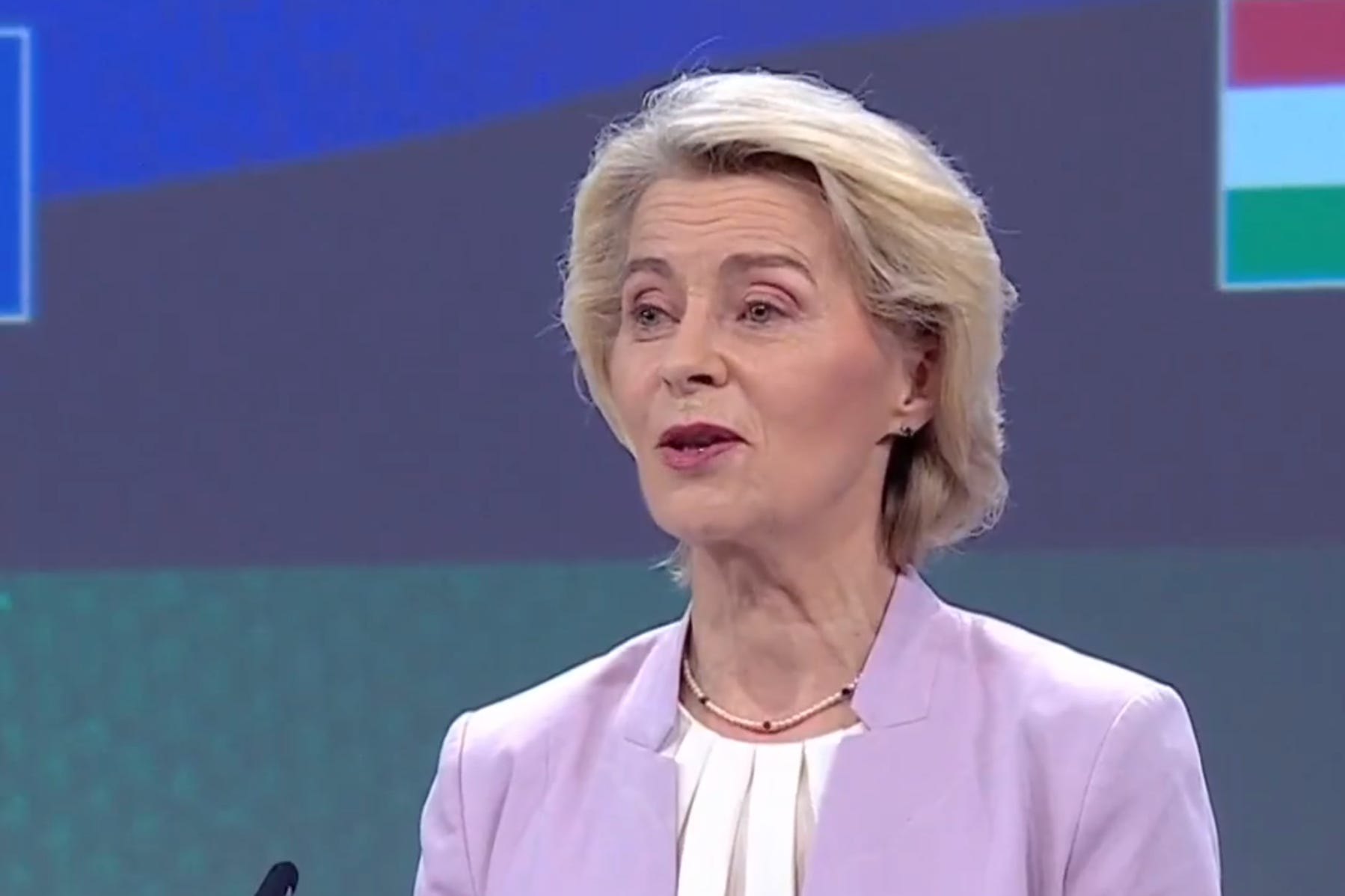
This image is used for illustrative purposes only.
Flowers as a diplomatic weapon
Russia’s decision to restrict Armenian imports — notably flowers, one of the most visible sectors of Armenia’s agricultural exports to former Soviet markets — did not come in a vacuum. It landed just days before Armenia’s June 7 parliamentary elections, a timing that Ursula von der Leyen, president of the European Commission, the EU’s executive arm, called out directly on Thursday.
“Moscow is using economic relations as a tool of political pressure.”
She added, after a call with Armenian Prime Minister Nikol Pashinyan, that the EU knew this playbook “all too well” — a deliberate echo of patterns seen in Ukraine, Georgia and Moldova, where Moscow has previously used trade and energy leverage to punish or deter western alignment. Moscow has officially framed the restrictions as phytosanitary measures; the timing, days before a consequential vote, has led most observers to read them as political.
The EU had already condemned what it described as Russian “coercion” attempts aimed at influencing Saturday’s vote, doing so publicly on Monday. Framing the trade move as electoral interference, rather than routine commercial policy, carries its own weight.
Armenia’s geopolitical pivot and its costs
To understand the intensity of Russia’s reaction, one must understand how far Armenia has moved from its historical orbit. Pashinyan, who has led Armenia since 2018, has pursued what independent analysts widely describe as one of the most dramatic foreign policy reorientations in the post-Soviet space in recent years.
Armenia suspended its active participation in the Collective Security Treaty Organization (CSTO), the Russia-led military alliance roughly equivalent to NATO for Moscow’s traditional partners. It has simultaneously deepened institutional ties with the European Union and begun discussions on a formal rapprochement. That shift is rooted in a deep loss of trust: Moscow did not come to Armenia’s aid during the 2020 Nagorno-Karabakh war — a disputed mountainous enclave that Azerbaijan and Armenia fought over — nor during the September 2023 Azerbaijani offensive that led to the region’s dissolution and a mass exodus of ethnic Armenians.
Saturday’s elections are, in effect, a public verdict on whether Armenians want to bear the costs of that rupture.
The EU’s response: financial and symbolic
Brussels’ counter-move operates on two levels. The financial component — a direct budget support transfer of more than €50 million — is a meaningful signal. Direct budget support, which flows into a government’s general accounts rather than earmarked project funding, is a tool the EU typically deploys for partners it considers strategically committed. “And there will be more,” von der Leyen pledged.
The symbolic dimension is harder to miss: 10,000 Armenian flowers bound for Latvia, an EU and NATO member with a long, documented history of Russian economic pressure. What Moscow refuses to import, Brussels will absorb. The message is calibrated.
Why this matters beyond the Caucasus
What is unfolding in Armenia poses a sharper version of a question Europe has wrestled with since Russia’s full-scale invasion of Ukraine in 2022: how far is the EU prepared to go to anchor a country in democratic transition when Moscow chooses economic coercion over military force?
The response this week suggests Brussels is unwilling to let Moscow win this standoff by default. But the nature of European engagement — conditional budget aid, symbolic gestures — does not yet amount to an integration architecture. Armenia remains formally outside the EU accession process, and no membership horizon has been offered. What is being negotiated is closer to a zone of protection and influence than the beginning of a membership pathway.
That distinction matters, because Russia is betting that economic pain will eventually outpace the appeal of European rhetoric without a binding European commitment in return.
The bottom line
The EU and Russia are waging a proxy contest on Armenian soil, and the stakes go well beyond spring flowers. The map of post-2022 Europe is being redrawn one country at a time — Armenia, Georgia, Moldova — along a fault line between two gravitational poles. The real question is not whether Yerevan can find new export markets to replace Russian ones. It almost certainly can. The question is whether Europe is ready to assume the role of anchor power it is advertising — with the financial, political and security commitments that entails. A shipment of flowers to Riga is a beginning. It is not an answer.
Sources: France Info · AFP