
Albania probe ties Trump resort to laundering case
Albanian prosecutors seek 20 arrests and seize $138 million in assets, in a probe that may touch a resort project tied to the Trump family.

On Saturday, June 13, 2026, while thousands of protesters again filled the streets of Tirana against a contested luxury resort on Albania’s Adriatic coast, the country’s anti-corruption prosecutors issued a statement that — without ever naming the project — may link that disputed development to a sprawling cocaine-trafficking and money-laundering network. Twenty people are wanted for arrest. Four were already detained. And behind one of the names cited, a thin but striking thread appears to lead back to a resort project associated with the family of U.S. President Donald Trump.
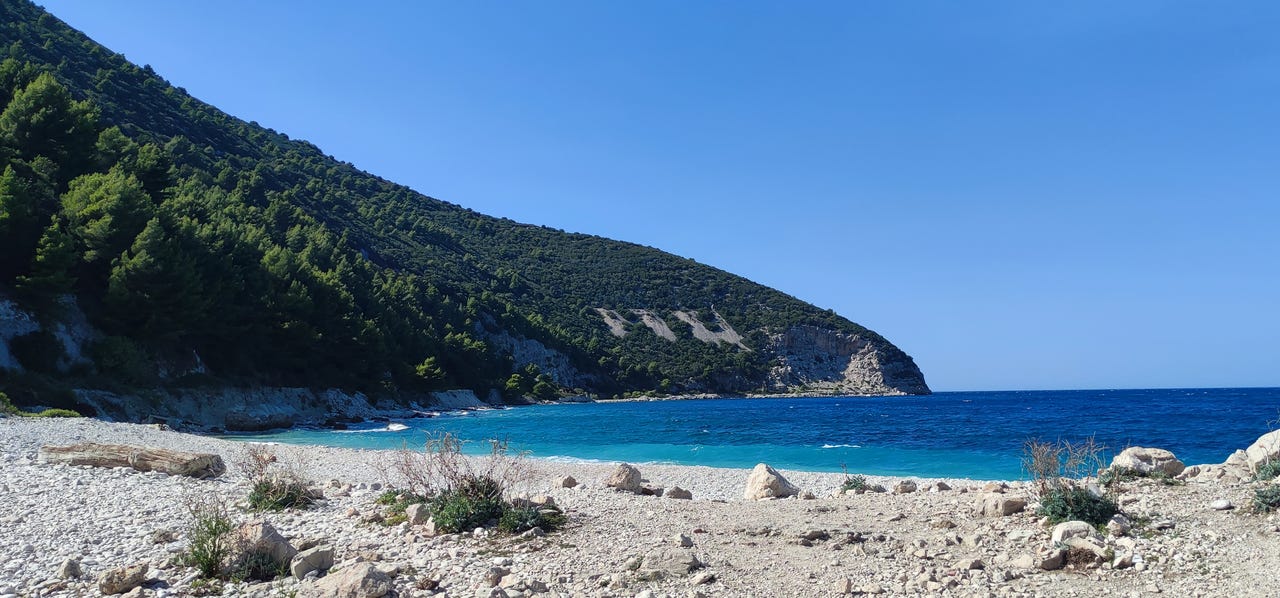
This image is used for illustrative purposes only.
At a Glance
SPAK, Albania’s independent anti-corruption and organized-crime prosecutor’s office, has requested the arrest of 20 people suspected of international cocaine trafficking and money laundering, and ordered the seizure of more than €128.4 million ($138 million) in assets.
Some of that money is tied to land sales in Zvernec to a company believed to be Albania Land Development — part of a larger resort project that also includes a separate development on nearby Sazan Island, recently described by Ivanka Trump.
The case broke as thousands of protesters entered a second week of demonstrations against that project, which critics say threatens protected wetlands and has become a test of Albania’s bid to join the European Union.
A money-laundering probe targeting a sprawling network
SPAK’s statement left little doubt about the scale of the case, even as it stayed vague about where it began. The investigation, opened over international cocaine trafficking, uncovered operations that allegedly concealed the origin of assets and funneled illicit proceeds back into the legal economy. Of the 20 people targeted for arrest, four were detained on Saturday. None of those named has been convicted of any offense, and all are presumed innocent unless and until a court rules otherwise.
Albanian courts also ordered the seizure of several assets tied to sales contracts between three individuals — identified only by the initials A.Sh., F.S., and B.S. — and a company identified as “A...L...D... sh.a.” The total value of the seizure exceeds €128.4 million (roughly $138 million at current exchange rates). Some of the flagged investments involve real estate and construction projects in the capital, Tirana, as well as in the coastal towns of Palasë, Himarë, and other locations along the Adriatic.
At this stage, prosecutors made no mention of any specific resort project. But identifying the company at the center of the case — and the land it controls — opens a far broader line of inquiry than the trafficking case alone.
The trail leads to Zvernec and Sazan Island
The initials “A...L...D...” are believed to refer to Albania Land Development, a company whose public filings with Albania’s commercial registry show it acquired large parcels of land in the protected area of Zvernec — the seized assets in this case relate specifically to that holding. Zvernec is one half of a two-part resort project; the other half is a separate development on nearby Sazan Island. Together, the combined site appears to closely match a description Ivanka Trump recently gave on an American podcast: roughly five miles of coastline facing Sazan Island, bordered by a lagoon on one side and white-sand beaches on the other.
The project Ivanka Trump described is the same one that has drawn protesters into Tirana’s streets since late May and early June: a large-scale resort backed by Affinity Partners, the investment firm tied to her husband, Jared Kushner. Its two components are a hotel complex in the protected Vjosa-Narta lagoon area around Zvernec, and a separate resort on Sazan Island, a decommissioned Cold War-era military base.
That leaves the identity of the first name in SPAK’s statement. A.Sh. may refer to Artur Shehu, who has been described in several journalistic investigations relayed by the French news agency AFP as the principal seller of land for the project tied to Albania Land Development. Shehu has not been charged in connection with this case, and his alleged involvement remains, like the others named, a matter of an ongoing investigation rather than an established finding. The Zvernec land itself has been the subject of a long-running ownership dispute: local residents say Albanian courts previously recognized their claims to the property, while Shehu maintains his family’s rights date back generations and has publicly described his title as undisputed. Neither side’s claims to the land have been independently verified. Asked about the SPAK case specifically, neither Shehu nor the prosecutor’s office had responded to AFP and Reuters as of Saturday afternoon. The link between the money-laundering case and the resort project therefore remains, for now, a hypothesis built on a body of documentary evidence — not a conclusion drawn by prosecutors themselves.
Why this case reaches far beyond Albania
What’s unfolding in Tirana isn’t just a local legal matter. The Sazan and Zvernec project reportedly received “strategic investor” status from the Albanian government in early 2025 — a designation meant to fast-track approvals for investments deemed a national priority. Protesters, who have marched for nearly two weeks carrying inflatable pink flamingos to symbolize the species threatened by the development, are demanding the project be scrapped outright, with some calling for Prime Minister Edi Rama’s resignation.
The stakes extend beyond Albania’s borders for another reason: the country is among the most advanced candidates in the European Union’s accession process. The European Commission has already warned Tirana to avoid any action that could undermine compliance with the environmental standards required for membership — a warning that takes on new weight if any part of the project’s land financing turns out, even indirectly, to be connected to the proceeds of organized crime.
The Albanian government, for its part, has not yet established any link between SPAK’s investigation and the resort project, which it continues to present as an opportunity for a country seeking to build an international tourism brand. No public evidence currently shows that Albanian officials personally profited from the financial arrangements uncovered by SPAK — and, as noted, prosecutors themselves have drawn no formal connection to the Sazan project in their statement. But for many Albanians on the streets, the overlap between a drug-money laundering investigation and the identification of a company holding part of the country’s most coveted coastline is enough to turn an environmental protest into a question of public integrity.
The Bottom Line
If the link between this $138 million seizure and the Zvernec land holdings is confirmed, what becomes of a project already weakened by two weeks of street protests and warnings from Brussels?
One question neither SPAK nor the Albanian government has yet had to answer publicly. For Albania, with so much riding on its EU accession timeline, the answer could carry far more weight than the fate of a single resort.
Sources: RFI · AFP · Reuters · Euronews