
AI-Designed Universal Vaccine: The end of chasing variants?

A DNA vaccine built around an AI-designed super-antigen, tested on humans without a needle, could protect against unknown coronaviruses — and make the case for rethinking how the world funds pandemic prevention.
At a Glance
British researchers at the universities of Cambridge and Southampton have completed the first human trial of a vaccine designed entirely by artificial intelligence, targeting not a single virus but the entire Sarbecovirus family — the betacoronavirus subgroup responsible for SARS, MERS, and COVID-19.
The DNA vaccine, delivered without a needle to 39 volunteers between December 2021 and September 2023, was well tolerated with no major safety concerns; results are published in the Journal of Infection (June 2026).
The trial opens the door to a Phase 2 study and raises a structural question: if AI can design broad-spectrum vaccines before a pandemic begins, why do global health funding systems remain overwhelmingly reactive?
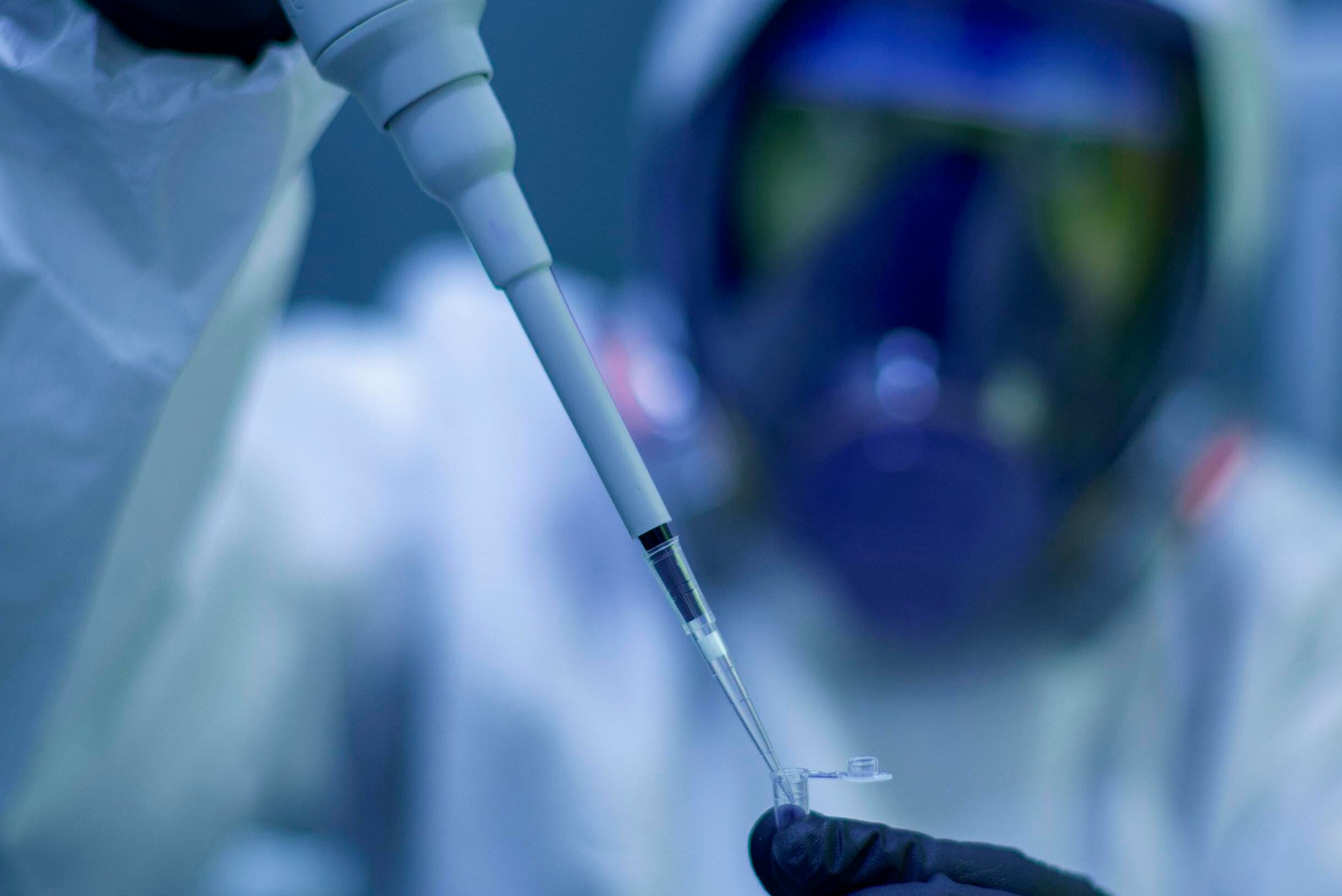
This image is used for illustrative purposes only.
The problem nobody was really solving
The scientific consensus since COVID-19 is settled: coronavirus outbreaks are not isolated accidents. Sarbecoviruses — a subgroup of betacoronaviruses that circulate primarily in bats and can jump to humans — have already triggered three major health crises in two decades: SARS in 2003, MERS starting in 2012, and the COVID-19 pandemic. Epidemiologists consider the probability of a fourth major zoonotic event within this viral family to be high.
The problem is not the absence of vaccines. It is their architecture. Current vaccines target a specific strain, identified after emergence. When the virus mutates — as SARS-CoV-2 did with its Alpha, Delta, and Omicron variants — protection diminishes, sometimes drastically. The pharmaceutical industry and health authorities find themselves in a permanent race: reformulate, test, deploy. Meanwhile, the virus circulates.
That is precisely the cycle the Cambridge-led team says it has broken.
How AI designs a universal vaccine
The mechanism is conceptually elegant. Rather than starting from a known virus and building an immune response against it, the team posed AI an inverse question: what characteristics are shared by all Sarbecoviruses — even those that might emerge tomorrow?
Machine learning ingested all available genetic sequence data for Sarbecoviruses logged by surveillance programs around the world, identified the protein structures most conserved across mutations, and generated a synthetic protein — the “super-antigen” — that mimics these common features without reproducing any existing virus. By presenting this protein to the immune system, the vaccine trains a response capable of recognizing a broad spectrum of viruses, including variants that have not yet appeared.
The research is a collaboration between the universities of Cambridge and Southampton and DIOSynVax (DVX) Ltd, a Cambridge spin-out established in 2017 to commercialize this class of digitally designed vaccines. Funding came primarily from Innovate UK.
Think of it this way: where a conventional vaccine is like a photograph of a specific suspect handed to the body’s immune police, the super-antigen is a composite sketch of the shared features of an entire criminal family — regardless of their future disguises.
39 volunteers, four doses, no major safety concerns
The Phase 1 trial enrolled 39 volunteers aged 18 to 50 between December 2021 and September 2023, conducted at NIHR Clinical Research Facilities in Southampton and Cambridge. Four doses were administered. The vaccine was well tolerated, with no significant side effects reported. Results appear in the Journal of Infection (June 2026, DOI: 10.1016/j.jinf.2026.106759).
The vaccine was delivered as a DNA vaccine — not the mRNA platform used by Pfizer-BioNTech and Moderna — through a microfluidic jet that propels the antigen directly into skin cells via a high-speed, hair-thin stream of liquid. No needle required. This approach reduces sharps waste, lowers volumes needed, and improves acceptance in settings where syringe use presents cultural or logistical barriers.
A critical advantage for low- and middle-income countries: DNA vaccines of this type are generally more thermostable than mRNA vaccines, eliminating the need for ultra-cold chain storage — a significant logistical edge in regions where cold-chain disruptions have historically undermined vaccination campaigns.
The geopolitical question: who funds prevention?
The Phase 1 results are encouraging, but the path to a universally deployable vaccine remains long. A Phase 2 trial must next evaluate immune responses across a larger, more diverse population — Heeney has indicated it would involve upwards of 200 participants.
The deeper question is institutional. Vaccine research funding still operates largely on a reactive logic: major emergency programs — Operation Warp Speed in the United States, the EU’s advance purchase agreements during COVID-19 — are triggered by an existing crisis, not by probabilistic anticipation. The Coalition for Epidemic Preparedness Innovations (CEPI), a global body created after the 2014–2016 Ebola outbreak specifically to finance preventive and universal vaccine development, represents a meaningful shift in that thinking — but remains structurally underfunded compared to budgets mobilized once a crisis is already unfolding.
It is worth noting that several actors are already pushing in the right direction: CEPI itself, Innovate UK through its support of DIOSynVax, and a growing number of biotech ventures are actively funding universal-vaccine platforms. The friction lies less in scientific consensus than in the scale and speed of public commitment. Governments and large institutional funders still tend to mobilize at crisis tempo, not prevention tempo — and for seasonal vaccines such as influenza, annual reformulation remains economically entrenched for manufacturers.
If technologies like the Cambridge-Southampton platform confirm their efficacy in later-stage trials, the case for rebalancing public health spending from response toward anticipation will be harder to dismiss.
The technology may exist. The political will to fund it — at scale, before the next outbreak — has yet to be demonstrated.
The Bottom Line
An AI-designed vaccine that protects against unknown viruses: the announcement can sound like science fiction. It is documented, peer-reviewed, and published. The real question is not whether the technology works — it is whether the institutions that govern global health are ready to fund prevention before they need it. Some already are. Most still are not. Will that change before the next Sarbecovirus jumps the species barrier?
Sources: Euronews · University of Cambridge · Journal of Infection