
A social media ban for under-16s: Starmer's high-stakes bet
London promises the world's toughest under-16 social media ban. Between a leadership crisis and Europe's slower path, will the promise hold up?

Introduction
On June 15, 2026, Prime Minister Keir Starmer promised the United Kingdom the world’s strictest ban on social media access for children under 16 — tougher than the one Australia, already described as a pioneer, has enforced since December 2025. Curfews for older teenagers, restrictions on AI chatbots, and widespread age-verification technology: the announcement had all the markings of a landmark policy.
It came, however, at a moment when nearly 100 lawmakers from his own Labour Party are publicly calling for him to step down, when several of his closest aides have resigned within months of each other, and when his approval ratings sit at their lowest point since he took office. The question, then, is not only what this social media ban would change for British families. It’s whether the policy can work at all — and the one country that has actually tried it, Australia, offers an answer that isn’t the one you’d expect.
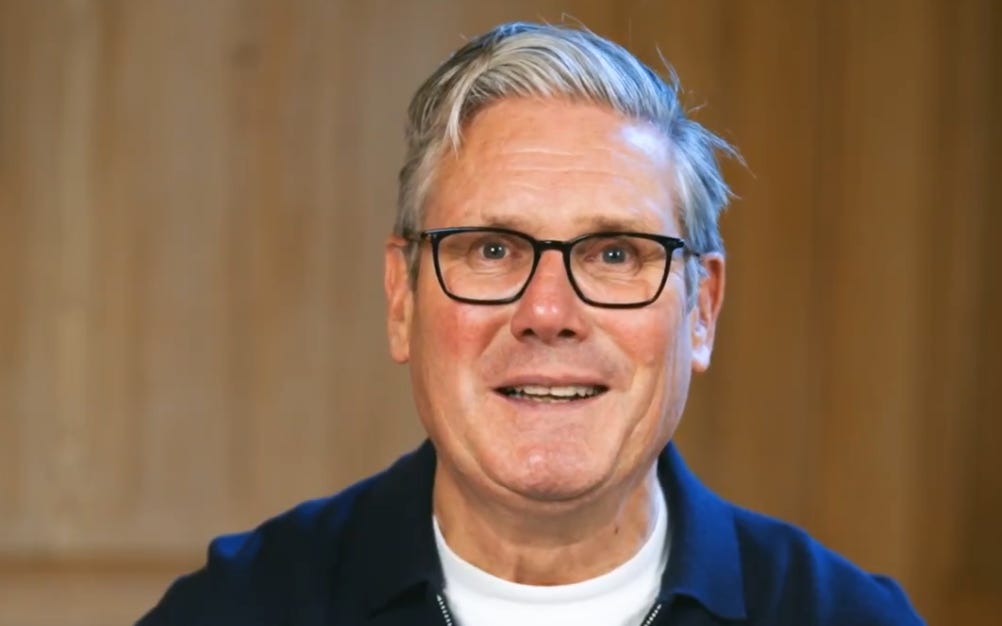
This image is used for illustrative purposes only.
At a glance
Starmer is promising a social media ban for under-16s tougher than Australia’s model, but its implementation depends on secondary legislation that still needs parliamentary approval.
Within weeks of Australia’s comparable ban taking effect, roughly 4.7 million accounts believed to belong to minors were deactivated — yet months later, a significant number of young people still access the platforms.
The European Union chose a different path in April 2026: a voluntary age-verification framework rather than an age-based ban, reflecting a post-Brexit divergence that France already experienced firsthand in 2023.
The social media ban Starmer promised, and what still has to happen
In his address, the British prime minister promised a “world-leading” ban on social media access for under-16s, framed as a response to concerns raised during a public consultation that received 116,000 submissions from parents, tech industry figures, and children themselves. According to Culture Secretary Lisa Nandy, 90% of the parents and young people consulted support such a ban.
The UK government has called on platforms to adopt “reasonable measures” for age verification — facial or voice recognition, official identity documents, or “age inference” tools — before allowing account creation. Starmer indicated the UK plan would go further than Australia’s by introducing curfews for older teenagers and restrictions on AI chatbots.
What the announcement doesn’t specify, though, is an exact timeline or a list of affected platforms. The legal mechanism behind it is an amendment to the Online Safety Act 2023 — the UK’s broad law governing platforms’ duties to protect users, including children — which gives the relevant secretary of state the power to regulate through secondary legislation. That measure still requires approval from both houses of Parliament before taking effect. Starmer’s announcement sets out an ambition and a political horizon; at this stage, it is not an immediately enforceable measure.
An announcement at the height of a power struggle
To understand the weight of this announcement, it helps to place it in context. Since spring 2026, Keir Starmer has been navigating the most serious crisis of his premiership: following poor election results and revelations about ties between his former ambassador to Washington and an American businessman convicted of sex offenses, nearly 100 Labour MPs have publicly called for his resignation or a timetable for his departure. Several ministers and close aides have left their posts within weeks of each other, and his approval ratings remain among the lowest ever recorded for a British prime minister.
In that context, an announcement framed as “world-leading” on a subject as broadly popular as protecting children online could give the government a political showcase that’s difficult for opponents to attack — common ground on which even the opposition struggles to push back. This reading remains a hypothesis: no official source establishes a link between the timing of the announcement and Labour’s internal turmoil. But the groundwork was already in place: since March 2026, the UK’s communications regulator, Ofcom, and the Information Commissioner’s Office (ICO), the UK’s data protection authority, have jointly put the largest platforms used by children on notice, threatening fines of up to £18 million or 10% of global revenue. Starmer’s announcement builds on a regulatory push that was already underway — and gives it a political face.
What Australia’s experience actually shows
Australia is the only country in the world with real-world experience of this kind of measure. Since December 10, 2025, the platforms most used by young people — Facebook, Instagram, TikTok, Snapchat, YouTube, X, Reddit, Threads, Twitch, and Kick — have been required to prevent under-16s from creating or keeping accounts, under penalty of fines of up to AUD 49.5 million (roughly €30 million, or about $32 million) for systemic non-compliance. Neither children nor their parents face penalties; responsibility falls entirely on the platforms.
Within about five weeks of the ban taking effect, Australia’s eSafety Commissioner reported that roughly 4.7 million accounts believed to belong to under-16s had already been deactivated, removed, or restricted. At first glance, that figure looks like a success story. But a follow-up compliance report published in March 2026 found that a significant number of Australian children continued to hold accounts, create new ones, and successfully pass age-verification checks — to the point that the regulator is now considering legal action against several platforms.
In concrete terms: even a law with steep financial penalties and mandatory monthly reporting, in effect for several months, has not closed the gap between the number of accounts officially removed and the number of minors still active on these platforms — a gap wide enough to justify potential court action. The UK, which is promising an “Australia-plus” model — curfews and AI chatbot restrictions that are arguably even harder to enforce than age checks at sign-up — will have to contend with that same reality, only amplified.
Why the EU can’t simply copy London’s approach
For a reader outside Europe, one detail of this announcement deserves attention: the United Kingdom is no longer a member of the European Union, and that fundamentally changes what it can legislate on its own.
In 2023, France passed a law establishing a “digital age of majority” of 15 for access to social media. Its implementing decrees were never published, after the law was found to be inconsistent with European Union law — particularly the rules governing the EU’s single market for digital services. Three years later, France’s National Assembly passed a new bill in January 2026 to ban social media access for under-15s; the Senate amended it in March 2026, favoring a “blacklist” of the platforms deemed most dangerous over a blanket ban, specifically to head off the same European compliance objections. The bill is still working its way through France’s two-chamber legislative process.
At the EU level, the European Commission published guidelines in July 2025 on protecting minors under the Digital Services Act (DSA), the EU’s law governing online platforms, and followed up in April 2026 with a recommendation urging member states to roll out a common age-verification framework by the end of 2026 — based on voluntary adoption and a future EU digital identity wallet, rather than an age-based ban. The DSA, as it stands, contains no provision setting a minimum age for accessing social media: the EU’s chosen path is verification tools, not prohibition.
In short, Brexit gave London a free hand that Brussels’ 27 member states don’t have: the EU has to move as a bloc, and so far that bloc has chosen tools over bans.
The United Kingdom, freed from those constraints, can legislate directly on the minimum age for platform access — a freedom France explored as early as 2023, with a law that sat unenforced for three years. For a North American reader, the dynamic will sound familiar: several U.S. states have passed their own age-verification laws, challenged in federal courts on First Amendment grounds. In both cases, smaller jurisdictions are moving faster than a larger bloc — at the cost of a regulatory patchwork that platforms operating globally will have to absorb.
Analysis
The precedent that never happened. Recent history already offers a warning: a law passed is not a law enforced. France learned this the hard way over three years with its first attempt at a digital age of majority. By choosing the route of secondary legislation — which still requires approval from both houses of Parliament — the UK risks a similar gap between announcement and real-world effect, even though its post-Brexit legal position removes the European obstacle that stalled Paris.
A showcase at a convenient moment. Whether or not the announcement serves to draw attention away from turmoil within the Labour Party remains an open question that no official source allows us to settle. What is certain is that protecting children online is one of the few subjects on which a weakened government can speak with almost unchallenged moral authority — and that the regulatory machinery, through Ofcom and the ICO, was already in motion before this announcement.
The real impact on families. Until the secondary legislation is passed and the list of affected platforms is published, British families remain in limbo. And if Australia’s experience is any guide, the ban — once in force — may not result in minors disappearing from social media, but in their migration toward workaround accounts, VPNs, or less-regulated platforms that could carry greater risks.
The real question underneath. This story isn’t about countries that protect their children versus countries that don’t. It’s about two competing philosophies of digital governance: Britain’s unilateral speed, made possible by Brexit but already tested by Australia’s precedent, and Europe’s consensus-driven slowness, which bets on shared technical tools rather than outright prohibition. In six to twelve months, which of these two paths will have actually changed what children do online — and which will have produced only a headline?
The Bottom Line
Australia has shown that a country can legislate quickly, set enormous fines, and still get only a partial result. The European Union chose the opposite approach: moving slowly, without an age-based ban, but working toward a shared timeline across 27 countries due by the end of 2026. The United Kingdom, by promising to go further than Australia while relying on a legal mechanism that will take time to materialize, could end up caught between the two models — without fully benefiting from either.
A law passed is not a law enforced.
The question this story leaves open isn’t whether Keir Starmer genuinely believes in this ban. It’s whether, a year from now, anyone will be able to say it changed anything for a 14-year-old in Britain.
Sources: House of Commons Library, UK Parliament (research briefing on social media age proposals) · Ofcom and the Information Commissioner’s Office, joint statements, March 2026 · Australia’s eSafety Commissioner, account-deactivation update (January 2026) and compliance report (March 2026) · European Commission, DSA guidelines on the protection of minors (July 2025) and age-verification recommendation (April 2026) · France’s National Assembly and Senate, legislative record (January–March 2026)