
A Putin critic is shot dead in Poland
An exiled Russian cartoonist known for mocking Vladimir Putin was gunned down in eastern Poland on Monday. Two Belarusians were briefly detained — then released.

Polish Prime Minister Donald Tusk called it “state terrorism.”
On a parking lot in Biała Podlaska, eastern Poland, on Monday morning, a gunman fired five shots at Semyon Skrepetsky, an exiled Russian artist whose caricatures had long infuriated the Kremlin. When the 44-year-old fell to the ground, the assailant moved in and fired twice more — at close range, hitting the head and chest. Three days earlier, Skrepetsky had been marching in front of Russia’s embassy in Berlin, holding a caricature of Putin and Stalin. He had declined the protection Polish authorities offered him.
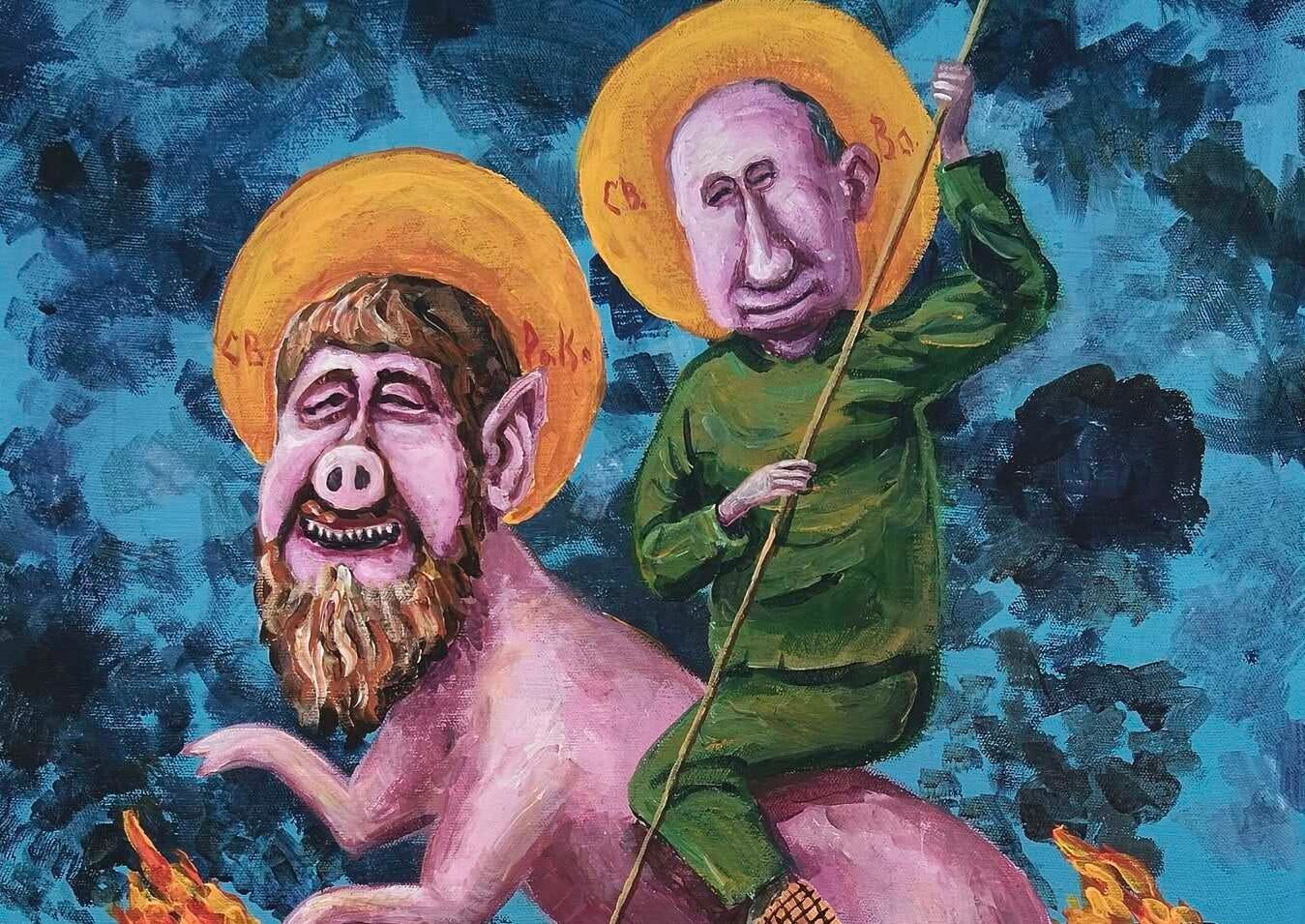
This image is used for illustrative purposes only.
At a Glance
Semyon Skrepetsky, whose real name was Robert Kuzovkov, was shot dead on June 15, 2026, in Biała Podlaska — a Polish border town a few miles from Belarus — in what authorities describe as a professional-style killing.
Two Belarusian nationals were arrested near the local Belarusian consulate shortly after the murder but were released on June 17 for lack of direct evidence linking them to the crime.
Polish Prime Minister Donald Tusk called the killing “political” and, if ordered by Russia, an act of “state terrorism” with serious international implications.
The profile of a marked man
Robert Kuzovkov was born in 1981 or 1982 in Russia’s Altai region in western Siberia. Under his artistic name Semyon Skrepetsky, he made his mark with biting political caricatures targeting Vladimir Putin, Chechen leader Ramzan Kadyrov, Belarusian President Alexander Lukashenko and even opposition figure Alexei Navalny — whose positions he sometimes portrayed in unflattering terms, reflecting an artistic stance that defied easy political categorization.
In 2021, facing mounting pressure from Russian authorities and credible physical threats, he fled Russia and was granted asylum in Biała Podlaska, a town of 55,000 in eastern Poland near the Belarusian border. He settled there with his wife and five children and continued his satirical work from exile.
On June 12, 2026 — Russia Day, Russia’s national holiday — he traveled to Berlin to join a gathering of Russian opposition figures outside the Russian embassy, carrying a caricature of Putin and Stalin and dragging a Russian flag along the ground in a deliberate act of provocation. Three days later, he was dead.
On the very morning of his assassination, Skrepetsky had posted to his Telegram channel to report threats from Russian nationalists and Kremlin supporters who, in his words, had promised to “take revenge” on him.
An execution in broad daylight
The shooting took place at around 9:45–9:50 a.m. An unidentified gunman approached Skrepetsky in the parking lot near his apartment building, fired three shots, then closed in as the artist fell and fired twice more. Skrepetsky was killed instantly, struck in the head, chest and back.
Within minutes, Polish police detained two Belarusian citizens near the Belarusian consulate in Biała Podlaska. According to a Belarusian opposition media outlet, a Belarusian taxi driver may have transported the assailants — reportedly two individuals — to the scene, before trying to seek refuge at the consulate after the shooting. That account has not been officially confirmed by Polish authorities, and both detained Belarusians denied direct involvement in the killing. On June 17, Tusk confirmed they had been released: “We have no evidence of their direct involvement.” The gunman or gunmen remain at large. A special investigative task force has been established.
Analysis: the anatomy of a presumed political killing
The geography of the crime as a signal
The choice of Biała Podlaska is unlikely to be accidental. The town sits a few miles from the Belarusian border — a natural escape route. The proximity of the Belarusian consulate, near where the two suspects were detained, adds a layer of symbolism that investigators will not ignore, even though no link to the Belarusian state has been established.
The operational pattern — a targeted killing on foreign soil, followed by a rapid flight toward a border — is consistent with a category of assassinations that European security services have tracked with increasing concern. The 2018 poisoning of Sergei Skripal in Salisbury, England; the 2019 killing of Zelimkhan Khangoshvili in Berlin, attributed by a German court to a Russian state-sponsored operative; and the 2021 apparent assassination of Belarusian opposition activist Vitaly Shishov in Kyiv — these cases share structural similarities with what happened in Biała Podlaska. Whether Monday’s killing was ordered by Moscow, Minsk, or actors operating on their behalf remains to be established, but the hypothesis of a state-directed targeted operation is the most coherent explanation available given the evidence.
Tusk’s wager
Polish Prime Minister Donald Tusk — who leads Poland’s centrist coalition government — did not wait for the investigation’s conclusion before using the phrase “state terrorism.” He conditioned his strongest judgment on Russia’s direct involvement being confirmed, but the political signal was unambiguous: Warsaw is prepared to frame this as an act of war by other means, if the facts bear it out.
That posture reflects Poland’s particular situation. As NATO’s eastern frontier state, most directly exposed to Russian pressure since the full-scale invasion of Ukraine in 2022, Poland has both the strategic interest and the domestic political incentive to name threats clearly — and early.
A victim who defied easy categorization
Skrepetsky was not embedded in a structured opposition movement. His artistic work reportedly targeted Ukrainian authorities as well as the Kremlin, and his name appeared in Ukraine’s Myrotvorets database — a controversial register that designates individuals accused of crimes against Ukrainian national security. That detail complicates any attempt to cast him purely as a pro-Ukrainian martyr. It does not change the central fact: he was an announced target, killed in daylight, on European Union soil.
It will be a test of whether the word “asylum” still means what it promises.
The bottom line
Skrepetsky’s murder in Biała Podlaska raises a question Europe can no longer defer: how far can authoritarian states reach into EU territory to silence their critics, and what concrete diplomatic or legal price — beyond condemnation — are European governments prepared to impose? If the killing is confirmed as a state-sponsored operation, it will not simply be the story of one cartoonist’s fate. It will be a test of whether the word “asylum” still means what it promises.
Sources: France Info · France 24 · Euronews · AFP